Minister admits ecosystem gaps as RMAFC flags investment bottlenecks
 admin
admin
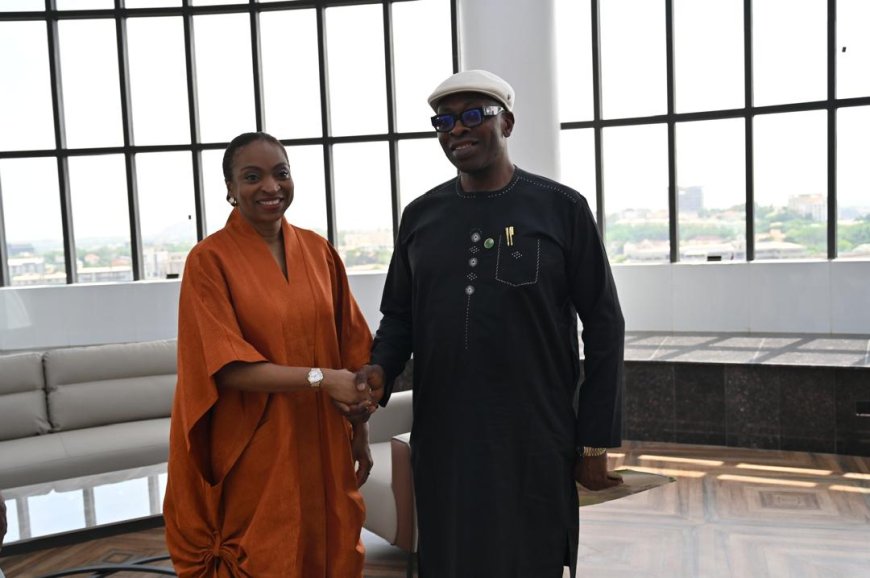
The Minister of Industry, Trade and Investment, Jumoke Oduwole, has admitted that gaps persist in Nigeria’s investment ecosystem, as the Revenue Mobilisation Allocation and Fiscal Commission flagged bureaucratic bottlenecks slowing investor inflows.
Oduwole made the admission during a meeting with a delegation of the commission in Abuja, where both sides discussed the need to improve the country’s investment climate.
The disclosure was contained in a statement issued on Monday by the commission’s Head of Information and Public Relations Unit, Maryam Yusuf.
“We acknowledge that while progress has been made, there are still gaps that need to be addressed,” the minister said, adding that the President had directed stronger coordination across government institutions to improve service delivery.
The commission had earlier raised concerns over delays in key investment processes, particularly company registration, warning that Nigeria risks losing capital to more efficient jurisdictions.
Speaking during the engagement, Chairman of RMAFC’s Investment Monitoring Committee, Enefe Ekene, said the commission had been tracking inefficiencies within the system and deemed it necessary to intervene.
“Our Committee on Investment Monitoring has been closely tracking investment-related processes, and we felt it necessary to engage directly with the Ministry to address some of the bottlenecks we have observed,” he stated.
Ekene pointed out that delays of up to two to three weeks for company registration were no longer competitive in a fast-paced global environment where investors expect quicker turnaround times.
“The world has moved on. Investors expect seamless, one-stop-shop systems where critical processes such as company registration are completed within days, not weeks. If we fail to meet these expectations, we risk losing valuable investment opportunities,” he said.
He added that such inefficiencies discourage investors operating within tight timelines, many of whom could redirect capital to countries with more predictable and efficient systems.
The RMAFC official also indicated a shift in the commission’s focus, noting that it was expanding its role beyond revenue allocation to supporting policies that would drive investment inflows and increase national earnings.
“As a Commission, we must move beyond revenue distribution to actively supporting initiatives that will grow the nation’s revenue. By improving the investment climate, we can significantly enhance national earnings and drive sustainable economic growth,” Ekene said.
Responding, Oduwole said the government had already begun reforms to improve coordination among agencies involved in the investment process, including the Corporate Affairs Commission.
She noted that efforts were ongoing to make business registration and related services more efficient and responsive to investor needs.
There have been notable strides and measurable achievements; however, much more remains to be done. Our focus is on deepening reforms across the entire investment ecosystem to ensure efficiency, transparency, and improved outcomes,” she added.
The minister also reaffirmed the ministry’s commitment to working with RMAFC and other stakeholders to strengthen Nigeria’s investment framework.
“I assure you of our continued collaboration with RMAFC to strengthen investment opportunities and deliver better services for investors and the Nigerian economy,” she said.
Members of the RMAFC delegation also highlighted additional challenges affecting investment flows, including the need to strengthen support for domestic investors and improve clarity around Export Free Zones.
Federal Commissioner representing Gombe State, Mohammed Kabeer Usman, emphasised the importance of backing local investors, while Federal Commissioner representing Kogi State, Abdulaziz Idris King, called for clearer identification and operationalisation of Export Free Zones to enable investors to benefit from incentives.
Another commissioner, Federal Commissioner representing Jigawa State, Hauwa Umar Aliyu, stressed the need for improved coordination among institutions to enhance the overall investor experience.
The commission said the engagement marked a step towards addressing structural barriers to investment and improving ease of doing business in the country, with the ultimate goal of boosting revenue generation through increased capital inflows.
The PUNCH earlier reported that the Revenue Mobilisation Allocation and Fiscal Commission said it is strengthening collaboration with key government institutions to attract foreign investment and boost revenue generation.