AWUJALE THRONE: HISTORY OR REVISION? THE OLUFADI–TUNWASE DEBATE REIGNITES Balancing Rebuttal on Lineage, Continuity, and the Burden of Custom
AWUJALE THRONE: HISTORY OR REVISION? THE OLUFADI–TUNWASE DEBATE REIGNITES Balancing Rebuttal on Lineage, Continuity, and the Burden of Custom
 admin
admin
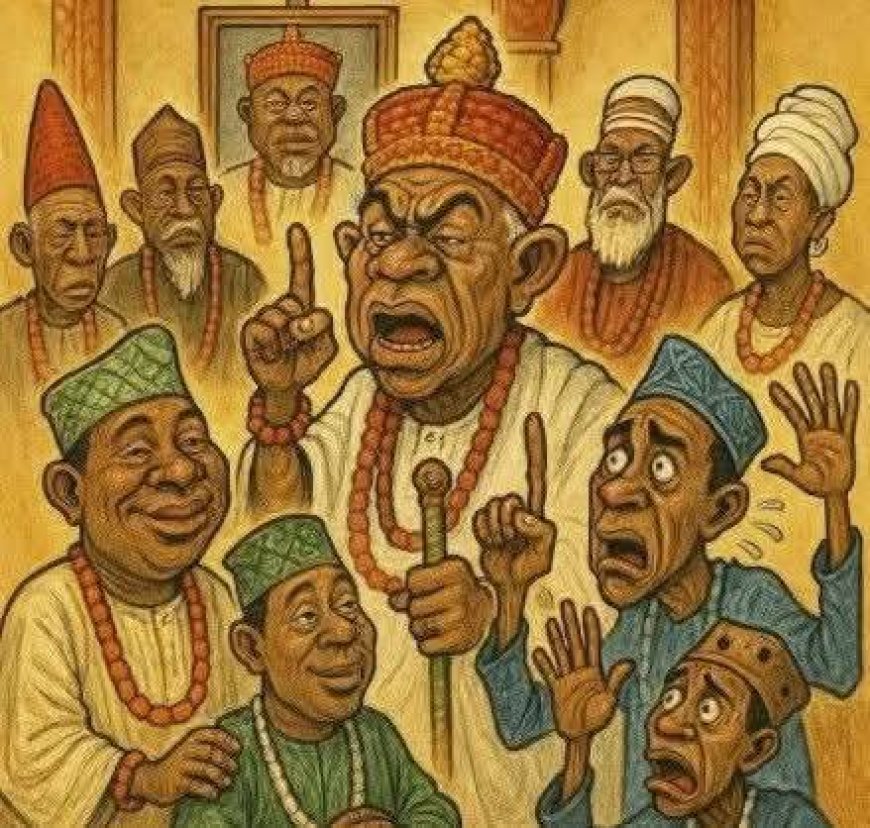
In the culturally revered kingdom of Ijebu, history is not a relic of the past—it is a living authority. It shapes identity, defines legitimacy, and, in moments such as this, becomes the focal point of renewed public scrutiny.
Today, the Awujale Throne stands at the intersection of memory and modern interpretation, as its Olufadi–Tunwase lineages debate resurfaces with renewed intensity.
At its core lies a defining question:
Are we guided by history—or are we attempting to revise it?
Olufadi in Perspective: Honour Without the Crown
There is no ambiguity in acknowledging Olufadi (Olufadekemi) as a respected figure within the Royal heritage of Ijebuland. As an Abidagba Prince—his proximity to the Awujale throne underscores his relevance. So says one of Adenuga Tunwase Prince in response to the narration of a Prince of Olufadi lineage, laying credence claim to Awujale's Stool Viz Abidagba assertion.
However, history makes a clear distinction:
Olufadi did not ascend the Awujale stool.
That pivotal moment in the late 19th century belonged to his younger Abidaagba sibling, Oba Adesimbo Tunwase, who emerged as Awujale around 1886.
Yet, in the spirit of balance and fairness, a critical clarification has been raised by stakeholders:
Olufadi did not “lose” the throne to Adesimbo Tunwase as put forth by the Adenugas —he had passed on before that ascension.
This distinction is important. It shifts the narrative from one contest to one of circumstances, reinforcing the need for accuracy in historical interpretation.
This is not a denial of heritage—it is an affirmation of historical fact. In Ijebu or even Yoruba monarchical tradition, honour and kingship are not interchangeable.
1886: The Defining Turn in Dynastic Continuity
The ascension of Oba Adesimbo Tunwase was more than a succession—it was a defining moment of dynastic activation.
Kingship, within Ijebu/Yoruba custom, is transformational:
It activates lineage
It establishes continuity
It determines the trajectory of royal succession
As one Palace Elder noted:
“Many are born Princes, but only one becomes the root of kingship. The crown does not suggest—it decides.”
Thus, while Olufadi remained within the dignity of princely heritage, the Tunwase lineage transitioned into active Royal continuity.
A Necessary Counterpoint: The Question of Consistency
However, critics of the Tunwase argument caution against selective interpretation of history and promotion of self-serving exclusivity of what tradition, history and the Cheiftaincy laws has made broad.
A pointed reaction to the Adenuga Tunwase position highlights a parallel often overlooked:
“If Olufadi lineage’s inability to ascend the throne since 1885 is cited as grounds for ineligibility, the same logic must apply to ADESIMBO TUNWASE lineage as well. Awujale Adenuga Folagbade himself did not complete his reign on the throne—having been removed and exiled to Ilorin. This raises questions about using continuity as an absolute standard.”
This perspective introduces a crucial dimension:
Can continuity be invoked selectively without undermining fairness?
It further reinforces that within Ijebu custom, royal legitimacy is not always linear, and historical interruptions do exist.
1915: Eligibility—Selective, Not Automatic
The events of 1915 remain one of the strongest historical reference points.
At the time:
The turn of the Fusengbuwa Ruling House arose
Prince Adenuga of the Tunwase lineage was identified as the only qualified Abidagba candidate
His limitation was age—not legitimacy
The Ruling House was subsequently bypassed
A historian in Ijebu Igbo explained:
“1915 demonstrated that eligibility was selective, not collective. Not every descendant stood on equal footing.”
This moment underscores a critical principle:
lineage alone did not guarantee eligibility—qualification did.
1925: Continuity Affirmed Through Kingship
History moved decisively in 1925.
A descendant of the Tunwase lineage ascended the Awujale Throne, reaffirming a principle deeply rooted in tradition:
legitimacy is strengthened through actual kingship occupancy.
From Erunwon, a Chief source reflected:
“History does not remember who argued—it remembers who ruled and his lineages are all eligible in the face of law and tradition”.
Law and Tradition: The 1959 Chieftaincy Declaration
The Awujale Chieftaincy Declaration of 1959 provides the formal legal framework guiding succession, recognising four ruling houses:
* Fusengbuwa
* Anikinaiya
* Fidipote
* Gbelegbuwa
However, its scope remains limited.
While it structures rotation among Ruling Houses, it does not:
1, Determine superiority within a Ruling House
2, Erase historical precedence
3, or Equalise all lineage claims
A legal practitioner in Ijebu Ode noted:
“Law provides the framework. Tradition determines legitimacy.”
The Debate Reignited: Continuity or Inclusion?
At the heart of the present discourse lies a delicate tension:
Should succession follow established historical continuity, or should evolving realities permit broader inclusion?
The Adenuga Tunwase position maintains that:
Kingship progression follows those who have occupied the throne
Eligibility has historically been specific, not automatic
Precedent remains a critical guide
Yet, voices from the Olufadi lineage and other stakeholders present a counterpoint rooted in equity and shared ancestry:
“Olufadi lineage remains the eldest Abidagba branch within Fusengbuwa. That standing deserves recognition, not dismissal.”
And more broadly:
“As Royal blood of the same dynasty, discussions must be anchored in fairness, truth, and love—not ridicule.”
Fairness and the Burden of Interpretation
Fairness within tradition is not easily defined.
Is fairness:
Strict adherence to historical precedent?
or Adaptive inclusion within a changing society?
The answer may lie in a careful balance—one that preserves historical integrity without silencing legitimate aspirations.
Clarity Without Erasure
This report does not seek to diminish the Olufadi lineage.
Olufadi remains:
a respected prince
a figure of heritage
an integral part of the royal narrative
Equally, it acknowledges that:
Olufadi did not ascend the throne
His absence from kingship was circumstantial, not necessarily competitive
His lineage retains historical and cultural significance within the dynasty
At the same time, tradition continues to distinguish between: Those who approached kingship and those who exercised it.
That distinction remains central—but must be applied with consistency and fairness.
Conclusion: A Throne Between Memory and Meaning
The Awujale stool stands as both a symbol of continuity and a test of interpretation.
From available records and customary understanding:
Olufadi was a Prince, not a crowned Awujale
The Tunwase lineage reflects continuity through kingship occupancy
The events of 1915 and 1925 affirm selective eligibility
The 1959 Declaration structures succession but does not settle intra-lineage claims
Historical interpretation must remain consistent to sustain legitimacy
Yet, the counterpoint endures:
Continuity must not be applied selectively
Lineage seniority within Abidagba deserves acknowledgment
Circumstantial history must not be misrepresented as defeat
Ultimately, the question persists:
Will the future of the throne be guided strictly by history—or shaped by a more inclusive interpretation of it?
Final Reflection
As one Elder aptly concluded:
“The future may choose the king—but history chooses the standard. Yet, wisdom ensures that the standard is applied with fairness to all.”
- Source: Igboro Lawa via Babafemi Mebude writes from Ijebu-Ode.