Health experts urge urgent action on sickle cell in Nigeria, Africa
 admin
admin
Health professionals and researchers in the health sector have called for urgent, coordinated action to address the growing burden of sickle cell disease in Nigeria and across Sub-Saharan Africa.
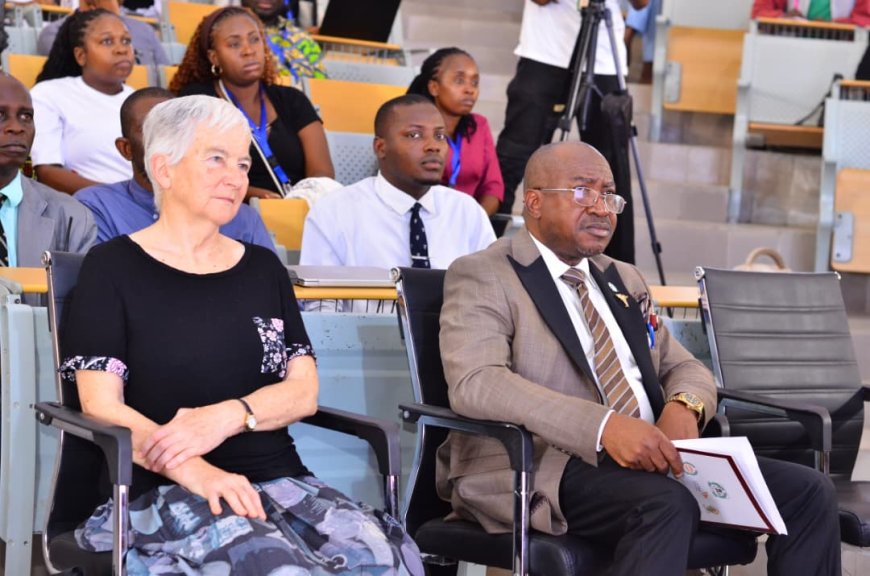
They made the call at the Centre of Excellence for Sickle Cell Disease Research and Training and the Patient-Centred Sickle Cell Disease Management in Sub-Saharan Africa Consortium meeting, held at the University of Abuja, now known as Yakubu Gowon University, on Wednesday.
In his welcome remarks, the Vice Chancellor of the university, Professor Hakeem Fawehinmi, stressed the significance of the gathering, describing it as “timely and critical to millions affected by the condition.”
Fawehinmi noted that Nigeria bears one of the highest burdens of sickle cell disease globally, with about 150,000 children born annually with the condition.
Sadly, many of them will face a lifetime of pain, interrupted schooling, compromised livelihood, and inadequate care, mostly because of a lot of our resource-poor settings in the areas outside the centre, peri-urban areas, rural areas,” he stated.
The prof added that research carried out under the PACTS programme over the past four years has generated evidence capable of transforming outcomes if properly implemented.
“As PACTS enters its final phase, the question before us goes beyond what research we have uncovered, what have we discovered?
Equally important is what we do with these findings, and who is responsible for ensuring that these gains are implemented and sustained,” he added.
The VC urged stakeholders to move beyond discussions to concrete action.
“The evidence before you today is a clearer call to action. We need a clear action plan with a clear, focused roadmap,” Fawehinmi urged.
Also speaking, the Bursar of the university, Shiva M’ovul-Kondoun, shared a deeply personal account of the impact of sickle cell disease, describing the initiative as a beacon of hope.
M’ovul-Kondoun recounted losing six siblings to the disease, highlighting the devastating consequences of poor access to care.
“I have witnessed firsthand the catastrophic effects of poor management of sequential disease in this country.
“I have watched my siblings lying side by side in one room with my mother and the rest of us running to see how their lives could be saved while they received blood transfusions. It was a nightmare I wished not to remember.
Equally important is what we do with these findings, and who is responsible for ensuring that these gains are implemented and sustained,” he added.
The VC urged stakeholders to move beyond discussions to concrete action.
“The evidence before you today is a clearer call to action. We need a clear action plan with a clear, focused roadmap,” Fawehinmi urged.
Also speaking, the Bursar of the university, Shiva M’ovul-Kondoun, shared a deeply personal account of the impact of sickle cell disease, describing the initiative as a beacon of hope.
M’ovul-Kondoun recounted losing six siblings to the disease, highlighting the devastating consequences of poor access to care.
“I have witnessed firsthand the catastrophic effects of poor management of sequential disease in this country.
“I have watched my siblings lying side by side in one room with my mother and the rest of us running to see how their lives could be saved while they received blood transfusions. It was a nightmare I wished not to remember.
“I lost six siblings to the hands of sickle disease before they ever got to the age of 30,” the bursar narrated.
M’ovul-Kondoun stressed the need for local ownership of interventions amid declining global funding.
She said, “Access to care was scarce and inclusive management systems were almost non-existent. But today, I am encouraged that CESTRA is changing the narrative.
“I want to thank you all for choosing this university for this workshop, while I end by calling on all stakeholders to ensure that the management of sickle cell in this country is not just left in the hands of foreign partners.”
A Co-Principal Investigator of PACTS, a researcher and haematologist with the Liverpool School of Tropical Medicine, Prof Imelda Bates underscored the patient-focused approach of the project.
Bates explained, “We are really focused on the patients with sickle cell disease, their families and their carers.
“We are trying to understand what their main problems are and talking to them about solutions they can put in locally that will be sustainable.”
Bates highlighted the social and economic challenges faced by patients and their families.
“They are a very vulnerable group of patients. They have to pay a lot of out-of-pocket costs. And then they have many children with sickle cell disease. So it is a really difficult problem,” she said.
She also stressed safeguarding reforms across participating institutions.
The co-principal investigator added, “One of the good things that’s happened from this project is that the safeguarding practices and training have now been taken up by all the universities in the project.
“So that will now impact tens of thousands of students.”
Bates also revealed that about one in four Nigerians carries the sickle cell gene, while between 1.5 and 2 per cent of the population lives with the disease.
“So it is really common,” she said, adding that increased screening is essential for early diagnosis and improved outcomes.
The Director of the Centre in Nigeria, and Co-Principal Investigator, PACTS, Prof Obiageli Nnodu, said the consortium has been assessing care delivery across health facilities in the Federal Capital Territory, covering about 300 patients across six facilities.
“We have been mapping, talking to patients who are enrolled in care in six hospitals, healthcare facilities across the FCT.
“Three tertiary hospitals and three primary healthcare facilities. There are about 300 of them,” Nnodu said.
The Country Lead explained that the study evaluates adherence to national treatment standards.
“There are certain standards that they ought to have about penicillin prophylaxis, hydroxyurea utilisation, which is a disease-modifying treatment, and blood transfusion.
“We are looking at how these standards are being applied in the way that they are receiving care in the hospitals,” she added.
Nnodu added that community engagement has revealed significant barriers.
She said stigma remains a major obstacle to early care.
“We found that stigma in the communities prevents mothers from bringing their babies in for care,” she said.
Nnodu also highlighted ongoing awareness efforts.
“We even have a radio programme, ‘Before it’s too late,’ which we are going to air soon across our stations. Just to sensitise the community around it,” the director noted.
The meeting, which brought together stakeholders from African countries alongside international partners.
PACTS is a research programme aimed at improving care for people with sickle cell disease in sub-Saharan Africa. Funded by the UK’s National Institute for Health and Care Research, it brings together researchers, health workers, policymakers, and communities to strengthen health systems and improve patient outcomes.
The programme works in countries like Ghana, Nigeria, and Zambia using a patient-centred approach. It focuses on better clinical care, training health workers, improving data systems, and involving communities, while using joint problem-solving methods to design and test solutions in real healthcare settings.
Overall, PACTS uses research and data to guide decisions and improve access to quality care. It aims to reduce inequalities and build stronger, more sustainable health systems for people living with sickle cell disease in the region.
CESRTA in Nigeria was created to address the country’s heavy burden of sickle cell disease, where over 150,000 babies are born with the condition each year. It focuses on closing major gaps in knowledge, diagnosis, and treatment, as well as reducing early childhood deaths linked to delayed or missed diagnosis.
Established in 2015, CESRTA conducts research, trains health workers, and works to turn findings into health policy. Its multidisciplinary team works with national and international partners to improve care, develop better treatment approaches, and strengthen the SCD workforce across Nigeria and beyond.
The centre also runs large-scale programmes like SPARC-Net and CONSA, which have built extensive patient registries and supported newborn screening across multiple African countries. These efforts have helped identify and enrol thousands of patients into care, train healthcare workers, and create scalable models for early detection and treatment of sickle cell disease.