CITN urges members to support tax reforms
 admin
admin
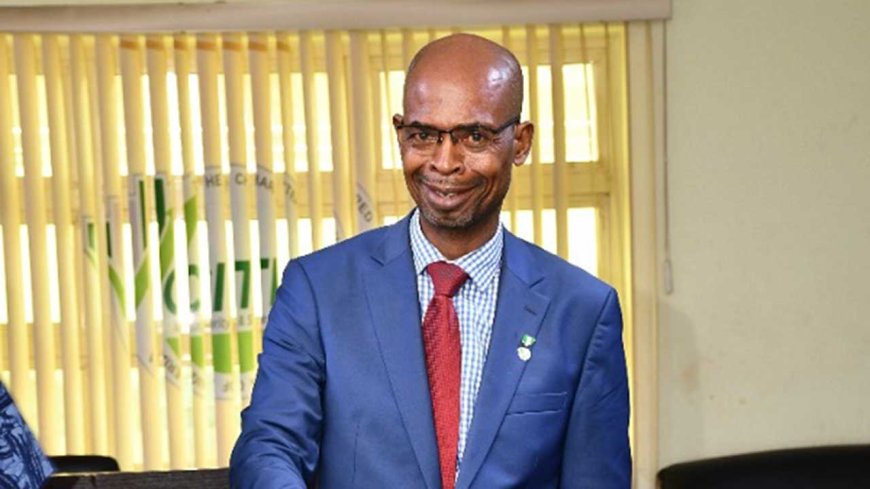
The Chartered Institute of Taxation of Nigeria has said the ongoing tax reforms in the country have increased demand for competent and ethical professionals, warning that practitioners must meet stricter standards under the new regime.
Speaking in Abuja on Thursday at the institute’s 54th induction ceremony, the President and Chairman of Council, Innocent Ohagwa, said the evolving tax landscape places greater responsibility on professionals to guide individuals and businesses through complex changes.
“There is, perhaps, no better time to be a tax professional than now.
“Across the country, individuals, businesses and institutions are seeking guidance. They are seeking clarity in the midst of change,” Ohagwa said.
He added that the institute had raised its standards on competence and ethics, stressing that “technical competence is now non-negotiable for recertification” while ethical conduct has become the bedrock of trust.
Ohagwa said the enactment of new tax laws marked a turning point for the profession, noting that provisions in the Nigeria Tax Administration Act, 2025, formally recognise certified tax agents and reinforce the role of professional bodies such as CITN in regulating practice.
He urged members to support the reforms, warning that professionalism and integrity would determine public trust in the system
We must all support these reforms, not just in words, but in practice. Guide your clients and employers with great competence and integrity,” he said.
In his welcome address, the Chairman of the Membership and Professional Conduct Committee, Yemi Sanni, said the induction comes at a critical period when Nigeria’s tax system is undergoing what he described as “the most far-reaching transformation in its modern history.”
According to him, reforms introduced from January 2026, including a new tax administration framework and harmonisation of tax laws, are already reshaping tax practice in the country.
He noted that the reforms would require active participation from professionals to succeed.
“The reforms, desirable as they are, will not implement themselves. All stakeholders, and tax professionals in particular, have a critical role to play,” he said, adding that practitioners would be central to improving revenue mobilisation, protecting businesses and strengthening the fiscal system.
Sanni also emphasised the importance of ethics and continuous learning, warning that the profession demands “competence, discipline, and a high level of ethical conduct” in a rapidly evolving environment.
Also speaking, the Registrar and Chief Executive, Afolake Oso, said the induction marked the formal entry of qualified professionals into a regulated system designed to uphold standards and professionalism in tax practice.
She explained that the institute, established in 1982 and chartered in 1992, is statutorily empowered to regulate the tax profession and set standards for practitioners in Nigeria.
“The institute is statutorily empowered to regulate and control the taxation profession in all its ramifications,” she said.
Oso highlighted requirements for members, including mandatory participation in training programmes, adherence to professional guidelines, and compliance with ethical standards.
She warned that failure to meet obligations such as subscription payments could attract sanctions, including delisting from the register of members.
She added that the institute has disciplinary mechanisms to address misconduct, including an investigation panel and tribunal to sanction erring members.
The induction ceremony formally admitted new members as associates of the institute, with about 1,435 new members inducted.
In June 2025, President Bola Tinubu signed four tax reform bills into law, including the Nigeria Tax Act and related statutes aimed at overhauling decades-old tax laws and modernising the country’s tax system.