Alaafin says insecurity requires innovative solutions
 admin
admin
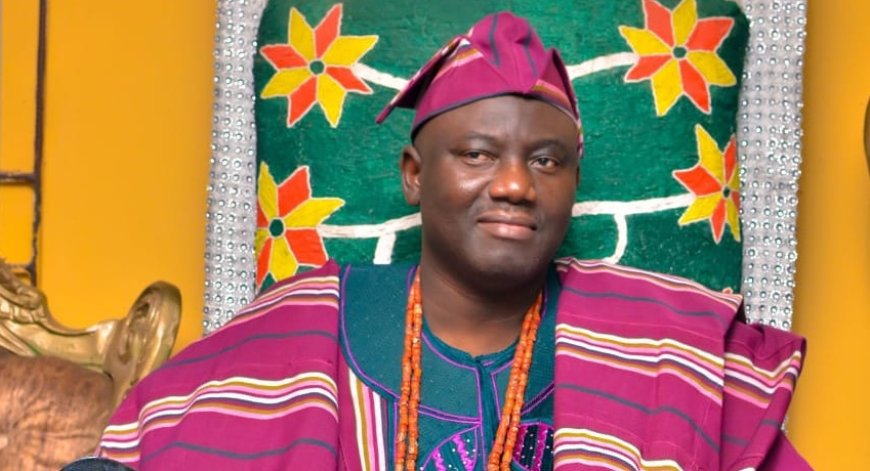
The Alaafin of Oyo, Oba Akeem Owoade, on Thursday said the diversity of Nigeria’s security threats requires innovative solutions tailored to specific contexts.
He said this would involve understanding the local dynamics of each threat and integrating them into a multidimensional national security strategy.
Owoade gave the advice while receiving leaders and participants of Executive Intelligence Management Course 19 from the National Institute for Security Studies, Abuja, who paid him a courtesy visit at his palace in Oyo town.
The monarch, in a statement released by his Director of Media and Publicity, Bode Durojaiye, in Ibadan, Oyo State, said Nigeria faces an array of security challenges beyond Boko Haram, adding that distinguishing these threats and understanding their socio-geographic dimensions is essential for designing appropriate responses
The paramount ruler noted that the domestic nature of ethnic militias highlights the importance of an integrated security approach that includes improved access to government services, social development, and job creation.
“Integrated security also entails widening access to justice. Accessible and trusted justice mechanisms can serve as a vehicle for conflict mitigation as well as defusing tensions between communities or with government,” he said.
He added that court rulings must be respected and enforced by security actors, noting that disregard for judicial decisions by some security agencies has in some cases worsened tensions and undermined the rule of law.
Another recurring challenge observed across multiple security contexts is the need to sustain a security presence in outlying areas.
“Our security forces have repeatedly been able to clear militant groups from territory they held—be it Boko Haram in the North-East, criminal groups in the North-West, or pirates and armed gangs in the South-West and South-South.
“However, the inability to sustain a security presence creates a vacuum that allows these groups to regroup and resume their activities. Communities caught in these shifting frontlines are left vulnerable. For Nigeria to turn the corner, government and security forces must sustain an accountable presence in these contested areas,” he said.
He stressed that Nigeria’s challenges are largely domestic and require active citizen engagement, adding that cooperation from citizens remains critical to any successful security response.
The Alaafin noted that ethnic militias pose a serious threat to democracy by fostering insecurity, undermining state authority, and destabilising political processes through violence.
He added that such groups are a danger to any nation as they weaken state sovereignty, erode national unity, and damage social, economic, and political stability.
“They often emerge from institutional failure and grievances of marginalised groups, but their operations frequently evolve into violent criminality such as kidnappings, killings, and destruction of infrastructure,” he said.
Earlier, the leader of the delegation, Halima Ibrahim, said they were at the palace as part of their intelligence-gathering course to draw from the Alaafin’s experience on ethnic militias, their implications, and possible solutions for national development.