N’West decline tied to skills gap, industry collapse — Govs, ex-minister
 admin
admin

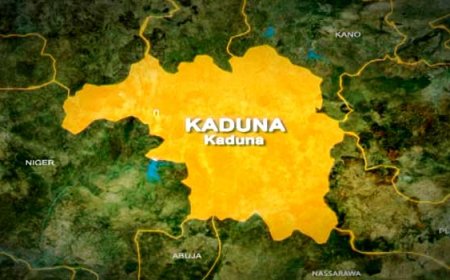
The governors of Kaduna and Kano states, Uba Sani and Abba Yusuf, alongside a former Minister of Communications, Prof. Isa Ali Pantami, have attributed worsening socio-economic challenges in the North-West to a widening skills gap and the collapse of industries that once sustained the region’s economy.
They spoke on Saturday at the maiden North-West Stakeholders Development Summit, organised by the Joint Senate and House of Representatives Committees on the North-West Development Commission at the Umaru Musa Yar’Adua Conference Centre, Kaduna.
The leaders agreed that insecurity, poverty, youth unemployment and the rising number of out-of-school children in the region are symptoms of deeper structural problems linked to weak education outcomes and the disappearance of industrial capacity.
Delivering the keynote address on behalf of Governor Sani, the Deputy Governor of Kaduna State, Dr Hadiza Balarabe, said the challenges facing the North-West had outgrown the capacity of individual states to manage, stressing the need for coordinated regional action.
She said the establishment of the North-West Development Commission by President Bola Tinubu was a deliberate effort to tackle long-standing regional disparities through an institution with a clear developmental mandate.
According to Governor Sani, the commission must move beyond bureaucracy and become “a catalyst that aligns policies, mobilises investment and ensures that development efforts across states reinforce, rather than duplicate, one another.”
He noted that with a population of over 50 million people, largely made up of young persons, the North-West stood at a crossroads.
This youth bulge can either become a demographic dividend or a destabilising burden, depending on how we invest in education, skills and jobs,” he said.
Sani warned against repetitive policy discussions without tangible outcomes, adding:
“Our people are not short of reports; they are short of results. This summit must produce actionable roadmaps with measurable outcomes.”
Governor Yusuf of Kano State, who was represented by the Secretary to the State Government, Alhaji Umar Ibrahim, described the region’s situation as being driven by “twin and intertwined challenges” of insecurity and systemic decay in the education sector.
He lamented that banditry, kidnappings and cattle rustling had displaced thousands of residents, destroyed farmlands and disrupted markets, thereby deepening poverty across the sub-region.
Yusuf said the public education system had been overwhelmed by overcrowded classrooms, dilapidated infrastructure, shortages of qualified teachers and a lack of basic learning materials.
“These conditions have crippled our ability to turn young people into productive human capital,” he said.
The Kano governor proposed the creation of a sub-regional education transformation body under the NWDC to coordinate reforms, innovation and improved service delivery across North-West states.
He also called for a sub-regional security collaboration framework to strengthen cross-border intelligence sharing and support the rehabilitation of displaced persons and affected communities.
In his presentation, Prof. Pantami traced the region’s current decline to the collapse of industries that thrived in cities such as Kaduna and Kano in the 1970s and 1980s, noting that the North had shifted from being a production hub to a largely consumer region.
“This transition is dangerous for our future if it is not urgently reversed,” Pantami warned, adding that the growing skills gap was driven by poor curriculum alignment and the neglect of technical and vocational education.
He advocated the adoption of a dual education system that combines classroom instruction with hands-on vocational training, similar to models used in Germany and Switzerland.
Pantami also expressed concern over the out-of-school children crisis, noting that a significant proportion of affected children were in Northern Nigeria — a trend he said posed serious long-term risks to national stability and competitiveness.
Culled from punch