Nigeria moves to implement agreements with Turkey
 admin
admin
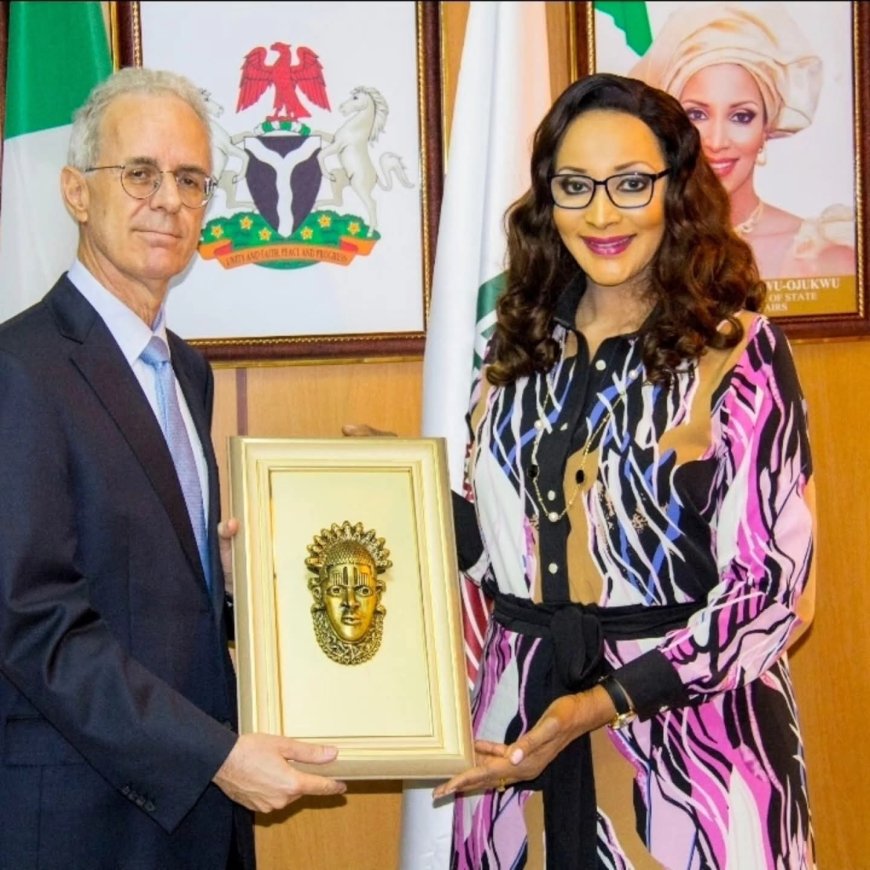
The Minister of State for Foreign Affairs, Ambassador Bianca Odumegwu-Ojukwu, has reiterated Nigeria’s commitment to operationalising its cooperation agreements and Memoranda of Understanding with the Republic of Turkey.
She made this known when the Turkish Ambassador to Nigeria, Mehmet Poroy, paid her a courtesy visit at her office in Abuja.
In a statement issued on Thursday and signed by the Special Assistant on Communication and New Media to the minister, Magnus Eze, it was recalled that at the invitation of Turkish President Recep Erdoğan, President Bola Tinubu undertook an official visit to Ankara on January 27, 2026, to strengthen bilateral relations.
The statement noted that the Nigerian delegation, which included no fewer than six ministers and the National Security Adviser, witnessed the signing of several key bilateral agreements between both countries.
These include an agreement on cooperation in the field of education; a Memorandum of Understanding between the Foreign Service Academy of Nigeria and the Diplomacy Academy of Turkey’s Ministry of Foreign Affairs; a Joint Declaration on the establishment of a Joint Economic and Trade Committee; and a protocol on military cooperation.
Other agreements cover cooperation in halal quality infrastructure, media and communications, as well as an MoU aimed at enhancing social services for women, children, persons with disabilities, and older persons.
Odumegwu-Ojukwu told the envoy that President Tinubu had emphasised the need to maximise the outcomes of the visit by directing Ministries, Departments, and Agencies to submit implementation roadmaps for the agreements signed in Ankara.
She added that the President also expressed optimism that the upcoming political consultations between both countries in Abuja later this year would produce positive outcomes.
The minister stressed that MoUs must go beyond documentation, noting that their true value lies in effective implementation for the benefit of citizens.
“Bilateral relations between Nigeria and Türkiye have blossomed over the years in all ramifications, and political relations between both countries remain cordial.
“Nigeria and Türkiye hold similar views on strategies to address global issues, including terrorism, climate change, human migration, promotion of international peace and security, as well as the need for reforms in global governance systems to ensure inclusiveness,” she said.
She further noted that economic relations between Nigeria and Türkiye were progressing steadily, with trade volume approaching $2 billion, including estimates from the informal sector.
According to her, the January 2026 trade forum in Ankara aligned with the Federal Government’s Renewed Hope Agenda by translating diplomatic engagements into practical steps towards achieving a $5 billion bilateral trade target.
A key outcome of the forum was the activation of the Joint Economic and Trade Committee, designed to provide a structured platform for addressing trade barriers and strengthening private sector participation
The forum also prioritised the modernisation of Nigeria’s energy and agricultural sectors through Turkish technical expertise, particularly by leveraging halal quality standards to expand access to European and Middle Eastern markets.
In his remarks, Ambassador Poroy highlighted ongoing defence cooperation between both countries and underscored the importance of holding counter-terrorism consultations in Abuja.
He expressed optimism that the Joint Economic and Trade Council would further strengthen economic ties, urging both countries to maximise the platform to achieve the $5 billion trade target.