
Lawyers warn against unregulated AI usage
 admin
admin
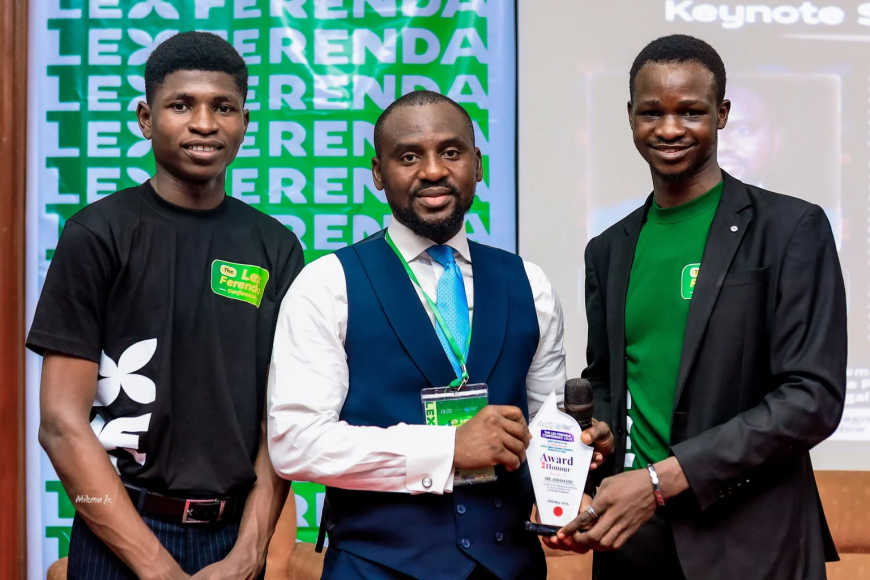
Legal practitioners, including Senior Advocate of Nigeria, Oyetola Atoyebi, have warned against the unregulated use of Artificial Intelligence in legal practice, citing concerns over deepfakes, plagiarism, misinformation and ethical breaches.
The legal experts spoke at the Lex Ferenda Conference 2026 held at the University of Lagos, Akoka, on Wednesday.
The conference, themed “The Future of Legal Scholarship in the Digital Age,” was jointly organised by the Lawrit Journal of Law and the Justice Oputa Student Chambers.
The event attracted legal practitioners, academics, policy experts, students and other stakeholders within the legal profession.
Delivering the keynote address, Atoyebi, who was represented by a legal practitioner, Joseph Adewumi, said while AI had become unavoidable in modern legal practice, there was an urgent need for caution and regulation.
He stated that AI tools could improve legal research and service delivery if properly applied, adding that existing laws already provide safeguards for digital practices.
“The theme is very instructive. In the legal profession, there are still some core traditional things that cannot change, but technology has helped us to enhance and evolve in our application of research to client cases.
We have no choice, there is no way we won’t be using AI tools, but we have to be cautious. The truth is that we cannot do without them but there are always safeguards. That is why we are having this legislation to caution practitioners while minding issues such as deepfakes, plagiarism and the likes,” he added.
Also speaking, Guest Speaker and Partner at Banwo & Ighodalo, Olumide Osundolire, who was represented by Mubarak Dosunmu, said technology and AI had significantly transformed legal scholarship and access to global opportunities.
According to him, legal scholarship was previously limited by geography and access to physical materials, but digital tools have broken such barriers.
Osundolire added that AI had drastically reduced the time required for legal tasks and research.
“You in UNILAG today can be writing for Oxford, Harvard and can be reviewing for the University of Berkeley because you are no longer in a stratified position. Your brilliance is no longer limited to where your physical legs can take you.
“The impact that AI has had on legal practice and scholarship cannot be quantified. There are so many things that would have taken you a month to do that with the right AI tool will take you less than a day.”
A Senior Associate at Babalakin & Co, Daniel Igiekhumhe, stressed the need for proper regulation to prevent the misconception that AI could completely replace lawyers.
“We have seen in the last two years that there has been more overlap between artificial intelligence and legal practice. While this is relevant, even more relevant is having regulation and control around some of these concerns so that people don’t assume that because AI can do the job of a lawyer, then AI is a lawyer.”
Similarly, Partner and Co-Founder of Abe & Asote Law Firm, Joshua Abe, described AI as useful but unreliable when used without human verification.
He maintained that AI could not legally replace lawyers under the country’s current legal framework.
“I think it is very risky for us to say AI is a problem solver because a lot of people have shared their experiences about how inaccurate some of the information can be sometimes. It is useful, but we need to use it with caution.
“Section 4 of the Legal Practitioners Act says only people who have been called to Bar and licensed to practise law can provide legal services. So, both from a technical and statutory angle, AI cannot take the job of a lawyer unless the laws are amended,” he added.
Speaking on the objective of the conference, Founder of the Lawrit Journal of Law, Joel Oloye, said the initiative was created to bridge the gap between legal theories and practical realities in the digital age.
“With the adoption of AI over the past few years, we have seen reports about AI cases in court being rejected, cases being formulated by AI tools, and judges talking about briefs that are poorly written because they were generated with AI.”
According to him, discussions around AI regulation had become increasingly necessary following incidents involving AI-generated court materials and manipulated digital evidence.
Also speaking, Chairperson of the Lawrit Journal of Law, Adeyanju Ayomikun, said AI and humans would continue to coexist in the legal profession.
She said, “AI helps us to work efficiently but it will not represent us in court. We are too African for that.”
The event featured panel sessions, networking engagements and the launch of a book titled Mastering Legal Research and Writing by the Lawrit Journal of Law.