Lawmaker cautions Soludo over sit-at-home policy in Anambra
 admin
admin
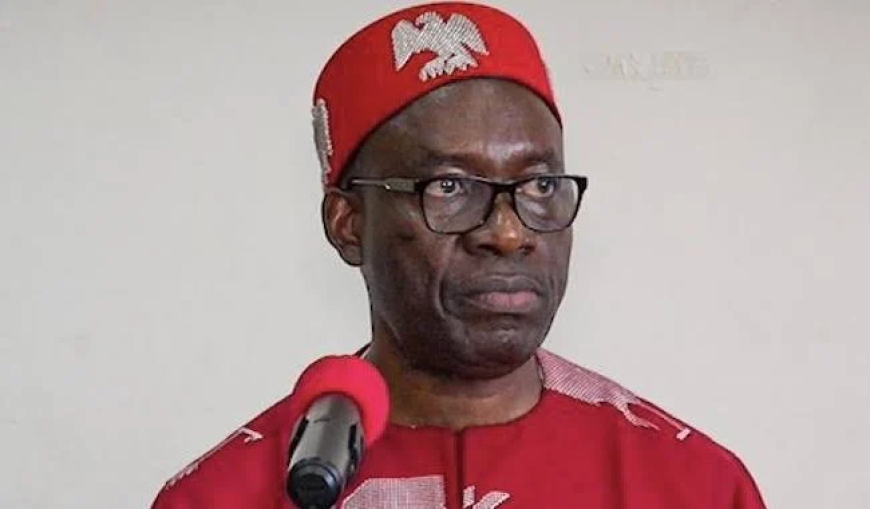
The Chairman of the House of Representatives Committee on Monitoring and Evaluation, Mr Obi Aguocha, has cautioned the Governor of Anambra State, Prof Chukwuma Soludo, over moves to halt the Monday sit-at-home order in the state, warning that the approach could escalate insecurity across the South-East.
Aguocha, who represents Ikwuano/Umuahia North/Umuahia South Federal Constituency of Abia State, said efforts by him and other stakeholders to stabilise the region were gradually yielding results before what he described as the recent intervention by Gov Soludo.
He also warned that the continued detention of the leader of the Indigenous People of Biafra, Nnamdi Kanu, by the Federal Government would continue to fuel agitation and violence in the South-East.
In a statement issued on Wednesday in Abuja, the lawmaker said Gov Soludo’s actions had unsettled a fragile peace that was slowly returning to the region.
Gov Soludo, unfortunately, has unleashed terror on an army of silent agitators who, for so long, had helped to abate the significance of the Monday sit-at-home rituals,” Aguocha said.
“Over the last three years, many markets, plazas and shopping centres across the South-East have gradually returned to normalcy, operating freely and unencumbered. I have worked tirelessly in this direction, and peace was steadily returning to our rural and commercial trading centres.”
He argued that while the governor’s intention to end the sit-at-home might be well-meaning, the method adopted was counterproductive
The governor’s effort has been executed in the most unconstructive and unacceptable manner. These misguided ordinances and actions have reignited embers of fear, hardened resistance and resurrected old resentments which, if left unchecked, could plunge the region into renewed violence, serious crimes and widespread criminality,” he said.
Aguocha maintained that a state government has no legal authority to compel private business owners to open or close their shops.
“Gov Soludo cannot force, punish or compel private business owners to close or open their shops, or to trade or refrain from trading,” he said.
He questioned whether similar punitive measures would be applied to those who close their businesses early on Wednesdays to attend midweek religious services.
“Such decisions fall squarely within the ambit of their fundamental rights and are not governed by any state, labour or market-union relationship,” he added.
On the broader security crisis, the lawmaker said the failure of the Federal Government to address core grievances in the region remained a major driver of unrest.
“Until the Nigerian state genuinely and sincerely addresses the unjust detention of Mazi Nnamdi Kanu, the bias in the administration of criminal justice, the marginalisation and entrenched hostility against the Igbo people, and the root causes of youth agitation, we must brace ourselves for a vicious cycle of resentment,” he warned
Aguocha also cautioned against attempts to coerce political support from the region, saying such tactics would fail.
“If nothing urgent is done, no one should expect votes from the region on the basis of being coerced, manipulated or compelled. Our votes will count, and we will defend them, even at the cost of our lives,” he said.
He stated that as a member of the House of Representatives, he had a duty to pursue the best path towards freedom and justice, pledging to carry out that responsibility with resolve and wisdom, guided by the hopes and prayers of his constituents.
The Monday sit-at-home order in the South-East began in 2021 following the arrest and extradition of IPOB leader, Nnamdi Kanu. Initially observed as a protest demanding his release, the directive gradually became enforced through fear, threats and violent attacks by armed groups, leading to widespread closure of businesses, schools and markets every Monday.
Although IPOB later announced the suspension of the sit-at-home order, compliance continued in many areas due to insecurity and lingering fear. Successive state governments have since struggled to restore normal economic activities, with enforcement measures often triggering fresh tension and resistance among residents.
Culled from punch