India: Peter Obi raises alarm over Nigeria’s economic decline
 admin
admin
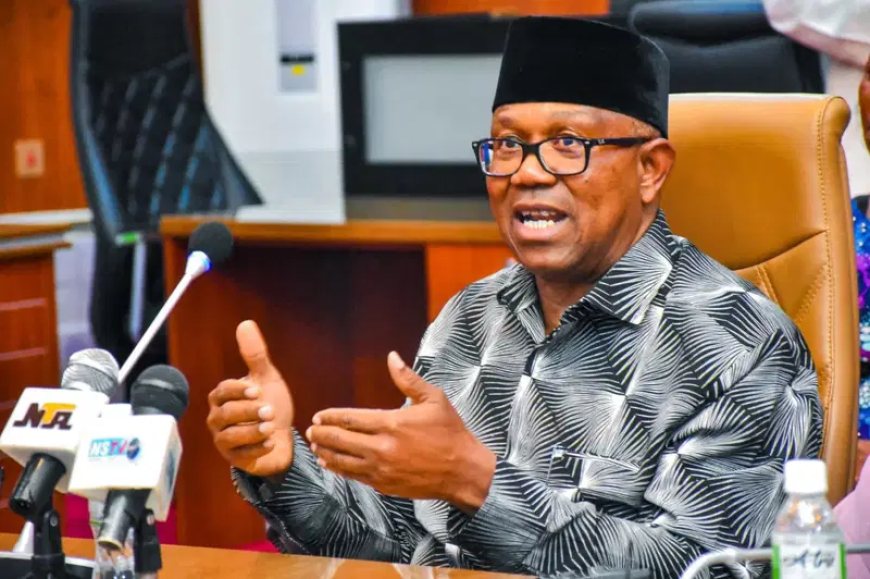
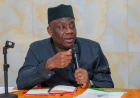
Former Labour Party presidential candidate, Mr Peter Obi, has expressed concern over Nigeria’s deteriorating economic situation, citing India’s recent emergence as the world’s fourth-largest economy as a stark contrast to Nigeria’s declining fortunes.
Reacting to reports that India has overtaken Japan in nominal Gross Domestic Product (GDP), Obi said the development highlights Nigeria’s failure to effectively harness its vast resources for sustainable growth. According to 2025 estimates by the International Monetary Fund (IMF), India’s nominal GDP is projected at about $4.187 trillion, narrowly ahead of Japan’s $4.186 trillion.
Obi noted that India is now poised to surpass Germany, whose economy is valued at approximately $4.74 trillion, to become the world’s third-largest economy.
Describing India’s economic rise as remarkable, Obi said the milestone is particularly instructive when viewed against the historical economic trajectories of both countries.
Quoting World Bank data, Obi said Nigeria once held a clear economic advantage over India. “At the end of 2007, during the administration of former President Olusegun Obasanjo, Nigeria’s nominal GDP per capita stood at about $1,816, significantly higher than India’s $1,022,” he said.
He added that by 2015, at the close of the Yar’Adua/Jonathan administration, Nigeria still maintained its lead, with GDP per capita of about $2,586 compared to India’s $1,584.
However, Obi said IMF World Economic Outlook projections for 2025 reveal a dramatic reversal. “India’s nominal GDP per capita is expected to rise to about $2,878, while Nigeria’s is projected to decline sharply to around $807,” he stated.
He described the figures as deeply troubling, especially in view of what he said were substantial subsidy savings, significant revenue growth, and unprecedented levels of borrowing by Nigeria in recent years.
According to Obi, Nigeria’s combined revenue between 2023 and 2025 is estimated at about ₦200 trillion, or roughly $135 billion, yet critical sectors such as healthcare, education, and poverty alleviation have recorded no meaningful improvement.
He lamented that poverty and insecurity have worsened, public services are collapsing, and businesses—particularly small and medium-scale enterprises—are shutting down daily due to high operating costs and lack of support.
Obi also decried erratic and expensive electricity supply, as well as rising costs of rent, transportation, and food, which he said have increasingly placed basic living beyond the reach of ordinary Nigerians.
The former Anambra State governor renewed his call for national unity and a new leadership consensus anchored on competence, compassion, and character. He stressed the need for a government that prioritises citizens’ welfare, invests in healthcare, education, infrastructure, agriculture, and technology, and reduces waste and the cost of governance.
He further emphasised transparency and accountability, insisting that Nigerians must be able to track national progress and hold public officials responsible.
Such an approach, Obi argued, would empower citizens economically, create jobs, support businesses, strengthen security, ensure energy and food security, and restore confidence in public institutions.
“Only through collective action, transparent governance, and visionary leadership can Nigeria close the widening gap with countries like India and reclaim its economic potential,” Obi said.
He warned that other nations are already moving ahead, stressing that the time for Nigeria to act is now.
culled from vanguard