In Iyabo Obasanjo, Ogun may find its best bet
 admin
admin
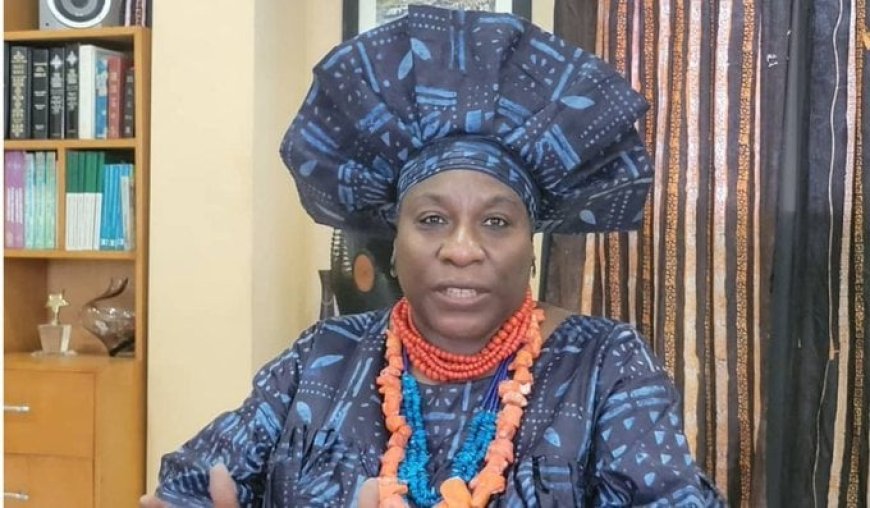
Public office reveals its true meaning in outcomes. It is seen in what was done and who was reached. That is where any serious conversation about Professor Iyabo Obasanjo’s suitability for higher office must begin.
There is a Yoruba saying that speaks directly to this moment. It holds that the truest measure of a person is how well they handle the responsibility that is primarily theirs (Idi ise eni laa ti mo eni ni ole). It is a simple idea with a firm logic. If someone has performed with clarity and impact in the role assigned to them, then there is a reasonable basis to expect even more when entrusted with greater responsibility.
It is along this line that any fair assessment of Professor Obasanjo’s readiness for executive office must begin with her record as Ogun State Commissioner for Health and later as Chairman of the Senate Committee on Health. These were roles with clear mandates and real consequences for failure or success.
As Commissioner for Health, her work was anchored in a deliberate effort to take healthcare closer to the people, particularly those in rural communities who had long been excluded from access to basic services. It was within this context that the Ogun State Rural Medical Scheme (OGRUMED) emerged, not as a policy on paper, but as a direct response to a visible problem.
For many, it meant receiving surgery or treatment in their own community for the first time, without the long and often dangerous journey to urban hospitals.
At a time when a large proportion of the state’s population lived in rural areas with limited access to care, the scheme took specialist medical services directly to them. The impact was immediate and tangible.
In Ogun Waterside Local Government, the programme was flagged off at Ibiade General Hospital, where a facility that had long been neglected was revived ahead of the intervention. Patients who would ordinarily have travelled long distances for treatment were attended to within their communities. Hundreds underwent surgical procedures within days, and thousands received medical consultations.
The same pattern played out in Ayetoro in Yewa North Local Government, where large numbers of residents turned up for treatment once confidence in the system was restored. In Odeda Local Government, the outreach recorded hundreds of surgeries and thousands of consultations within a short period. Similar interventions extended to other locations across the state, gradually building a network of access where there had been neglect.
Across these outings, the numbers tell only part of the story. Over 5,000 surgical procedures were carried out without a single recorded death. About 54,000 people received treatment for various ailments. Thousands benefited from dental care and vision support, including the distribution of reading glasses. Behind those figures were individuals who returned to their farms, their trades and their families with renewed health.
What made the initiative stand out was not only the scale, but the thinking behind it. It recognised that the problem was not simply the absence of hospitals, but the distance between people and care. By rotating medical teams across local governments, the scheme reduced the need for risky and costly journeys to urban centres. It also restored life to dormant health facilities and rebuilt public trust in the system.
Her tenure also recorded broader institutional improvements within the health sector. General hospitals were rehabilitated and ambulance services strengthened to respond to emergencies more effectively. Efforts to control disease were intensified, leading to the elimination of Guinea worm and the containment of polio when it reappeared.
In the same period, all three schools of nursing in the state were renovated. This included the School of Nursing in Ilaro, which had previously lost accreditation due to the poor condition of its facilities. The upgrades restored standards, improved training conditions and ensured a steady pipeline of qualified health professionals for the state.
When she moved to the Senate, the nature of responsibility changed, but the focus on substance remained. As Chairman of the Senate Committee on Health, she worked within the constitutional role of lawmaking and oversight. The expectations were different, and so were the tools available.
work on the National Health Bill formed part of the early legislative foundation for what would later become Nigeria’s broader health reform framework. She guided committee deliberations, presented reports during plenary and helped manage the process of aligning positions between both chambers of the National Assembly.
She also sponsored and supported bills aimed at strengthening public health standards, regulating tobacco use, improving emergency medical access and reinforcing regulatory oversight in the pharmaceutical sector. These were policy efforts designed to build systems that would endure.
Even outside formal government structures, her engagement with society remained steady. Her decision to lecture at the University of Agriculture, Abeokuta, while serving as a senator reflected a personal commitment to education. She maintained that routine despite the demands of public office, travelling regularly to fulfil her teaching responsibilities.
Through her Iyanuwura Foundation, she has supported education and community welfare initiatives across different parts of the state. Many of these efforts were carried out without publicity, yet they reinforced a pattern of engagement that has been consistent over time.
There is also a practical dimension to her thinking about governance that has begun to draw attention. In addressing infrastructure challenges, particularly in fast-growing communities along the Lagos corridor, she has outlined an approach that links road construction with local participation and youth employment. The idea is straightforward and rooted in execution. It seeks to fix roads while creating opportunity for young people within those communities.
This aligns with a broader pattern in her public life. It is a preference for systems that work and interventions that last. In a political environment where performance is often judged by visible projects, not all of them enduring, her record presents a different argument. It suggests that lasting progress is built through policy and sustained attention to people, especially those who are easily overlooked.
No public record is without its limitations. She has acknowledged that there were constraints in the offices she held and that more could always be done. That acknowledgement reflects a level of awareness that strengthens rather than weakens her case.
That record naturally raises a simple question, what might be possible if that same approach is applied with full executive authority.
What remains central is that her primary responsibilities were handled with clarity and purpose. The health interventions reached those who needed them most. The legislative contributions focused on strengthening national systems. The personal initiatives reflected a consistent concern for people.
As the 2027 election cycle approaches, voters in Ogun State will weigh different options and competing narratives. The difference will lie in the ability to separate promise from proof.
In Professor Iyabo Obasanjo, there is a record that speaks through outcomes. It is not loud, but it is clear enough. For many across the state, that may well be the most compelling argument of all.
Ladigbolu is a Lagos-based journalist.