FG, GenCos disagree over electricity debt reconciliation
 admin
admin
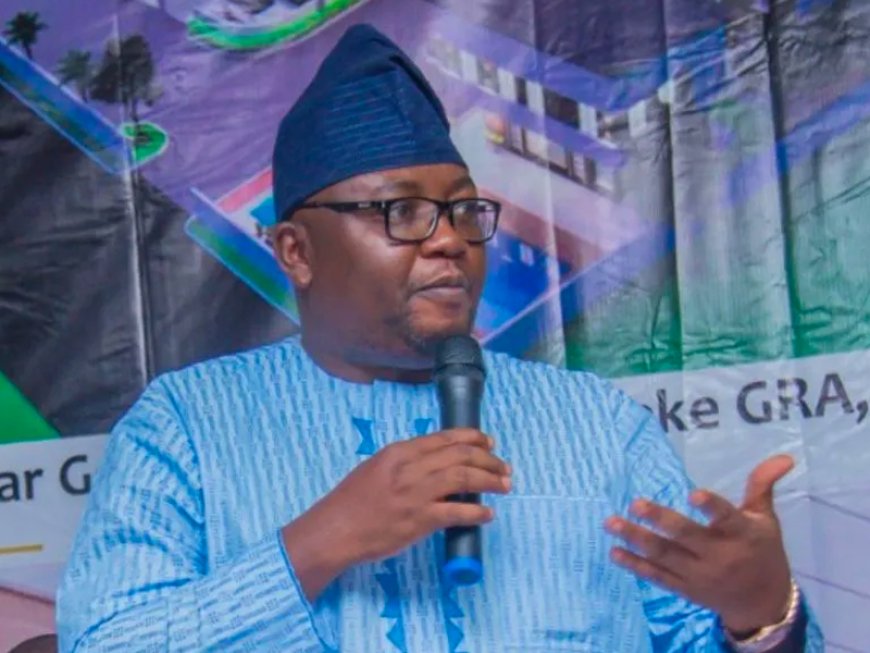
The Federal Government and power generation companies have disagreed over the reconciliation of debts in Nigeria’s electricity market, with both sides offering differing accounts of the actual liabilities owed to the GenCos.
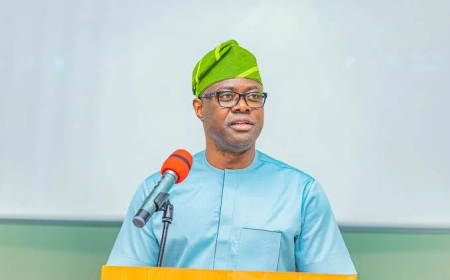
The Minister of Power, Adebayo Adelabu, said the actual debt owed to generation companies may be significantly lower than widely reported, as ongoing reconciliation efforts continue to clarify obligations within the sector. He said the government’s liabilities to generating companies could settle at about N4tn, rather than the N6.3tn figure often cited in industry discussions.
Adelabu made this known during a recent question-and-answer session at a press conference in Abuja, where he also apologised to Nigerians for the persistent power outages across the country.
“You asked how much we owe suppliers. I can tell you that the amount we owe GenCos is estimated and is still being reconciled,” the minister said. “When we said N4tn as at the end of 2024, it was audited and agreed at about N2.8tn because of the interest elements and the foreign exchange components embedded in it.
“A number of the GenCos have agreed, while some are still discussing back and forth. But now that we are talking about N6tn for the generating companies, by the time reconciliation is concluded, it will probably be around N4tn total.”
He further explained that a large portion of the obligations relates to gas supply, which underpins electricity generation in the country. “What I can tell you is that a proportion of this, which is not less than 60 per cent, is being owed to gas suppliers. So I hope that is clear,” Adelabu added.
However, power generation companies faulted the government’s position, insisting that the reconciliation process must involve all stakeholders and reflect agreed figures
Responding to the minister’s comments, the Executive Secretary of the Association of Power Generation Companies, Joy Ogaji, called for more clarity on how the figures were derived, while reaffirming the need for a comprehensive reconciliation involving all parties.
She insisted that the last reconciliation meeting between all parties was in March 2025. “We are talking about a bilateral agreement, which means reconciliation of figures should be done by all parties,” Ogaji said in a chat with our correspondent on Friday.
“We want the government to publish how they arrived at their figures and what components formed them. The last time all parties had a reconciliation meeting was in March 2025. So it is important to confirm when another reconciliation was done.”
She noted that discussions with generation companies indicated that no subsequent reconciliation had taken place after the March meeting, stressing that accurate figures could only emerge through a joint verification process. “I spoke with the GenCos, and they confirmed that after the March reconciliation, no other reconciliation has been done. So how did the government get its figures from?” she asked.
Ogaji also questioned the reliance on the Nigerian Bulk Electricity Trading Plc as a sole source of data. “How can NBET be the only source? Invoice settlement is done by market operations; NBET only pays. The true figures can only emerge after a proper reconciliation. What are we turning the sector into?” she asked.
She explained that GenCos’ claims are based on contractual agreements and include multiple cost components often overlooked in public discourse. According to her, the outstanding liabilities cover unpaid invoices for electricity generated since 2015, capacity payments, deemed capacity, foreign exchange differentials, and supplementary charges arising from frequent plant start-ups and shutdowns.
Other components include interest on outstanding payments pegged at NIBOR plus four per cent, Value Added Tax on gas supplied between 2013 and 2021, and losses incurred due to low plant utilisation caused by gas shortages and transmission constraints
The GenCos supply power via a PPA with all the terms as approved by GENCOS contract; the outstanding falls into different categories – unpaid invoices for power generated and consumed from 2015 till date – capacities made available and tested by NBET annually – deemed capacity – difference between declared and actual – forex differentials – supplementary charges associated with start-ups and shutdowns, which have moved from 20 per annum to over 365 times a year – interest on outstanding, NIBOR plus 4 – VAT on gas from 2013 till Sept 2021 when it was stopped.”
She further noted that generation companies also incur costs from providing ancillary services such as spinning reserve and black start capabilities, as well as operating in Free Governor Mode, conditions that impose additional wear on equipment without corresponding compensation.
“Quantification of losses from low plant utilisation and stranded capacity; because of problems with gas supply and transmission evacuation, the generating plant is being run significantly below its design utilisation.
“In turn, this incurs additional costs which are not covered by tariffs nor by the draft PPAs; quantification of tariff for ancillary services; the generating plant is being used to provide a range of ancillary services (spinning reserve, black start, etc.), which carry significant costs but for which no tariff exists nor provision in the market rules and draft PPAs; quantification of tariff for FGMO; the system operator has instructed each generator to run their plant in Free Governor Mode of Operation, which is outside the design parameters of the equipment and leads to excessive wear and maintenance which is presently not compensated.”
The disagreement comes amid broader efforts by the Federal Government to sanitise the electricity market and address longstanding liquidity challenges that have affected the sector.
It also follows an earlier report that President Bola Tinubu approved N2.8tn as the verified portion of legacy debts owed to generation companies, based on an audit of subsidy obligations accumulated since 2010.
A senior government official familiar with the development said the approved amount reflects what has been duly validated, noting that further discussions are ongoing to reconcile outstanding claims.
The audit has shown that N2.8tn is the verified liability, and that has been approved. The reconciliation process will continue to address other components of the claims,” the source said.
The disagreement signals a looming showdown between operators and the Federal Government over the audit and settlement of legacy debts and subsidy shortfalls in the power sector, but also presents an opportunity to establish clearer financial records, improve transparency, and restore investor confidence in Nigeria’s power sector.
While discrepancies in figures are not unusual in a transitioning market, sustained engagement between the government and operators will be critical to achieving long-term stability and improved electricity supply.
Despite ongoing reforms, the sector continues to grapple with legacy debts, tariff shortfalls, and market inefficiencies, issues that have limited investment and hindered stable power supply across the country.