FG begins documentation of traditional medicine practitioners
 admin
admin
The Nigerian Natural Medicine Development Agency says it has started creating a comprehensive national database of traditional medicine practitioners as part of efforts to standardise and strengthen the sector.
The Director-General of NNMDA, Prof. Martins Emeje, said this on Tuesday in an interview with the News Agency of Nigeria in Abuja.
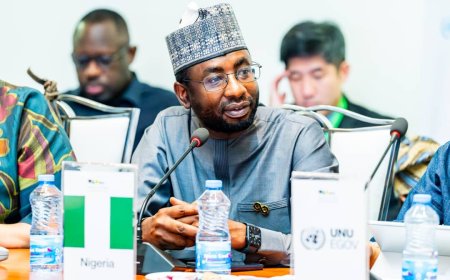
Emeje spoke following his appointment as Co-Chair of the World Health Organisation Strategic and Technical Advisory Group on Traditional, Complementary and Integrative Medicine (STAG-TM) in December 2025.
Speaking on how he intended to leverage the position to advance traditional medicine practice in Nigeria and Africa, Emeje said the agency had recognised the need to index traditional medicine practitioners in the country.
Emeje said that about 80 per cent of Nigerians, estimated at over 160 million people, relied on traditional medicine, particularly those in rural communities who lacked access to conventional healthcare.
According to him, the initiative would bring sanity to the ecosystem, enhance credibility and create more visibility for the country’s natural medicine in the global space.
Emeje said that, from its analysis, traditional medicine remained the most patronised form of healthcare in the country and globally, yet appeared controversial and poorly funded.
Traditional medicine ecosystem is in chaos because it lacks proper organisation.
“In my pharmacy profession, I have a number, and when you input that number on the website of the regulatory body, my name will come out, where I work and my current licence.
“Traditional medicine in Nigeria lacks that, and, for the first time in Nigeria, we have started solving that problem.
“Eight months ago, we started the digital database of traditional medical practitioners, their practices and their products.
“After registering you and documenting you based on our electronic system, we will now verify your place of practice, the kind of practice you render and the products that you have in those places,” Emeje said.
According to him, the agency would verify the records and then issue practitioners identification numbers, as it would have the full coordinates of their clinics.
He said the target was to capture practitioners in the 774 Local Government Areas of the country, adding that a pilot project had been created in Iseyin Local Government Area of Oyo State.
That which we have done for that particular local government is what we are cascading to all the local governments in Nigeria.
“By so doing, we will know the number of traditional medical practitioners in Nigeria, the services they provide and where they live and operate.
“Documentation is the first and most important element of standardisation,” he said.
The director-general said the pilot would be presented to the National Assembly as a proposal and implemented once funds were available.
Emeje said the initiative aligned with WHO’s current strategy to support member states in developing comprehensive databases of traditional medicine practitioners.
He added that Nigeria was already benefiting from the global agenda due to its active participation at the policy level.
In research, the NNMDA boss said that global funding for traditional medicine research remained below one per cent, despite the high level of usage worldwide.
Research funding in the area of traditional medicine is a shame; it is less than one per cent.
“We talk of humongous research funding in pharmaceuticals, yet less than one per cent goes to the most populous part of healthcare consumers.
“Traditional medicine consumers form the majority of healthcare users globally, yet research investment does not reflect this reality,” he said.
Emeje also identified education and standard-setting as critical pillars for advancing the sector.
He said that the NNMDA School of Traditional Medicine was working towards accreditation and quality assurance for training programmes for practitioners and interested persons.
According to him, the goal was not to replace indigenous knowledge, but to structure and preserve it through formal education, research and regulation.
“Traditional practitioners possess deep expertise. The role of the system is to recognise, document and strengthen their knowledge, not undermine it,” he said.
He noted that countries such as China and India had successfully integrated traditional medicine into their healthcare systems through structured education, research and policy support.
The director-general said Nigeria would leverage WHO’s renewed focus on traditional medicine to attract improved research funding, generate scientific evidence and validate the safety and efficacy of natural medicines.
Emeje said Nigeria was moving in the same direction by aligning with WHO’s strategic objectives for traditional medicine, which included evidence-based practice, strong regulatory frameworks, integration into healthcare systems and international collaboration.
He said his position at WHO would enable Nigeria and Africa to contribute meaningfully to global policy discussions, research collaborations and capacity development in traditional medicine.
(NAN)