FG, ASUU unveil agreement to end prolonged university disputes
 admin
admin
The Federal Government and the Academic Staff Union of Universities have unveiled a renegotiated agreement aimed at resolving long-standing disputes in Nigeria’s tertiary education sector.
The 2025 agreement is the culmination of a renegotiation process that began in 2017 to review the 2009 Federal Government–ASUU pact, which was due for revision in 2012. Several committees set up under past administrations, chaired by Wale Babalakin, Munzali Jibrin and Nimi Briggs, failed to deliver a final agreement.
The breakthrough came under the current administration, which inaugurated the Yayale Ahmed-led renegotiation committee in October 2024.
An agreement was reached about 14 months later, focusing on improved conditions of service, funding, university autonomy, academic freedom and broader reforms to reverse sectoral decay, curb brain drain and reposition universities for national development.
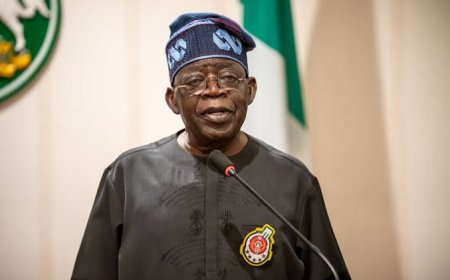
Speaking at the unveiling of the agreement in Abuja on Wednesday, the Minister of Education, Dr Tunji Alausa, said the deal marked a renewed commitment by the administration of President Bola Tinubu to uninterrupted academic calendars and improved welfare for university lecturers.
According to him, the agreement goes beyond a formal document and represents “renewed trust, restored confidence, and a decisive turning point in the history of Nigeria’s tertiary education system.”
Alausa credited President Tinubu with personally driving the process, noting that, “for the first time in the history of our country, a sitting President took full ownership of this long-standing challenge confronting our tertiary education system and accorded it the leadership attention it truly deserved
He said decades of unresolved remuneration issues and welfare gaps had led to recurring industrial actions that disrupted academic calendars and threatened students’ futures, but stressed that the current administration chose “dialogue over discord, reform over delay, and resolution over rhetoric.”
Outlining key provisions of the agreement, the minister announced that the remuneration package of academic staff in federal tertiary institutions would be reviewed with effect from January 1, 2026. He disclosed that the emoluments of university academics would be increased by 40 per cent to enhance morale, improve service delivery and curb brain drain.
Under the new structure, salaries will comprise the Consolidated University Academic Staff Salary and a Consolidated Academic Tools Allowance.
Alausa explained that the 40 per cent review would be represented by the academic tools allowance, which covers journal publications, conference participation, internet access, learned society membership and book allowances.
He also said nine earned academic allowances had been restructured to ensure transparency and fairness, adding that they would now be strictly tied to duties performed, including postgraduate supervision, fieldwork, clinical duties, examinations and leadership responsibilities.
A major highlight of the agreement is the introduction of a new Professorial Cadre Allowance for senior academics. “For the first time, the Federal Government has approved a new Professorial Cadre Allowance,” Alausa said, stressing that it applies strictly to full-time Professors and Readers.
According to him, Professors will receive ₦1.74m per annum, equivalent to ₦140,000 per month, while Readers will earn ₦840,000 per annum, or ₦70,000 per month. He described the intervention as “not cosmetic” but “structural, practical, and transformative.
With the total support, direction, and guidance of Mr President, we confronted what many had described as an intractable problem—and we have resolved it decisively, now and into the future,” the minister said.
He added that the agreement ushered in “a new era of stability, dignity, and excellence” for Nigerian universities, restoring confidence to lecturers and predictability to academic calendars.
The minister reaffirmed the government’s commitment to faithful implementation of the agreement under the Renewed Hope Agenda and thanked members of both the government and ASUU renegotiating teams for resolving what he described as “a two-decade-old quagmire.”
“History will remember today not merely as an unveiling ceremony, but as the day Nigeria chose dialogue, transparency, fiscal realism, and strong Presidential commitment as the pathway to resolving long-standing governance challenges and achieving sustained progress,” he said.
Details later…