ASUU NSUK threatens industrial action over unmet demands
 admin
admin
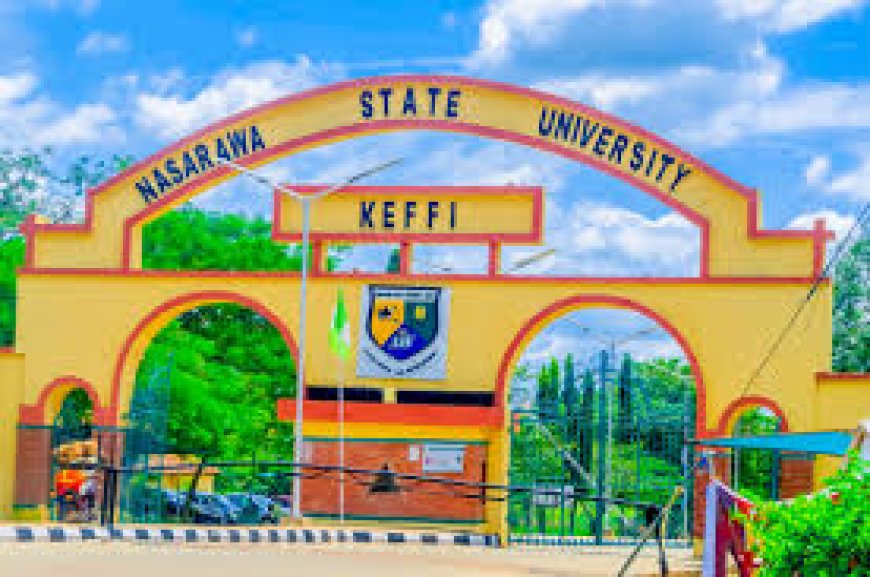
The Academic Staff Union of Universities, Nasarawa State University, Keffi branch, has issued a strong warning to the Nasarawa State Government over what it described as the continued neglect of critical issues affecting its members, cautioning that industrial harmony at the institution cannot be guaranteed if urgent steps are not taken.
Addressing journalists at a press conference on Thursday, the union said the briefing was convened to “draw urgent attention to the continued neglect of critical issues affecting our members and the university system.”
The Chairperson of ASUU NSUK branch, Abdulmumini Loko, stated that despite repeated engagements and appeals, the concerns raised by the union remain unresolved.
“Unless immediate steps are taken by the Nasarawa State Government to defray all outstanding arrears and address our demands, industrial harmony cannot be guaranteed,” Loko said.
The union outlined a series of demands, including the immediate implementation of a 40 per cent salary increment recently agreed between ASUU and the Federal Government, improved funding of the university, and the implementation of professorial allowances.
Loko also called for the payment of arrears of Earned Academic Allowance, outstanding salary increments of 25 per cent and 35 per cent, as well as arrears related to the ₦70,000 minimum wage and ₦35,000 wage award.
“We hereby call on the Nasarawa State Government to urgently address these issues to restore staff morale and ensure effective teaching, research, and infrastructural development,” he said.
Other demands include the domestication of the contributory pension scheme with immediate remittance of government contributions, implementation of the compulsory retirement age for professors, regular constitution of visitation panels, and the payment of full salaries as pensions to retired professors.
The ASUU chairperson warned that failure to meet these demands could have serious consequences for the university system.
“The continued delay in addressing these legitimate demands has serious consequences, including decline in the quality of education, increased brain drain among academic staff, disruption of academic activities, and erosion of staff welfare and morale,” Loko said.
While reaffirming the union’s commitment to dialogue, he stressed that patience among members was running out.
“ASUU NSUK remains committed to dialogue and constructive engagement. However, the patience of our members is not infinite. We therefore urge the Nasarawa State Government to act decisively and responsibly in resolving these issues without further delay,” he added.
Loko warned that the union would be left with no choice but to take lawful steps to protect its members if the situation persists.
“Failure to do so will leave the union with no option but to take all lawful steps necessary to protect the interests of its members and preserve the integrity of the university system,” he said.
Disputes between ASUU and government authorities, both federal and state, have been a recurring feature of Nigeria’s university system for decades, often centring on funding, staff welfare, and the implementation of agreements. The Academic Staff Union of Universities has led several nationwide strikes in recent years to press home similar demands, including improved remuneration, revitalisation funds for universities, and payment of earned allowances.
Although some agreements have been reached at the federal level, their implementation has remained uneven across state-owned universities such as Nasarawa State University, Keffi, where funding and salary structures are tied to state government policies.
Education stakeholders have consistently warned that prolonged disputes contribute to disruptions in academic calendars, with Nigerian public universities frequently experiencing shutdowns that delay graduations and affect students’ learning outcomes. Analysts also link the situation to the growing migration of skilled academics to better-funded institutions abroad, further weakening the country’s higher education system.
In Nasarawa State, concerns over funding and staff welfare have surfaced intermittently, with unions calling for stronger government commitment to sustaining quality education and institutional stability.