US judge blocks Trump govt from tying counterterrorism grants to election rules
 admin
admin
A US judge on Monday blocked the Trump administration from conditioning counterterrorism funds for local governments on changes to election administration.
The ruling was issued in a case brought by local governments challenging the Department of Homeland Security’s attempt to make election-related requirements a condition for receiving funds under the Federal Emergency Management Agency’s Homeland Security Grant Program.
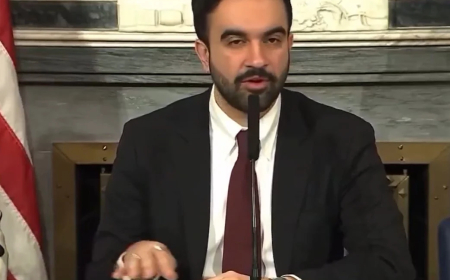
The case, Metropolitan Government of Nashville and Davidson County, Tennessee, et al. v. U.S. Department of Homeland Security, et al., is before the U.S. District Court for the District of Columbia and is being heard by Judge Amir H. Ali. Law360 reported that governments in Tennessee, Texas and Ohio had asked the court to rule in their favour, arguing that Congress had not conditioned the receipt of counterterrorism grants on how localities administer elections.
The Homeland Security Grant Program provides federal funding to state and local governments for preventing, protecting against and responding to terrorism and other security threats.
According to the complaint filed by the local governments, Congress created the programme “to help state and local governments prevent, protect against, and respond to terrorism.”
The complaint said the programme was funded according to a statutory formula based on each jurisdiction’s vulnerability to terrorist attacks.
“Congress did not create the HSGP to empower the federal government to control state and local election procedures,” the complaint said.
The dispute arose after FEMA attached five election-related conditions to fiscal year 2026 funding under the programme.
According to the complaint, the conditions covered voting equipment and the means by which voters cast their ballots, post-election audits, ballot reconciliation, voter-roll citizenship checks and election-worker citizenship checks.
Under the funding requirements, jurisdictions were required to submit plans to move away from electronic voting systems that use bar codes or QR codes to count votes and toward equipment that accepts hand-marked paper ballots.
They were also required to demonstrate compliance with a five per cent post-election manual audit, reconcile the number of voters who participated in federal elections with the number of ballots cast, and use the Department of Homeland Security’s Systematic Alien Verification for Entitlements, known as SAVE, to verify the citizenship of people in state voter-registration databases.
The requirements also called for citizenship verification of people working at polling places or operating election systems. The federal funding notice says election officials must use SAVE or another authorised government system for those checks.
The local governments said FEMA would withhold 20 per cent of each state’s Homeland Security Grant Program award until the election-related conditions were met.
“FEMA will now hold 20 percent of every state’s HSGP award hostage—more than $200 million nationwide—unless states agree to these and other election conditions,” the complaint said.
The plaintiffs argued that the federal government lacked authority to impose the conditions through the counterterrorism grant programme.
The complaint said, “FEMA has no authority to impose those conditions—not under its governing statute and not under the Constitution.”
It added: “Congress authorized FEMA to help jurisdictions protect critical infrastructure from terrorist and cyberattacks. It did not authorize FEMA to decide who may vote, how ballots must be counted, or how states maintain their voter rolls.”
The lawsuit was initially filed on Aug. 17 by Nashville, Tennessee; Harris County, Texas; El Paso County, Texas; and Columbus, Ohio. Dallas County and Travis County, Texas, later joined the case, according to Public Rights Project, which is involved in the litigation.
Law360 reported on Sept. 2 that the governments had asked the D.C. federal court for a ruling in their favour, arguing that Congress did not make the administration of local elections a condition for receiving counterterrorism grants.
The local governments’ challenge followed FEMA’s announcement that it would withhold 20 per cent of Homeland Security Grant Program funding unless recipients complied with the five election-related requirements.
The Texas Tribune reported in August that the requirements included a transition from voting machines that accept QR and bar codes to equipment that uses paper ballots, manual ballot audits and the use of the SAVE system for voter-registration checks.
The case is one of several legal disputes over the Trump administration’s efforts to impose election-related requirements through federal programmes. The Brennan Center for Justice said the lawsuit alleges that the conditions violate the separation of powers, federalism and the Constitution’s Spending Clause, as well as the Administrative Procedure Act.
The judge’s Monday ruling prevents the administration from conditioning the counterterrorism funding on the challenged election-administration changes while the litigation proceeds.