UN bombing: DSS witness admits absence of lawyers during suspect’s statements
 admin
admin
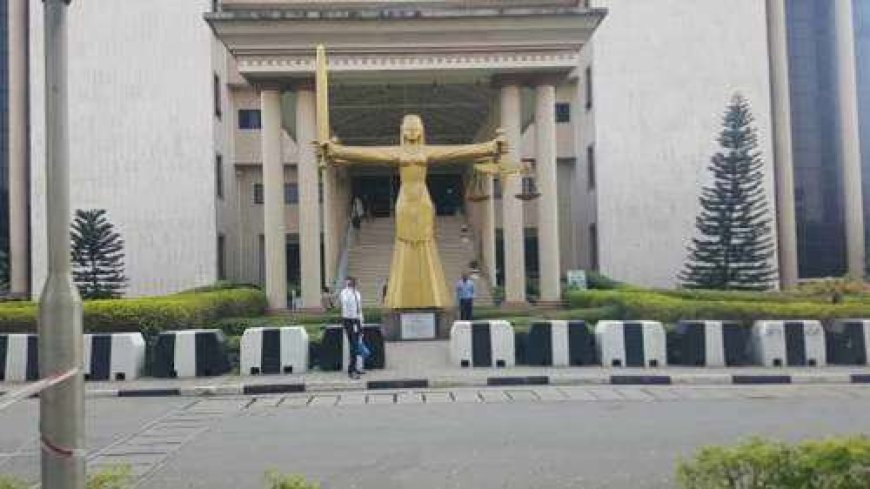
A witness of the Department of State Services on Thursday told the Federal High Court in Abuja that statements made by a key defendant in the alleged 2011 UN building bombing case were translated months after they were obtained and without the presence of legal representation.
The witness, identified as ABZ1A/ABZ1B, testified before Justice Emeka Nwite during a trial-within-trial to determine the admissibility of statements allegedly made by the defendants.
The case, marked FHC/ABJ/CR/36/2017, is between the Federal Republic of Nigeria and five defendants, including Khalid Al-Barnawi.
Under cross-examination by defence counsel, the DSS operative admitted that he did not translate the first defendant’s statements on the same dates they were made, noting that the process depended on directives from a superior officer.
Yes, my Lord. It depends on when the chief investigating officer directs me to do so because I was involved in so many assignments,” the witness said.
When pressed further, he acknowledged that he translated some of the statements in February 2017 but could not recall when the original statements were made, despite suggestions that there was a gap of several months.
The witness also conceded that no lawyer or relative of the first defendant was present when the statements were taken.
The first defendant had no lawyer in the interview room. There was also no relation of the first defendant,” he said, adding, however, that the sessions were audiovisually recorded.
He further admitted that he could not account for how the defendant was treated before being brought into the interview room, stating that such responsibility rested with suspect handlers.
“I do not know because the movement of suspects from the cell to the interview room is the function of suspect handlers,” he said.
On his role, the witness maintained that he was part of an interview team led by a superior officer and primarily handled translation of statements from Hausa to English.
However, under intense questioning, he admitted he could not recall key operational details, including the number of statements made by the first defendant or the composition of the interview team.
“I can’t recall the number, but I was part of it,” he said.
In relation to the second defendant, the witness also admitted he had no knowledge of events preceding the taking of the statement.
“I do not know because we only met in the interview room,” he said.
Further inconsistencies emerged during cross-examination regarding statements allegedly obtained from the third and fifth defendants.
While another prosecution witness had earlier claimed responsibility for obtaining the fifth defendant’s statement, the current witness insisted he merely recorded it as dictated.
“He was narrating it sentence by sentence to me in Hausa language, and I wrote it down… thereafter, he thumbprinted, and I countersigned,” he said.
The defence challenged the credibility of the testimony, suggesting the witness lacked firsthand knowledge of critical aspects of the investigation.
“I put it to you that you know nothing at all about this case and yet you have come to mislead the court,” counsel said.
But the witness disagreed, insisting he acted within his assigned role in the investigative process.
Justice Nwite subsequently adjourned the matter till April 20, 2026, for continuation of the trial-within-trial.