No state govt can survive without corps members — Minister
 admin
admin

The Minister for Youth Development, Ayodele Olawande, has said that no state government can survive without members of the National Youth Service Corps.
Olawande described the scheme as an important link in the drive for grassroots development across the country.
The minister made the statement at the Stakeholders’ Consultative Forum on the NYSC Reform, held in Abuja on Monday.
In his address, Olawande noted that the NYSC, being one of Nigeria’s oldest institutions at over 50 years, must move with the times, adding that the scheme must be reformed to meet the collective aspirations of the country.
The NYSC is a platform of unity, national building and national development. It is also an institution that the majority of us here today have benefited from, directly or indirectly, which is why we are all doing our best to make sure that it survives and nothing happens to it.
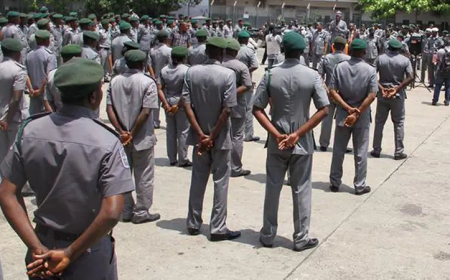
The National Youth Service Corps remains an important drive for grassroots development across Nigeria.
“The corps members continue to play a crucial role I can tell you for free, and I thank God that the Governors’ Forum is here, there is no government, state government that can survive without corps members; in education, in health, in agric, in sports, in whatever are and this is one of those things that I want the reform to look into very well.
We must recognise that this scheme needs to move with the times, and also accept that the time is moving beyond the scheme, and meet all the challenges, all the changes needed for our society and also global reality,” he said.
The minister also called for the review of the NYSC posting system “to connect members with their skills area,” noting that corps members often did not get the satisfaction from their mandatory service year.
“Let me also say that there is still a lot of work to do, because we still find corps members in places that are not related to their academic and professional training. And because of this, we usually miss the opportunity to place many of our skilled youths where they belong in their national service.
The corps members also do not get the satisfaction they expected during their service because of the gap that we have. We must review the current posting system to connect corps members with their skills area,” Olawande stated.
Meanwhile, the Director General of the NYSC, Brigadier-General Olakunle Nafiu, while addressing concerns and debates around the scheme’s continued relevance, disclosed that the scheme currently mobilises 400,000 graduates annually, with a projection of over 600,000 graduates from 419 institutions from 2026.
“We believe that the scheme’s importance in today’s Nigerian socio-economic environment is even greater than when it was first introduced 52 years ago. In 1973, the first set of corps members was about 2,364.
“Today, 52 years later, we are mobilising 400,000 annually. And from our projection, after discussing with the 419 Corps Producing Institutions we have internally, in-country, we expect that 650,000 locally trained graduates will come knocking to serve their fatherland next year. So, you can see that the scheme has continued to grow in scope and in its activities over the years,” he stated.
The DG also disclosed that the scheme helped some state governments save over N30bn to N40bn annually with the deployment of corps members, noting that the NYSC also deployed over 400 doctors to the FCT, and obliged requests from state governments having a crisis in the education sector.
“The Honourable Minister mentioned earlier that several states will not survive. As a matter of fact, no state can survive today without the NYSC. We have saved some states up to the tune of N30bn, N40bn annually when we deploy corps members.
“FCT, for instance, gets about 400 doctors from the NYSC annually. There is no way the Honourable Minister will put out adverts and get 400 doctors recruited in one year. The same goes for Lagos State and other states of the federation.
“Some states approach us and say they have a crisis in the education sector. How do we come in? They want a certain percentage of corps members deployed to remedy the situation, and we oblige. Results after a couple of years are there for anyone to verify when results start coming out. So, the scheme at the sub-national level is doing a lot to sustain the socio-economic status of states across the federation.
In her address, the Special Adviser to the President, Policy and Coordination Unit, Hadiza Bala Usman, called for collaborative participation to ensure the success of the proposed reforms, stating that “No reform of this scale can succeed without collaborative participation.”
culled from punch