2027: Muslim groups seek Ogun gov slot
 admin
admin
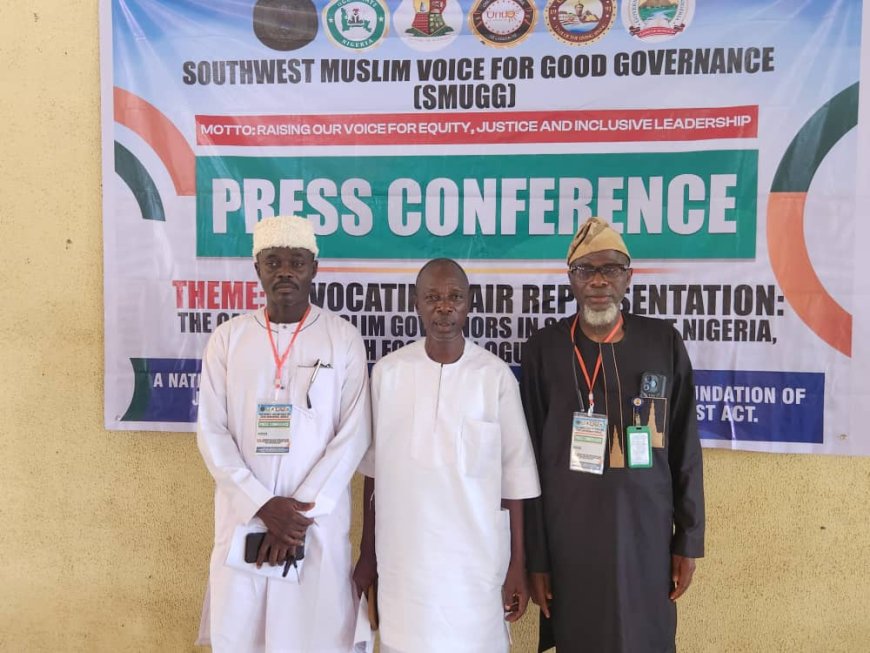
A coalition of Muslim organisations, under the aegis of Southwest Muslims for Good Governance, has called for broader religious inclusion in political leadership across South-West Nigeria, with particular attention to Ogun State.
The coalition also urged political parties to consider nominating candidates from diverse religious backgrounds, including Muslims, in the 2027 governorship election.
According to a statement made available to The PUNCH on Monday, the call was made during a joint press conference held at the Crescent University Professional Complex, Abeokuta, Ogun State chapter.
The coalition comprises the Muslim Rights Concern, National Council of Muslim Youth Organisations, Supreme Council for Shariah in Nigeria, Coalition of Muslim Vanguards and Stakeholders in Ogun State, Coalition of Muslim Women Organisations, Islamic Training Organisation of Nigeria, and the Federation of Muslim Women Associations in Nigeria, among others.
The statement noted that stakeholders at the conference emphasised the importance of inclusive governance and balanced representation in leadership positions, adding that it was the third in a series of engagements held across the state to highlight concerns about representation.
Speaking at the conference, the co-convener of SMUGG, Kehinde Lawal, said the advocacy was rooted in the principles of equity, justice, and democratic balance rather than religious dominance.
He noted that Nigeria’s democracy thrived on inclusivity and fairness, adding that the exclusion of any group over time could lead to dissatisfaction and weaken national cohesion.
According to him, Muslims constitute a significant proportion of the population in Southwest Nigeria, particularly in Ogun State, but their representation in top political offices, especially the governorship, has remained limited.
“Today, we gather not in anger or division, but in conviction rooted in the principles of equity and democratic balance,” Lawal said, adding that diversity, when properly managed, strengthens democratic institutions.
He explained that the call for a Muslim governor in Ogun State in 2027 was intended to promote fairness and ensure that all groups have access to leadership opportunities within the democratic system.
Lawal also pointed out that although Ogun State is widely regarded as culturally and religiously diverse, its current leadership structure did not fully reflect that diversity, adding that key positions in the state were held by individuals of the same religious background.
He added that Muslim professionals had contributed significantly to the development of the state and should also be considered in leadership selection processes.
According to him, since the creation of Ogun State in 1976, only one Muslim has served as a civilian governor compared to a longer period of leadership by Christians.
“This imbalance informs the ongoing call for broader representation and inclusiveness,” the statement quoted.
He called on political stakeholders, traditional institutions, civil society organisations, and the electorate to support efforts aimed at promoting inclusive governance ahead of the 2027 elections.
Lawal also urged political parties in the region to adopt transparent and fair candidate selection processes, noting that balanced representation could strengthen democratic institutions and promote unity.
The statement noted that the representative of the Ogun State chapter for the Supreme Council for Shariah in Nigeria, Shereef Mayaleeke, reiterated the group’s position on the need for improved representation of Muslims in leadership roles.
Also, the statement noted that the Secretary General of SMUGG, Tajudeen Alao, in his welcome address, stressed that the advocacy was based on fairness and inclusivity.
“The call for a Muslim governor in 2027 is not about dominance but about equity. It reflects a desire for leadership that mirrors the diversity of the people while maintaining competence, integrity, and vision,” Alao was quoted as saying.
He further encouraged political parties to present credible candidates from all backgrounds and urged community and religious leaders to promote mutual understanding and fairness in the political process.