State police now national imperative— US-based officer, Alade
 admin
admin

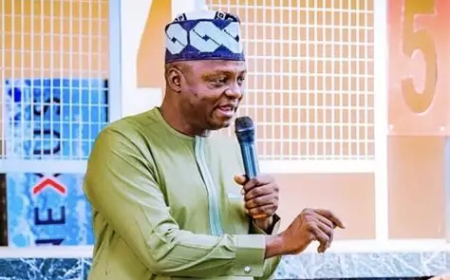
Former U.S.-based police officer and public policy analyst, Monday Alade, warned yesterday that Nigeria has reached a defining security crossroads and must urgently embrace structural reforms, beginning with the creation of state police, if it is to respond credibly to rising global concern over insecurity across the country.
Alade’s position followed a high-level meeting last week between the United States Secretary of Defense, Pete Hegseth, Nigeria’s National Security Adviser, NSA, Mallam Nuhu Ribadu, and Senior Advisor, Sean Parnell, at the Pentagon, where the U.S. pressed Nigeria to demonstrate “concrete and urgent action” in tackling jihadist networks and protecting vulnerable populations.
Although the U.S. noted that attacks against Christians in Nigeria didn’t constitute state-sponsored persecution, the concern, he said, reflected the uncomfortable reality that churches, much like mosques, markets, schools, palaces, and transport hubs, had increasingly become soft targets in a nationwide wave of extremist violence.
According to Alade, the development signals that Nigeria’s security performance is now under global evaluation and that cosmetic changes will no longer suffice.
Reacting to the U.S. position, Alade said the most urgent reform Nigeria must now implement was the decentralisation of the police system to allow states establish their own policing formations.
“Nigeria is the only major federal system in the world that still operates a fully centralised police structure.”
With more than 220 million people spread across diverse terrain and cultures, a one-size-fits-all security model can no longer protect the country,’’ he said.
He argued that the disconnect between local realities and a centralised command has fuelled slow response times, weak intelligence gathering, limited community trust and a pattern where every security failure was blamed on the President, even in remote areas far removed from federal control.
“State police will correct this imbalance. It will empower governors to secure their states, free the President from impossible expectations, and allow communities to work with officers who understand their terrain, language and cultural context,’’ he said.
Alade noted that the Pentagon’s message underscored a broader shift, which is that Nigeria must now demonstrate measurable reforms to strengthen internal security, particularly against extremist violence targeting vulnerable groups
He said: “Such expectations cannot be met through outdated structures. The world is watching Nigeria’s response, and state police is the strongest signal we can send to show readiness for modern, intelligence-driven security.”
He said his professional experience across multiple countries, ranging from the U.S. to Israel, Brazil and the U.K, showed that decentralised policing improved accountability, strengthened intelligence penetration, and enhanced response time.
“Nigeria cannot defeat 21st-century threats with a 20th-century policing model,” he insisted.
culled from vanguard