Senate clears Magnus Abe as NUPRC board chairman
 admin
admin
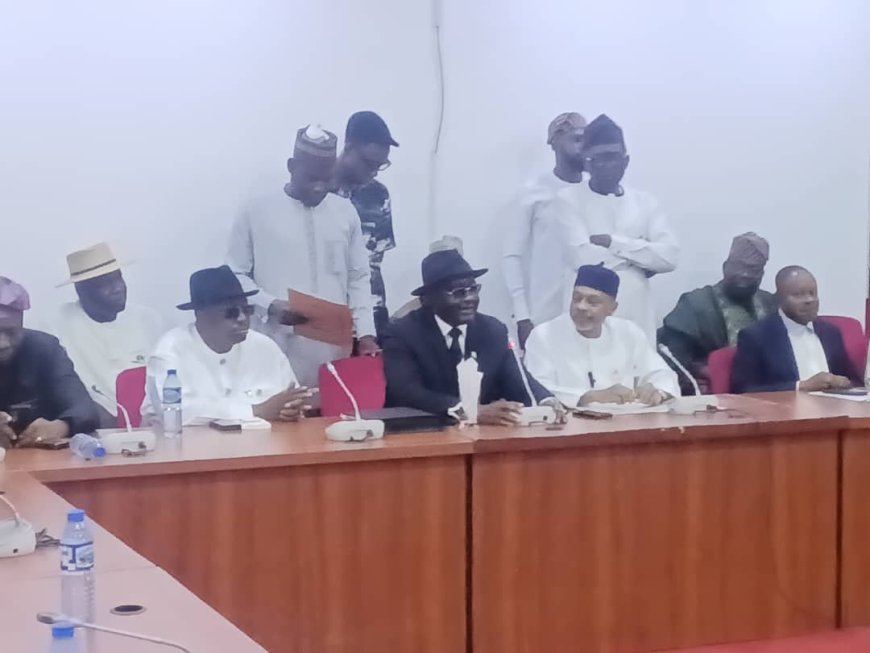
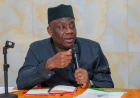
The Senate on Monday cleared former lawmaker representing Rivers South-East Senatorial District, Magnus Abe, for appointment as Chairman of the Board of the Nigerian Upstream Petroleum Regulatory Commission.
Abe, a political ally of the Minister of the Federal Capital Territory, Nyesom Wike, was screened by the Senate Committee on Petroleum Resources (Upstream) before receiving the approval of lawmakers.
The committee, chaired by Senator Eteng Jonah Williams, who represents Cross River Central Senatorial District, screened nominees forwarded by President Bola Tinubu for appointment as chairman and non-executive commissioners of the commission.
In line with the Senate’s tradition for former lawmakers appearing for confirmation, Abe was asked to “take a bow and go,” having served two terms in the National Assembly.
Speaking with journalists shortly after his appearance before the committee in Room 117, Abe said the surge in global oil prices triggered by tensions involving Iran and the United States presents both challenges and opportunities for Nigeria.
Responding to questions on the impact of the escalating global crisis on Nigeria’s fuel prices, Abe described the situation as a worldwide challenge rather than a purely Nigerian problem.
“This is a very difficult time for the entire planet. It’s not just a Nigerian challenge; it is a global challenge,” he said.
According to him, while the conflict has pushed up the cost of fuel and created hardship for Nigerians, the increase in oil prices could also translate into higher national revenues.
“You must look at the balancing act. Prices will definitely be affected, but revenues from our oil sales will also be positively affected. There will be some measure of balance in what will happen,” he added.
Abe called for global prayers for an end to the conflict, noting that beyond the economic implications, the crisis was claiming human lives.
“Human beings are actually dying. Our prayers should be that this conflict, which in my opinion is unnecessary and harmful to the entire world, should quickly come to an end so that we can begin to recover,” he said.
The 2023 governorship candidate of the Social Democratic Party, however, urged Nigerians to see the situation as an opportunity to strengthen the country’s energy sector, particularly in gas development and marginal oil field investments.
“If the price of oil is going up, it allows us to invest in marginal fields that otherwise would not have been profitable. If gas supplies are being disrupted globally, this is an opportunity for Nigeria to optimise its own gas production, which will create jobs and new opportunities,” he said.
Abe also expressed gratitude to the president for nominating him to serve on the regulatory body’s board.
I am sincerely grateful to Mr President, the Commander-in-Chief of the Armed Forces, Bola Tinubu, for considering me and other members of the board worthy of service to this country and me.
“I see it as a great privilege and an opportunity to contribute to the Renewed Hope Agenda,” he stated.
He assured Nigerians that the incoming board would work closely with stakeholders to strengthen the regulatory environment in the petroleum industry.
According to him, the framework provided by the Petroleum Industry Act offers solutions to several long-standing problems in the sector, including oil theft and community agitation.
“With the Host Communities Fund, the host communities themselves are now stakeholders. They benefit from production, and nobody destroys what he is eating,” Abe said.
Earlier during the screening, one of the nominees for non-executive commissioner of the NUPRC board, Paul Jezhi, identified discrepancies in crude oil measurement at custody transfer points as a long-standing challenge in the sector.
He told lawmakers that the deployment of modern metering technology could significantly reduce the problem.
The discrepancies in crude oil at the custody point have been a long-time issue. But modern meters can now record measurements within a margin of plus or minus one to five, and when such meters are deployed, these discrepancies will largely disappear,” he said.
Jezhi also recommended the adoption of drones and satellite technology to strengthen surveillance against oil theft and pipeline vandalism, particularly in the Niger Delta.
“The deployment of drones and satellite surveillance will also help curb oil theft and pipeline vandalism, especially in the Niger Delta,” he added.
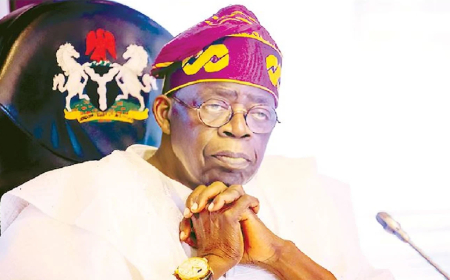
On January 5, 2026, President Tinubu had earlier written to the Senate seeking confirmation of 21 nominees for the boards of the Nigerian Upstream Petroleum Regulatory Commission and the Nigerian Midstream and Downstream Petroleum Regulatory Authority.
In the letter, the president nominated Abe as chairman of the NUPRC board.
Other nominees for the NUPRC board include the past chairman of the Trade Union Congress in Kaduna, Paul Jezhi, and a former deputy director at the defunct Department of Petroleum Resources, Sunday Babalola, which was dissolved following the enactment of the Petroleum Industry Act in 2021.
Culled from punch