SDP, Obidients seek electoral reforms before 2027 polls
 admin
admin
The Social Democratic Party, Obidient Movement, and a coalition of pro-democracy groups and civil society organisations have called for electoral reforms ahead of the 2027 general elections, stating that Nigerians must be guaranteed the right to freely choose their leaders through a credible electoral process.
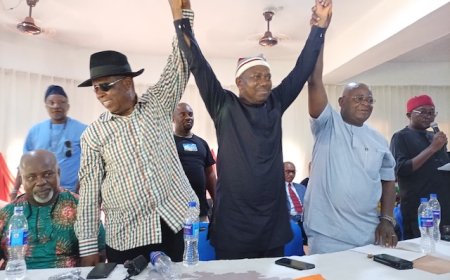
This formed part of resolutions reached at a June 12 Democracy Anniversary dialogue organised by the Movement for Credible Elections in collaboration with the June 12 Democracy Movement of Nigeria in Lagos.
The communiqué, titled “Agenda for a Valuable Nigeria,” was read on Saturday by the Founder of Human Rights Africa, Dr Tunji Abayomi, and endorsed by the National Coordinator of the Obidient Movement, Dr Tanko Yunusa; and SDP National Chairman, Prof Sadiq Umar Gombe, among others.
The stakeholders noted that the country was facing declining public trust in the electoral process, arguing that the Electoral Act (Amendment) 2026 was flawed.
President Bola Tinubu in February signed the amendments to the 2022 Electoral Act despite the controversies that trailed some provisions of the Act.
According to the communiqué, the first priority should be the establishment of a credible electoral framework before the 2027 polls.
“There should be in place, before the 2027 elections, a credible electoral process that represents the clear will and wish of our people arising from urgent review of the Electoral Act by the National Assembly,” the communiqué stated.
They also decried worsening insecurity, rising poverty and growing disillusionment among citizens, stressing that urgent steps were needed to safeguard Nigeria’s democracy.
Expatiating on the resolution, Abayomi said the success of democracy should not be measured by which political party wins elections but by whether citizens are allowed to freely determine who governs them.
“Our view is that government should be preoccupied with ensuring free and fair elections beyond winnability. If government establishes free and fair elections and that same government loses through a free and fair election, actually the government has won because the people of Nigeria have won,” he said.
He argued that voting remains the most important democratic right available to ordinary Nigerians.
“Our people have no cars, they don’t have land in Asokoro or Maitama, they don’t have money in the bank, they don’t have big houses. The only thing they have is the right to constitute government over themselves.
“If this right is injured and made impossible, then what do they have? It should be the first principle and primary commitment of government to ensure that the people of Nigeria win through free and fair elections,” he added.
Abayomi expressed dissatisfaction with what he described as the disproportionate allocation of public funds to the maintenance of government compared to critical sectors affecting citizens.
We are dissatisfied with the amount of money spent to maintain government as compared with the amount of money spent for the well-being of the people.
“When you look at the budget and compare what is committed to health, education, water and food security with what is committed to running government, there is a sense of inequity. The wealth of the nation belongs to the people, not to the government,” he said.
The coalition also raised concerns over the country’s security situation, describing terrorism, banditry and kidnapping as threats requiring urgent intervention.
It called on the Federal Government to embrace modern technology and intelligence-driven approaches to security rather than relying solely on conventional methods.
“The nation is presently under the siege of insecurity, terrorism and banditry. Government, working with the people in the various localities across the country, must take effective steps and measures to tackle the country’s heightening insecurity without any further delay,” the communiqué stated.
According to Abayomi, technological tools such as surveillance systems, drones and other advanced security infrastructure should be deployed to strengthen national security.
“The world has changed. Sending troops to be looking for bandits is no longer the standard of this age. Technology is the standard of the age. Government should invest in technology to secure our people,” he said.
On food security, the participants warned that rising hunger and low agricultural productivity posed a serious threat to national stability.
They urged the government to move beyond assurances and adopt practical measures to increase food production and support farmers.
“The country is beset by low agricultural productivity and food insecurity. Given the country’s increasing population, government needs to tackle this existential threat through concrete steps beyond mere assurances,” the communiqué stated.
Abayomi warned that failure to address the challenge early could result in a deeper crisis in the future.
“There is too much poverty in the country and too much hunger. God has endowed this nation with the land to produce food. Government needs to do something urgently,” he said.
The forum also renewed calls for constitutional reforms, arguing that the 1999 Constitution lacked popular legitimacy because it was imposed by the military.
The stakeholders maintained that Nigerians should be given the opportunity to produce a constitution through a democratic and participatory process.
“The military as an institution gave itself power only to make laws, not to make a constitution for the people of Nigeria,” the communiqué stated.
Abayomi said, “It is not a government that gives a nation a constitution; it is a constitution that gives a nation a government.
“We hold the view that a constitution of the people, by the people and for the people has become imperative if Nigeria is going to have peace, order and good government.”
Consequently, the forum urged the National Assembly to initiate legislation that would enable Nigerians to produce a new democratic constitution.
The stakeholders further announced plans to establish an ideological think tank comprising pro-democracy advocates and other stakeholders to mobilise support for electoral reforms, constitutional restructuring and governance reforms.
They called on Nigerians across political, ethnic and religious divides to unite in addressing the country’s challenges and restoring confidence in the nation’s future.
Giving more details on the meeting resolutions, Abayomi stressed that the gathering transcended partisan interests, saying participants were united by a common commitment to Nigeria’s progress.
“We have only one political party, and that is the Federal Republic of Nigeria. The happiness of the nation affects everybody, whether political or apolitical.
“We believe in the concept of Nigeria. We believe the nation should be good for every Nigerian citizen regardless of religion or ethnicity,” he said.