Reps summon REA boss over renewable power projects
 admin
admin
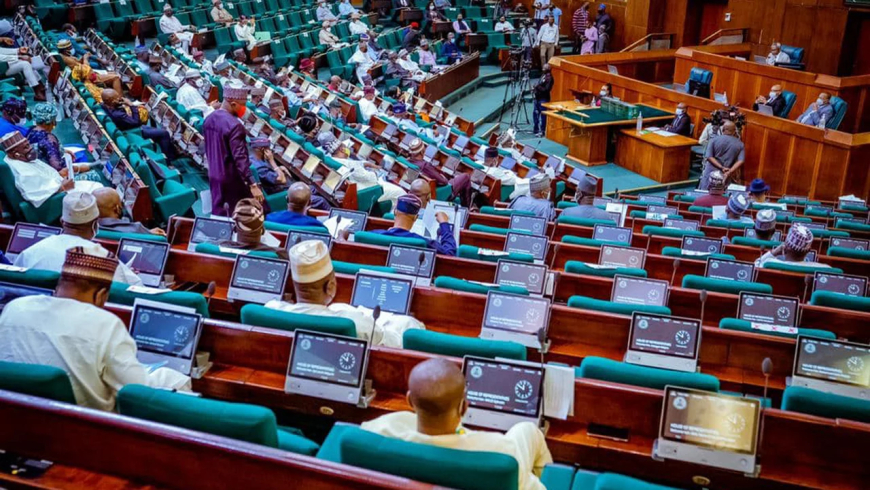
The House of Representatives Committee on Renewable Energy has summoned the Managing Director of the Rural Electrification Agency, Abba Aliyu, to appear before it on Wednesday, February 26, 2026, to answer questions on ongoing renewable power projects across the country.
The summons followed the adoption of a motion by the Committee on Tuesday after Aliyu failed to honour an earlier invitation to attend an investigative hearing held at the National Assembly Complex, Abuja.
The probe is part of the House’s ongoing oversight following its October 2022 resolution mandating the Committee to investigate the domiciliation of green and renewable energy projects across ministries, departments, and agencies.
Chaired by the lawmaker representing Ogbaru Federal Constituency of Anambra State, Afam Ogene, the Committee is currently conducting a comprehensive audit of renewable energy interventions implemented by the REA, with particular focus on projects executed under the Energizing Education Programme Phases I, II, and III.
To ensure a thorough and accurate exercise, the panel has also directed all contractors and developers involved in EEP Phase I–III projects to appear with complete documentation relating to their respective contracts.
Projects under review include solar hybrid installations at the Abubakar Tafawa Balewa University and Teaching Hospital, Bauchi; Bayero University, Kano; the Federal University of Agriculture, Makurdi; and the Federal University of Petroleum Resources, Effurun, among others.
Others are the Federal University Ndufu-Alike, Ikwo; Nnamdi Azikiwe University, Awka; and Usman Danfodio University, Sokoto.
Contractors handling solar hybrid projects for the University of Abuja (now General Yakubu Gowon University), the Nigeria Defence Academy, Michael Okpara University of Agriculture, Umudike, and the University of Maiduguri are expected to present original and certified true copies of contract award letters, executed agreements, memoranda of understanding, and technical specifications.
They are also required to submit engineering drawings, feasibility studies, project status reports, implementation timelines, commissioning documents, and sustainability plans.
In his opening remarks, Ogene outlined the scope of the investigation, stating that the Committee’s mandate includes the need to “investigate the domiciliation of green energy projects with inappropriate entities, aiming to prevent substandard implementation and loss of value.
“To examine foreign grants and government investments received in the renewable energy sector from 2015 to date.
“To assess the utilisation of renewable energy in ministries, departments, and agencies of the Federal Government.”
He also drew attention to the widespread failure of public lighting infrastructure across the country.
“If you look around you, whether in the cities where some of us reside or our rural areas, you will most likely notice that many of the streetlights installed for the good of the people go bad less than six months after installation. Why is it so?
Do streetlights in Europe and other parts of the world suffer the same fate? What could be responsible for this economic wastage, considering the high cost of procurement and installation of these dysfunctional streetlights to the nation?”
According to him, the situation raises broader concerns about value for money and accountability in public infrastructure spending.
“The prevalence of dysfunctional streetlights,” he added, “raises concerns about procurement practices, maintenance, and the overall value for public investment.
“Comparing our infrastructure to global standards, such as those in Europe, highlights potential inefficiencies and areas for improvement.”
Also speaking, the Speaker of the House of Representatives, Dr. Tajudeen Abbas, who was represented by the Deputy Minority Leader, Abdullahi Halims, described the investigative hearing as a critical parliamentary exercise.
According to him, a key objective of the Electricity Act, 2023, is to provide a holistic and integrated policy framework that accommodates all sources of electricity generation, transmission, and distribution, including renewable energy.
He said, “There is a global quest for safer, sustainable, and renewable energy, on account of the glaring impact of carbon emissions from fossil fuels on our environment. The growing effects of global warming and climate change are not only reserved as a topic for big climate conferences around the world, but could alarmingly be felt all around us in different forms.”
He urged the Committee to conduct a thorough investigation, noting that renewable energy remains central to Nigeria’s sustainable development agenda.
“Renewable energy is a sure way to go. Besides the need for clean energy, there’s also a growing conversation across board about sustainable development in every sphere of life, or sectors of corporate or governance structures.”
culled from punch