LASG targets 3.5GW power supply, seeks private investment
 admin
admin
The Lagos State Government is seeking to turn its huge electricity demand into a bankable market capable of attracting investment in generation and distribution, as the government targets about 3.5 gigawatts to tackle persistent power shortages across the state.
The plan was discussed on Thursday at the Lagos State High-Level Strategic Power Town Hall, where government officials, regulators, electricity operators and investors examined why the state continues to receive less than one gigawatt from a national grid capable of transmitting considerably more.
The gap between available supply and Lagos’ electricity needs formed the central concern of the meeting, with officials arguing that simply adding generation capacity would not resolve the problem without a functioning system for contracting, delivering, metering and paying for electricity.
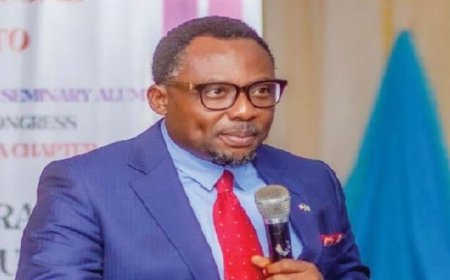
The Special Adviser to the President on Power and Chairman of the Presidential Taskforce on Power Sector Reset and Restoration, Rilwan Babalola, said Lagos now had an opportunity to demonstrate what a commercially viable electricity market could look like under Nigeria’s emerging decentralised power regime.
He said the proposed Clean Lagos Electricity Market would initially test a 500MW model built around aggregating demand, contracting directly with power suppliers, guaranteeing payment and allowing electricity to move through an open-access network.
“We are no longer just talking about generating more electricity. We are talking about creating a market that works,” Babalola said.
He said the first 500MW phase should not be scaled prematurely, arguing that Lagos must first establish that customers could be identified, electricity delivered and metered, and generators and other participants paid transparently.
Among the questions the proposed market must answer, he said, were where demand was concentrated, who the customers were, where the power and gas would come from, whether existing networks could carry the electricity and what tariff would make the system commercially sustainable.
The proposal comes as Lagos seeks to exploit new powers available to states under the Electricity Act and constitutional changes that permit sub-national electricity markets.
Babalola, however, warned that state-level regulation should not create isolated electricity systems, saying Lagos would still need to coordinate with federal regulators, the national transmission network and interstate electricity trading arrangements.
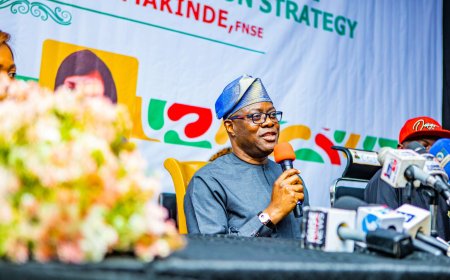
The scale of the supply deficit was highlighted by the Commissioner for Energy and Mineral Resources, Biodun Ogunleye, who said Lagos currently receives less than 1GW from the national grid, despite the Transmission Company of Nigeria having the capacity to transmit about 3.5GW.
Ogunleye said the state was seeking an additional 2GW as an immediate step towards its 3.5GW supply ambition.
That increase, he said, would enable more distribution feeders to operate and improve electricity availability for households, commercial users and industries.
The commissioner said the government was also looking beyond the national grid, pointing to newly commissioned substations and plans to work with distribution companies to monitor specific feeders and determine whether interventions were actually producing better supply.
Lagos is also examining embedded generation and restructuring its existing Independent Power Projects to make them financially viable, according to the Chief Executive Officer of the Lagos State Electricity Regulatory Commission, Temitope George.
George said the state’s electricity demand had fallen from more than 1,500MW to below 1,000MW, while identifying weak generation and transmission, vandalism, electricity theft and unpaid bills among the problems undermining the market.
She called for greater payment discipline from consumers, arguing that electricity consumed without payment ultimately weakens the entire supply chain.
The regulator, however, said consumers should also see tangible improvements in service, particularly as discussions around electricity pricing continue.
Ogunleye similarly insisted that consumers should not be expected to shoulder higher costs without improvements in metering and electricity infrastructure.
“Consumers must not be made to pay for darkness,” he said.
The town hall therefore placed commercial viability alongside infrastructure expansion at the centre of Lagos’ power strategy.
Stakeholders at the meeting agreed to develop measurable action points and establish baselines against which progress in the sector could be assessed.