LASG advocates voluntary sanitation for cleaner Lagos
 admin
admin

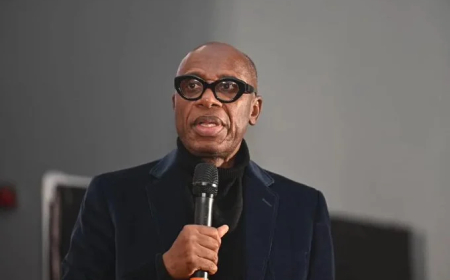
The Lagos State Commissioner for Environment and Water Resources, Tokunbo Wahab, on Thursday, urged residents not to wait for the declaration of movement restrictions before voluntarily embracing environmental cleanliness.
He made the appeal while featuring on the X Space (AskLagos) programme in response to questions on when the state government would commence movement restrictions on the last Saturday of every month for sanitation purposes.
He said, “We all need to imbibe the culture of cleaning our environment for a few hours every Saturday and not wait until the state declares a particular month for general sanitation or restriction of movement before acting appropriately.
“What the government is saying is to let us see how residents can set aside one Saturday of each month to take care of our environment.
“It costs us nothing, and that is the thought behind bringing back the sanitation exercise. Let us start building that culture that we were building before the disruption all over again.”
According to him, the decision to reintroduce environmental sanitation was taken by members of the Lagos State Executive Council, chaired by Governor Babajide Sanwo-Olu and the Deputy Governor, Obafemi Hamzat.
He described it as a well-thought-out decision that was subjected to legal review by the Ministry of Justice and the Attorney General for over a year.
It is about trying to build a culture of waste management, the way we have built a culture of excellence.
“A culture where Lagosians would know that sacrificing one or two hours once a month to fix our environment is not a bad idea; we say to ourselves in our holy books that cleanliness is next to godliness,” he added.
Wahab described waste management as a global culture, stressing that any country serious about managing municipal solid waste must be willing to build such a culture.
He added that developed countries came to this realisation years ago, just as Lagos did some years back.
He explained that in countries like the United Kingdom, refuse bins come in different colours —blue, black and green— each serving specific purposes.
Lagos, he said, was building that culture until it was halted by a court order obtained by a citizen exercising his rights.
He clarified that the court case was not against environmental sanitation itself but centred on legal questions surrounding movement restrictions and fundamental human rights.
The commissioner stated that the state lost the case at the high court but appealed through the current Attorney General, who was then the Solicitor General. The state eventually won at the Court of Appeal.
He added that although the state was expected to resume the monthly environmental sanitation exercise after the judgment, it failed to do so, a decision he said reversed the gains already made in building a waste management culture.
In the past two to three years, he said, the government decided to revisit the initiative, noting that there was no subsisting court order restraining the state from reinstating it.
Wahab disclosed that the sanitation culture had continued in markets every Thursday from 7 a.m. to 10 a.m., during which no market operates as traders participate in environmental sanitation.
He said since the exercise had not been disrupted in markets, the government sought to replicate it across homes.
He stressed that while Lagos faced significant sanitation challenges, the government was not attempting to abridge residents’ rights but was exploring innovative solutions to address the issue.
“We know all over the world that municipal solid waste is a contextual narrative every now and then.
People in London and New York experienced this challenge for a month. They are the realities we have to contend with.
“So, I’m sorry, we may have to find an out-of-the-box solution to enable us to say, let us do this once a month. Once the culture is built, then we have achieved the goal,” he added
culled from punch