Experts seek focus on indigenous crops to boost climate-resilient agriculture
 admin
admin
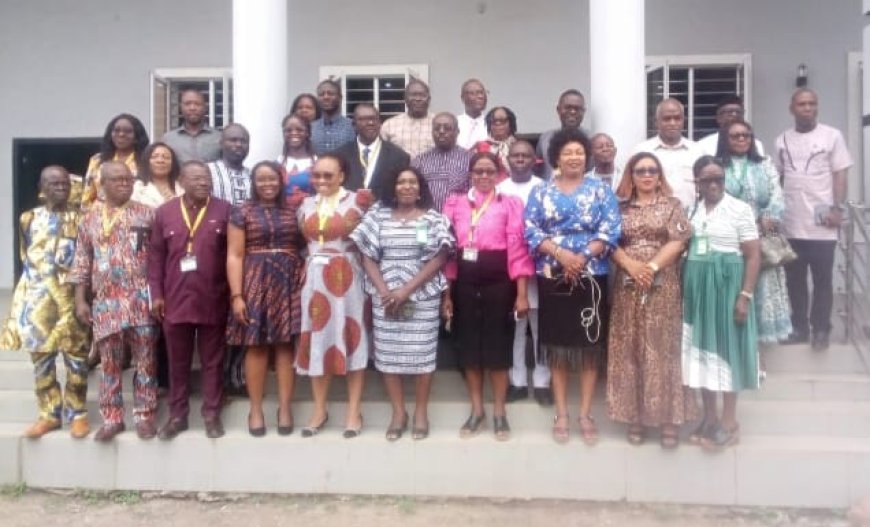
Agricultural experts, policymakers, farmers and other stakeholders have called for renewed attention to indigenous crops and stronger engagement with farmers as part of efforts to build climate-resilient agriculture in Nigeria.
The call was made on Saturday at the end of a two-day event comprising a Farmer–Scientist Engagement Programme and a Policymakers/Stakeholders Summit held at Michael Okpara University of Agriculture, Umudike, Abia State.
The event, co-convened by Dr. Carol Ibe of the University of Cambridge and the Agri-Impact and Innovation Project (AGRIIP), alongside Prof. Olayinka Nwachukwu of the host institution, formed part of a project titled “Building Nigeria’s Capacity for Climate Resilience in Agriculture through Molecular Biotechnology.”
The initiative is funded by the Mastercard Foundation and the University of Cambridge Climate Resilience and Sustainability Research Fund.
Declaring the summit open, the Vice-Chancellor of the university, Prof. Ursula Ngozi Akanwa, reiterated the institution’s commitment to advancing research that supports climate-resilient agriculture and sustainable food systems. She noted that the university would continue to promote innovations aimed at improving agricultural productivity, strengthening indigenous crop systems and addressing climate-related challenges affecting farmers.
Akanwa described the programme as “a timely collaboration aligned with the institution’s mandate to promote agricultural development and enhance food security.”
In a keynote address titled “Climate Change and its Impact on Nigerian Agriculture,” Prof. Sylvester N. Ibe, a Professor of Genetics and Animal Breeding, highlighted the growing threat climate change poses to food systems and human survival. He explained that climate resilience involves preparing for environmental impacts and strengthening the capacity of communities and institutions to recover from shocks such as prolonged droughts and extreme weather conditions.
He added that despite progress recorded under global frameworks such as the Millennium Development Goals and Sustainable Development Goals, Nigeria’s agricultural sector continues to face serious challenges, including insecurity, high cost of farm inputs and inadequate infrastructure.
In his lead paper, the Senior Special Assistant to the President on Agribusiness and Innovation, Dr. Kingsley C. Uzoma, outlined Federal Government initiatives aimed at promoting climate resilience through public education, policy interventions and agricultural programmes.
Speaking on the objectives of the programme, the Project Lead (Nigeria), Prof. Olayinka I. Nwachukwu, said the engagement was designed to bridge the gap between scientific research and practical farming. She described the initiative as “an important step toward strengthening Nigeria’s capacity to respond to climate change through science, innovation and collaboration.”
She stressed that closer collaboration among farmers, scientists, policymakers and other stakeholders would be critical to developing sustainable and climate-smart agricultural solutions.
Also speaking, Dr. Carol Ibe, founder of the JR Biotek Foundation and a researcher at the University of Cambridge, underscored the importance of revitalising indigenous crop systems. She expressed concern that many traditional African crops are gradually disappearing due to limited research investment and policy attention.
“Africa currently imports about $75 billion worth of food annually, despite possessing numerous indigenous crops that are naturally resilient to drought and well adapted to local ecosystems,” she said.
She cited crops such as akidi (Bambara beans), cocoyam, three-leaf yam and ukpo as examples of indigenous food resources that require greater research support and value addition. According to her, promoting these crops would strengthen food security, preserve cultural heritage and reduce dependence on food imports.
The Project Co-Lead (Nigeria), George Ikwuakolam Okoro, said the initiative aims to strengthen resilient agricultural systems through innovation, research partnerships and farmer support. He added that the programme would improve sustainable farming practices and enhance farmers’ livelihoods.
A nutritionist, Kelechi Ikpe, said her participation focused on assessing farmers’ nutritional status and providing guidance on healthier dietary practices to improve their wellbeing and productivity.
Some participants also commended the initiative. A farmer, Mr. Chimaobi Ifeanyi, said the programme provided practical insights into climate change and strategies for improving farming practices, while another participant, Mrs. Veronica Nnanna, expressed appreciation for the knowledge gained, noting it would enhance her farming activities.
Participants at the summit were drawn from academia, research institutes, the Abia Agricultural Development Programme, the private sector, and state and federal government institutions, as well as farmers.