Drama as Senegal beat Morocco to claim AFCON title
 admin
admin
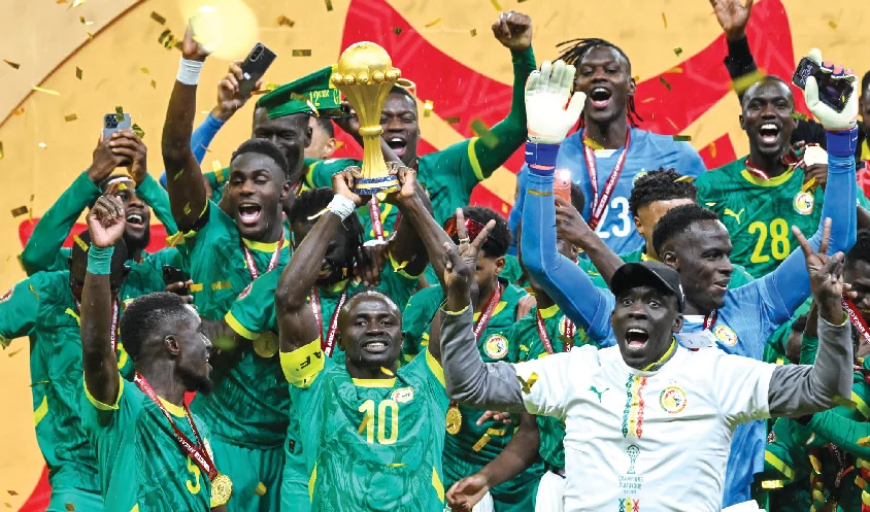
Senegal won their second Africa Cup of Nations title in dramatic fashion on Sunday after defeating hosts Morocco 1–0 following extra time at the Prince Moulay Abdellah Stadium in Rabat, in a final that descended into chaos and controversy, The PUNCHreports.
The Teranga Lions, playing their fourth AFCON final and first since 2021, overcame the Atlas Lions, who were contesting only their second final since 2004, to lift the trophy in a match marked by contentious refereeing decisions, a pitch protest, and a decisive goal from Pape Gueye.
Senegal had enjoyed a relatively smooth run to the final, playing all six of their previous matches in Tangier, while Morocco were playing their seventh game in Rabat.
Despite this fatigue, the host nation, who became the 15th African nation to reach a final on home soil, had the support of a raucous crowd and were aiming to emulate recent successful hosts such as Tunisia in 2004, Egypt in 2006, and Ivory Coast in 2023, all of whom lifted the trophy after reaching the final at home.
The match itself was cagey in the early stages, with both teams feeling each other out. Senegal’s Sadio Mané and Morocco’s Brahim Diaz tested the respective goalkeepers, while set-pieces became a frequent feature of the game as defenders and attackers jostled for advantage.
Ismaïla Sarr and Nicolas Jackson created early chances for the Teranga Lions, but Yassine Bounou and Édouard Mendy in the respective goals were alert.
Morocco’s Ayoub El Kaabi and Achraf Hakimi sought to penetrate Senegal’s defence, but Senegal’s organised backline, marshalled by El Hadji Malick Diouf, held firm.
The drama intensified deep into stoppage time at the end of the second half. Senegal thought they had scored a late winner when Idrissa Gueye’s strike hit the post and Ismaïla Sarr nodded home the rebound, only for the goal to be disallowed.
DR Congo referee Jean-Jacques Ngambo ruled that Gueye had fouled Achraf Hakimi in the build-up, leaving Senegal furious as the whistle had already blown before the ball crossed the line, preventing a VAR review.
Minutes later, the controversy escalated further when Morocco were awarded a penalty after a VAR check adjudged El Hadji Diouf to have fouled Brahim Diaz.
In protest, Senegal manager Pape Thiaw instructed his players to leave the pitch. Only Mané remained as the game was delayed for approximately 16 minutes.
Brahim Diaz’s ensuing penalty was a tame chip straight into the arms of Édouard Mendy, sending the contest into extra time and giving Senegal a lifeline.
In the fourth minute of the first period of extra time, Pape Gueye capitalised on a fast break, receiving a pass from Idrissa Gueye and rifling a left-footed shot into the top right corner of the net to finally break the deadlock.
Morocco pressed desperately for an equaliser, bringing on fresh legs including Ilias Akhomach and Hamza Igamane, but Senegal’s defence and Mendy’s commanding presence in goal ensured the lead was protected.
The remainder of extra time saw a flurry of attacks and blocked shots. Cherif Ndiaye, Mané, and Pape Gueye all tested Bounou, who produced a series of important saves, while Morocco’s El Khannouss, El Aynaoui, and En-Nesyri were denied by Senegal’s defenders and quick reactions from Mendy.
Senegal’s victory was their sixth win at this edition of the tournament, marking their highest single-edition tally of victories.
They now add a second AFCON title to their record, joining their 2021 success, while Morocco’s heartbreak continues as they were denied the chance to emulate previous victorious hosts. The match will also be remembered for the unprecedented walk-off by the Senegal players and the missed penalty by Diaz, which might have altered the outcome.
As Gueye’s decisive strike ensured Senegal emerged as deserved champions in what will go down as one of the most dramatic finals in recent African football history, Morocco, despite the disappointment and controversy that trailed them from the group stage, remain a formidable force, and their run to the final will be seen as a positive platform for future tournaments.
![Champions League draw: Real Madrid to face Atletico, Liverpool to clash with PSG [Full Draw]](https://theissuesmagazine.com/uploads/images/202502/image_430x256_67b8719134797.jpg)