South Africans protest Nigerians calling Pretoria community ‘Little Lagos’
 admin
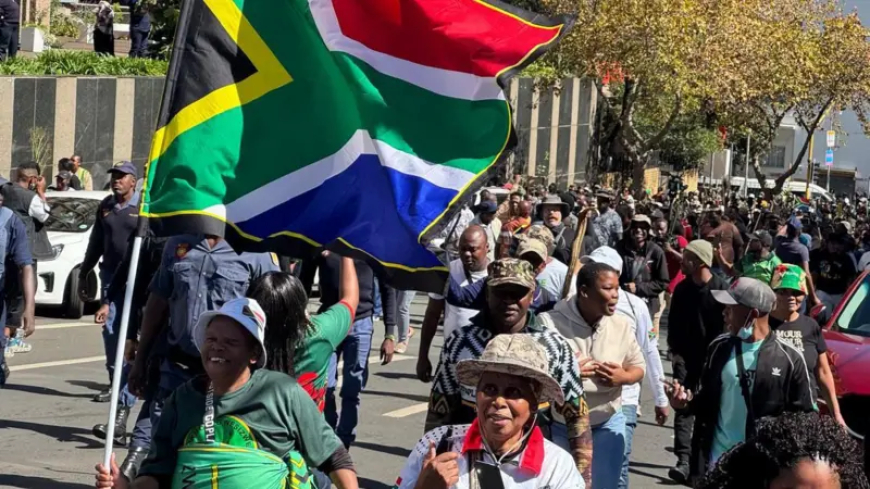
South African protesters have confronted Nigerians living in Pretoria’s Sunnyside neighbourhood, questioning their presence in the area and challenging its nickname, “Little Lagos”, during an anti-immigration demonstration led by the March and March movement.
In a video from the protest shared on social media on Wednesday, the movement’s leader, Jacinta Ngobese-Zuma, addressed Nigerians in the neighbourhood, asking who gave them permission to refer to the area as “Little Lagos”.
“I am being told here that we’ve entered Sunnyside, the home of Nigerians. I am inviting Nigerians to come out, let’s talk to each other. We want to know who gave you this place and called it Nigeria. Who gave you permission to call this place Lagos or whatever you call it?” she asked.
In a Facebook post on Thursday, Ngobese-Zuma further criticised Nigerians, making allegations about the country and its nationals.
“Their President is wanted for drug trafficking, their country is also a hub for drugs and some very delusional people think that Nigerians will contribute more than just drugs, prostitution, human trafficking and Jollofinas to our country?” she wrote.
The comments followed a protest organised by the March and March movement in Pretoria on Wednesday, November 18, against undocumented migration and South Africa’s immigration policies.
The demonstration began in Sunnyside, moved through Arcadia and proceeded towards the Department of Home Affairs in Hatfield, with protesters demanding stricter immigration controls and the deportation of undocumented foreign nationals.
The movement also called on the South African government to withdraw from the 1951 United Nations Refugee Convention and stop accepting new refugee applications. Some businesses along the protest route in Hatfield reportedly closed as demonstrators approached the Home Affairs offices.
Ngobese-Zuma had also argued that 95 per cent of asylum applications in the country were fraudulent, saying in an interview with eNCA that “if 95% of those applications are not real asylum seekers, then the problem is not with the Home Affairs departments. The problem is with the people that are applying.”
The latest protest comes amid renewed tensions between Nigeria and South Africa over xenophobic and Afrophobic attacks against Nigerians and other African nationals living in the country.
In September, the Federal Government said it had evacuated 1,821 Nigerians from South Africa following attacks and threats against foreign nationals. The Ministry of Foreign Affairs said it remained concerned about the persistent attacks and was pursuing diplomatic engagements with South African authorities to protect Nigerians in the country.
News had also reported that Nigeria’s Acting High Commissioner to South Africa, Ambassador Ajayi Alexander, said 98 Nigerians had died in mob and hate-related incidents in the country since 2022.
The tensions have also played out diplomatically in recent days following a disagreement between Nigeria’s High Commissioner to South Africa, Femi Fani-Kayode, and the South African Presidency over the omission of his speech from a livestream of the ceremony where he presented his letters of credence to President Cyril Ramaphosa on November 13.
South Africa subsequently summoned Fani-Kayode over his public comments on the incident, with its Department of International Relations and Cooperation expressing concern about his remarks and reminding him to use established diplomatic channels.
The Nigerian High Commission, however, said the meeting was cordial and that the envoy was neither reprimanded nor issued a warning.
The latest demonstration adds to concerns over the safety of Nigerians in South Africa and the strained relations between both countries.