Group calls for strict laws, punishment to curb harmful traditional practices
 admin
admin
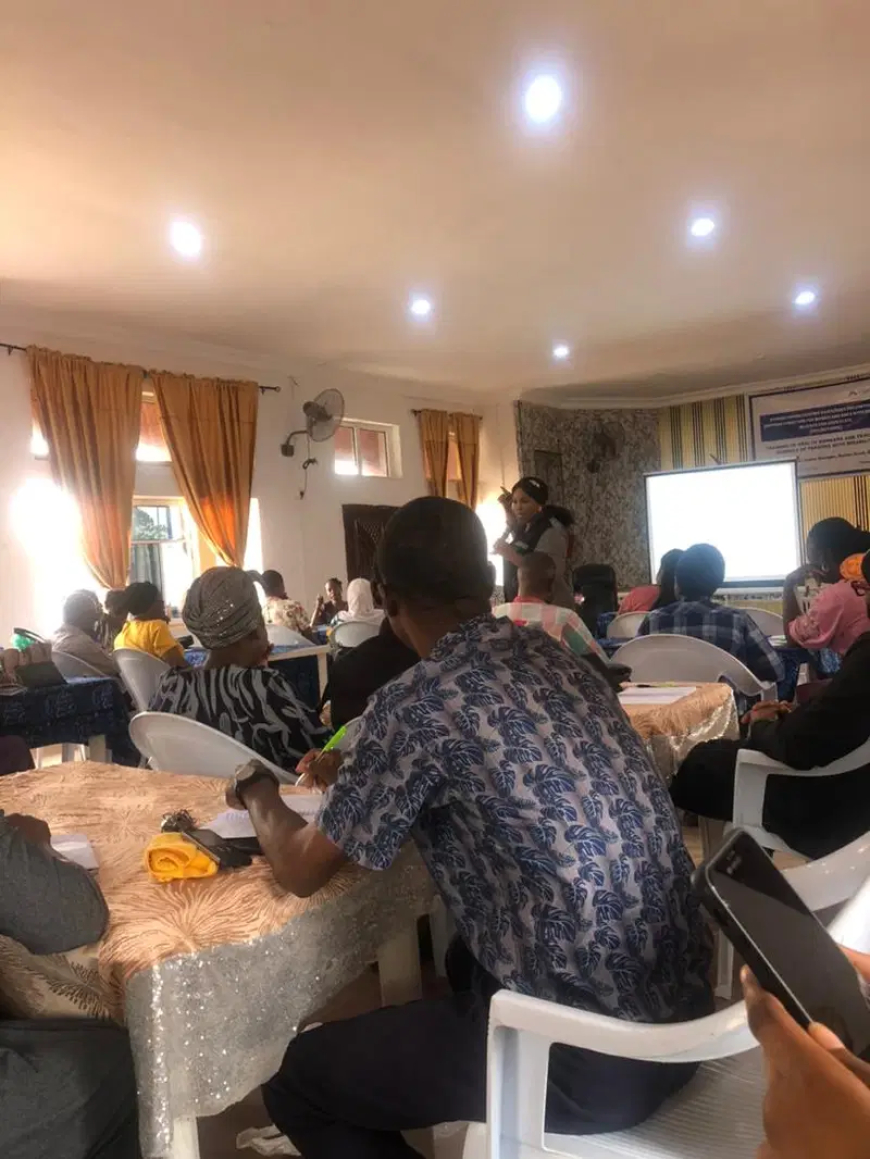
A Non-profit Organisation, the Centre for Women’s Health and Information, CEHWIN, has called on government and communities to enforce stricter laws and punishments to eradicate harmful traditional practices, particularly those affecting women, children, and persons with disabilities.
Delivering her lecture at a training organised by CEHWIN with support from the United Nations Trust Fund to End Violence Against Women (UNTF), for health workers and teachers in schools for PWDs in Osogbo on Tuesday, Mrs Juliet Olumuyiwa-Rufai, noted that while culture remains an important part of society, some traditional practices are harmful and must be challenged.
She stressed that the responsibility of ending such practices should not be left to the government alone but must involve families, religious institutions and communities.
According to her, Our culture is beautiful but there are aspects of our culture that are harmful to people and that’s what we’re looking at. So it’s not everything we’ll be leaving to the government; as members of society, we should also say no to aspects of culture and traditions that are harmful.
So while we’re advocating to the government, we have laws and punishments for people who perpetrate this abuse against people. We are also calling ourselves to talk to each other, friends and family members and people from our religious sectors that these issues are harmful to people and we should not condone them. We should report them to law enforcement, the government and we should also support the survivors and the key people free from this kind of attack.”
Meanwhile, the Director of Education and Rehabilitation, Bureau for people with disabilities, Oyetola Olajumoke, called on security agencies to respond decisively whenever cases of gender-based violence are reported, stressing that perpetrators must be brought to justice to serve as a deterrent to others.
She said, “this is one of the ways the government is trying to to curb the act of gender based violence because if the government did not allow this type of program to happen it won’t come up, and also I think whenever there is such action occurs our security personnel should try as much as possible to take it up and make such penetrator a scape goat.”
Earlier, CEHWIN’s Senior Programme Officer, Julia Afachung, explained that the training was designed to sharpen teachers’ awareness and bring attention to warning signs of abuse that are often overlooked, especially among children with disabilities.
She however, stressed that the responsibility of safeguarding children with disabilities cannot rest on non-governmental organizations alone, hence the need for the government to take concrete steps in improving conditions in special needs schools.
We hope that the trained teachers will return to their schools and take leadership in establishing Gender Desks within their institutions to serve as first points of contact for reporting, response, and prevention of violence. These Gender Desks will help institutionalise protection mechanisms and ensure that cases of violence are addressed promptly and appropriately, especially for women and girls with disabilities”, she added.
Participants, drawn from Ife, Osogbo, and Ikirun described the training as timely and impactful, noting that it improved their confidence in responding swiftly to cases and strengthened their role as advocates for prevention and safeguarding in their schools.
Culled from vanguard