Fix fuel pricing system, not just pump price, don urges FG
 admin
admin
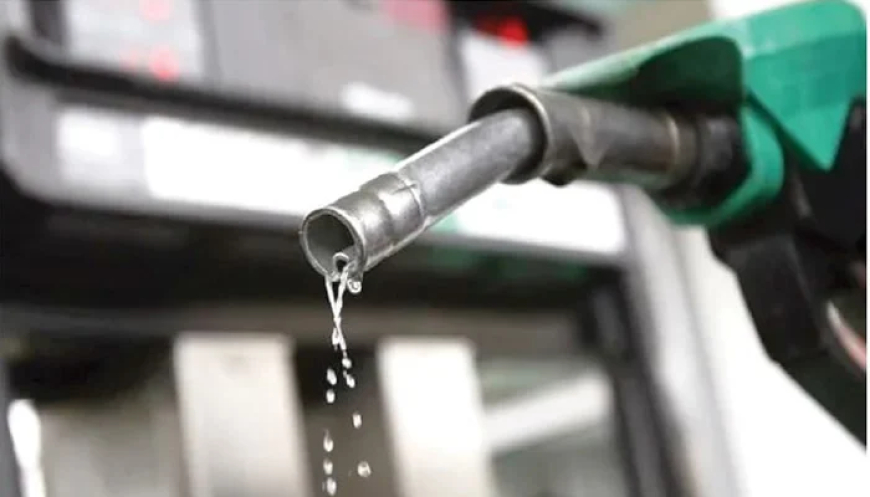
A Professor Emeritus of Petroleum Economics, Wumi Iledare, has urged the Federal Government to shift the national conversation on petrol pricing away from the cost of Premium Motor Spirit and instead focus on building a competitive, transparent and efficient downstream petroleum market.
According to the renowned petroleum economist, Nigerians should be more concerned about whether the pricing mechanism is working fairly than whether petrol prices are high, arguing that pump prices are merely the final outcome of several market forces.
Speaking in a television interview with Television Continental on Monday, Iledare said the debate over fuel pricing had become overly emotional since the removal of subsidy, adding that the more important issue was ensuring that market institutions function efficiently and competitively.
He said, “The issue is no longer whether prices should be regulated. The issue is whether markets are functioning competitively, transparently, and efficiently. The pump price is merely the visible outcome; the pricing mechanism is what policymakers and regulators must continually improve.
The petroleum economist explained that although the removal of fuel subsidy fundamentally changed the pricing mechanism for PMS, it did not remove the economic variables that determine the retail price of the product.
He identified exchange rate volatility, international crude oil and refined product prices, logistics and distribution costs, limited market competition and macroeconomic uncertainty as the major factors driving pump prices across the country.
According to him, many Nigerians wrongly assume that domestic refining alone will automatically lead to cheap petrol.
Iledare argued that while local refining remains strategically important for Nigeria’s energy security, it cannot completely shield the country from global market forces because crude oil is internationally priced and many refining inputs are still dollar-denominated.
“Domestic refining, while strategically important, cannot completely insulate Nigeria from international market realities because crude oil is priced globally and many production inputs, including equipment, financing, chemicals, and replacement costs, remain linked to the United States dollar,” he explained.
He also introduced the concept of what he described as “asymmetric pricing,” noting that petrol prices often rise quickly whenever production or supply costs increase but decline much more slowly when those costs fall.
According to him, such behaviour is common in imperfect markets where businesses immediately transfer higher costs to consumers but delay passing on the benefits when operating costs decline.
“High prices do not necessarily indicate market failure. However, when prices fail to respond appropriately to improvements in underlying costs, the critical question becomes whether competition is sufficiently robust,” he stated.
Rather than advocating a return to fuel subsidies, Iledare said government resources should be redirected toward protecting vulnerable citizens through targeted social interventions.
He described universal fuel subsidies as fiscally expensive, economically distortionary and poorly targeted, insisting that public funds would deliver greater value if channelled directly to those who genuinely need assistance.
The long-term solution is not to subsidise petroleum products again. The solution is to subsidise people instead of products. Government should protect vulnerable households through carefully targeted interventions without distorting market signals or discouraging investment.
“Support can come through expanded mass transit systems, improved rail transportation, transport assistance for students and workers, digital consumer vouchers for low-income households and sustained efforts to stabilise the foreign exchange market. Lower macroeconomic uncertainty reduces risk premiums, and that eventually benefits consumers through better pricing outcomes,” he said.
The professor also called for the full implementation of the Petroleum Industry Act, saying the legislation already provides a framework for promoting competition, transparency, efficiency and investment across Nigeria’s downstream petroleum sector.
He urged regulatory agencies to intensify market oversight while encouraging more private sector participation by removing barriers to entry and ensuring that no single operator dominates the market.
According to him, regulators should regularly publish petroleum pricing templates, assumptions used in price calculations, taxes, levies and logistics costs to improve public understanding of how pump prices are determined.
“Transparency builds trust. When consumers understand how prices are determined and have confidence that markets are functioning fairly, public confidence in deregulation will improve significantly,” he added.
Iledare also proposed what he called the PEWI Four Tests as a framework for evaluating petroleum pricing policies.
According to him, every pricing policy should answer four critical questions: Is it economically efficient? Is it operationally effective? Is it socially equitable? And is it ethically defensible?
“If a pricing policy fails these four tests, it probably requires adjustment. Good petroleum pricing policy should balance economic efficiency with social responsibility and ethical governance,” he said.
He maintained that Nigeria should resist calls to abandon market reforms simply because fuel prices remain elevated.
“Nigeria should not abandon the market because prices are high. We should make the market work better. The objective is not simply cheaper fuel; it is a pricing mechanism that is efficient, transparent, competitive and fair. When markets function well, consumers benefit, investors gain confidence, and the economy becomes more resilient,” Iledare concluded.
The comments come amid continued public concern over fluctuations in petrol prices following the removal of fuel subsidy in 2023 and the liberalisation of Nigeria’s downstream petroleum sector under the Petroleum Industry Act.
Since deregulation, pump prices have been influenced largely by exchange rate movements, international crude oil prices, domestic supply conditions and competition among marketers, prompting renewed calls for greater transparency in the country’s fuel pricing framework.
The recent debate over petrol prices in Nigeria has shifted from whether fuel prices should be deregulated to whether consumers are benefiting from a truly competitive market.
Although global crude oil prices have fallen from the highs recorded during the Middle East conflict and exchange rate pressures have eased somewhat, many Nigerians have questioned why pump prices have not declined at the same pace.
This has prompted the Federal Government, the Nigerian Midstream and Downstream Petroleum Regulatory Authority and the Federal Competition and Consumer Protection Commission to warn marketers against profiteering and anti-competitive practices, insisting that the benefits of lower replacement costs should be reflected at filling stations.
The government has also convened meetings with refiners and marketers, including the Dangote Petroleum Refinery, to ensure that pump prices better reflect prevailing market conditions in the fully deregulated downstream sector.