Fight Against Terrorism: Allow us carry arms to defend ourselves—M/Belt leaders, farmers agree with US Congressmen
 admin
admin
On October 31 last year, US President Donald Trump re-designated Nigeria as a Country of Particular Concern, CPC, following persistent killings of residents by the terrorists.06
Donald Trump followed this up by mandating US Congressman Riley Moore and the House Appropriations Committee Chairman, Tom Cole to lead a comprehensive investigation into the alleged killings by terrorists and the security challenges plaguing Nigeria. Riley Moore had earlier led a delegation on a fact-finding mission to Nigeria visiting Internally Displaced Persons Camps in Benue and also spoke with victims of terrorism.
The Rep Panel which submitted its detailed report to President Trump last Monday recommended some measures to end the killings which include the “removal of Fulani militias from confiscated, productive farmland and enable the voluntary return of displaced communities to their homes”.
The panel also recommended a “technical support to the government of Nigeria to reduce and then eliminate violence from armed Fulani militias, including a demobilisation, disarmament and reintegration programme to address illicit weapons and support safer communities while allowing farmers to engage in legitimate self-defence”. This recommendation excited farmers in the country as they have suffered heavy casualties arising from their persistent clashes with armed herdsmen who grazed their cattle on the farmers’ farmlands. Most of the farmers are in support of the recommendation that they should be allowed to carry arms for self-defence.
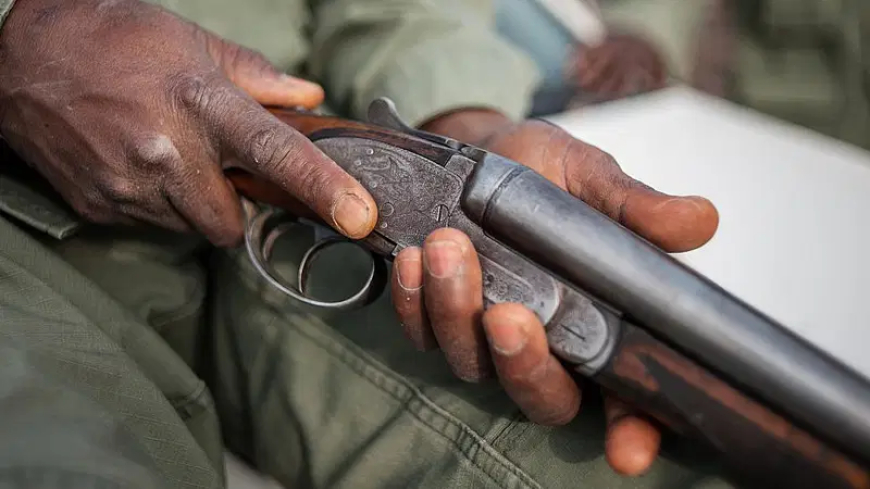
The 1999 Constitution of Nigeria does not however expressly provide citizens the right to bear arms. Instead, firearm possession is strictly regulated by the Firearms Act Cap F28 LFN 2004, which prohibits unlicensed possession, classifying it as a criminal offense. Private citizens may only possess certain firearms (e.g. shotguns) with a license issued at the discretion of the President or the Inspector-General of Police.
Middle Belt leaders back US Congress call for armed self-defense
The Middle Belt Forum (MBF) and Mzough U Tiv (MUT) Worldwide have endorsed a recommendation by the United States Congress that Nigerian farmers be allowed to carry arms to defend themselves against bandits and violent herders. The groups described the proposal as timely, citing the persistent attacks and killings in rural communities across the country. National President of the MBF, Dr. Bitrus Pogu, said the organisation had long advocated for the legal right of Nigerians to bear arms due to the rising wave of insecurity.
Speaking on the development, Dr. Pogu said the recommendation was a welcome move. “We advocate that all Nigerians should be free, like Americans, to bear arms. Communities should not remain defenseless while attackers operate freely. If the person coming to kill you, who has not been disarmed, is free to move around the country all this while, then we should be allowed to have arms.
“However, the problem is that even if that is allowed, people do not have the resources to acquire arms. So we come back to the organised structure we have been talking about. Let local government police be established. Let state police be established. Decentralised policing would ensure that communities become the first line of defence in the event of attacks. Let these people take care of their immediate environment and be the first line of defence in any attack. If these insurgents know that there are people with guns on the other side, I think they will think twice before attacking. They take advantage of the vulnerability and the lack of defence, and the fact that our communities are not adequately policed or protected by the military.
To worsen the issue, some people in these security agencies are compromised to the extent that when communities are attacked, they do not respond promptly. They think more about themselves than performing their civic duties. We deserve to defend ourselves. Since we do not have the resources to do that individually, let the government come in with a structured defence mechanism that will allow communities to defend themselves in the event of attack,” he said.
Similarly, the President General of Mzough U Tiv (MUT) Worldwide and Chairman of the Benue Tribal Leaders, Chief Iorbee Ihagh, also threw his weight behind the U.S. Congress recommendation.
Chief Ihagh commended the U.S. lawmakers for what he described as a bold step and urged the administration of former U.S. President Donald Trump to go further in addressing issues affecting Nigeria. He said, “I am 100 percent in agreement with the recommendation of the U.S. Congress. Our farmers should be allowed to carry arms to protect themselves”.
Cassava farmers’ ex-chair backs US call to arm Nigerian farmers
Also, former South East chairman of the Cassava Producers Association of Nigeria, and traditional ruler of Oriendu Autonomous Community in Umuahia North, Philip Ajomuiwe, endorsed the call by United States of America lawmakers for Nigerian farmers to bear arms to defend themselves against violent herders and bandits. Ajomuiwe, a renowned farmer, described the recommendation as timely and necessary, citing repeated attacks on farmers and the destruction of farmlands without consequences.
He said, “It is a very welcome recommendation. Farmers are being kidnapped, killed and their farms destroyed by criminal herdsmen who simply walk away. If this continues, how do we feed the nation?
I had more than five hectares of cassava worth over N5m at Ndiambe in Ozuitem. The herders drove their cattle into my farm and uprooted everything. That single attack wiped out my entire investment.
“I reported to the then Commissioner of Police. His men came, saw the destruction and were visibly unhappy. They even wrote to the government, but nothing was done to the herders.
“Allowing licensed farmers and community vigilantes to bear arms, as done in developed countries, would deter attacks and restore confidence among rural producers. With proper gun licensing, farmers will no longer be afraid to go to their farms. Communities can mobilise their vigilante groups. We have what it takes to overpower these bandits if we are legally allowed to defend ourselves. Without decisive action to protect farmers, Nigeria’s food security would remain under serious threat”.
Also reacting, a former Commissioner for Agriculture in Abia State, and Board of Trustees member of the Maize Association of Nigeria, Chief Israel Amanze, however warned against rushing into proposals that would allow Nigerians to bear arms, urging the Federal Government to first give state police time to work.
According to Amanze; “When you say allow farmers to bear arms, you are effectively saying allow all Nigerians to bear arms, because almost every Nigerian is a farmer in one way or another. That is a very worrisome development. It is practically a call for gun licences for everyone. I want to advocate one thing: give the government a little time to implement state police. If states are allowed to recruit their own police, secure their boundaries and comb their forests, let us see whether insecurity will reduce. “Centrally controlled policing system has weakened response time and local intelligence, as officers often require clearance from Abuja before acting. The police are operating outside the control of the immediate environment where the pain is being felt. By the time approvals come, crimes have been committed and the criminals have escaped.
“One of the greatest challenges to production and our GDP is the constant attack on farmers in their farms. When farmers are attacked, they abandon their farms. Even when they manage to produce, their crops perish. This is creating serious food security challenges for the country. Let us give state police a chance and see if it will be properly implemented before we get to the dangerous point of encouraging Nigerians to bear arms.”
Plateau farming communities welcome US Congress push for self-defence
The farming communities in Plateau State described as commendable the recommendation by the United States Congress Committee that vulnerable farmers be allowed to bear firearms in self-defence.
Speaking with our correspondent, former Chairman of All Farmers Association of Nigeria (AFAN), Mr. John Jiller, said the recommendation was a step in the right direction, stressing that farmers remained exposed in their homes and on their farmlands.
“It is a welcome idea because farmers are not protected in their communities. They are being killed in their homes and cannot go to their farms. We do not feel safe,” he said. Responding to concerns that community armament could lead to human rights abuses, Jiller argued that “any such measure should operate within a strict regulatory framework.” He added that if the government was unable to guarantee adequate protection, it should consider supporting lawful self-defence initiatives.
Also, Joshua Ishaya, another farmer from Kwall in the Bassa local government area of the state said the proposal was long overdue, noting that “farmers across the Middle Belt have suffered years of attacks, displacement and loss of livelihoods at the hands of these terrorists.”
Similarly, a Civil Liberties Organisation leader in the Middle Belt, Comrade Steve Aluko, maintained that Nigeria’s Constitution recognises the right to self-defence in the face of unprovoked attacks. He called for a regulated community-based security structure to complement conventional security agencies. However, a female ginger farmer, who is a member of the Small Scale Women Farmers in Nigeria, SWOFON, Grace Danaan argued that asking women to carry arms will add additional burden to them. She said, “What we want is for the government at all levels and security agencies to ensure all round protection of citizens, irrespective of their profession.
Edo farmers also back American Congress recommendation
Some farmers in Edo State have also thrown their support for the call by the United States of America Congress that Nigerian farmers should be allowed to arm themselves. Speaking with Vanguard on Friday, HRH Alhaji Bako E Dogwo, who is the Chairman of All Farmers Association of Nigeria in Edo said, “it’s a welcome development here because farmers are the ones that have been attacked more than any other persons, so farmers should be allowed to carry arms to protect themselves and that is why we want the government to invest more in farming.
“When you invest in farming, give them loans they will be able to take from that loan and arm themselves. Even some women can also acquire those arms. Because when you look at the rate of the killings, farmers should be allowed to arm themselves. If I have a gun and you know that I have a gun and the other person has a gun, you will not be able to come to my farm to attack me just like that. When you know that if you come to my farm it is going to be ‘fire for fire’, you will think twice. It’s a welcome development to us farmers. As the head of farmers in the district, I totally support it.
On fears that such privilege may be abused, he said, “Some people have guns, they cannot be abused. When a gun is given to somebody and is given through their proper authority, nobody will abuse it and again, the kind of gun you are also to be given, whenever a person is shot, you know, the kind of bullet that should be in which type of gun. Some farmers have guns for hunting and no farmer has ever abused it, farmers are very disciplined people, you can’t see a farmer getting drunk while on duty, they are highly competent with their senses and farmers are the ones that are supposed to acquire these guns in order to protect themselves in the farm.”
Speaking in a similar vein, the Chairman, Edo State chapter of the National Palm Produce Association of Nigeria, Atoe Efosa Luque said his association had already adopted a method where its members register with vigilantes in the areas where their farms are located to be trained in the art of self defence and urged the Nigerian government to adopt the recommendation. He said “Most of the farmers, the young guys who are farming, we have enlisted almost all of them into the vigilantes and they are being trained. So what the American Congress is saying is not out of place. It is something that every Nigerian should be aware of”.
Equip farmers with legislative backup — FCT AFAN boss
The Chairman, All Farmers Association of Nigeria, AFAN, Dr Nkechi Okafor said, “Yes, farmers should be equipped and allowed to defend themselves. It is heartbreaking that a farmer who is attacked in his farm and by God’s intervention overpowered his attackers would always be sent to prison for self-defence and if he got killed nothing would happen to his murderer(s). If those who are killing farmers in their farms now know that farmers can equally defend themselves as empowered by law, it will at least make them think twice before attacking the farmers. If the fear of going to jail when your attackers get killed in the process of defending yourself is out of it, I believe more farmers, especially the able bodied will have the courage to go to their farmers.”
Allow farmers to defend themselves — AFAN
The Deputy President, All Farmers Association of Nigeria, AFAN, and National President, Potato Farmers Association of Nigeria, POFAN, Chief Daniel, said: “This is part of my earlier write up on self-defence. This is the way out of the attacks farmers have been grappling with. Farmers should be legally empowered to arm themselves for self-defence. This is the way forward in tackling the insecurity in our dear country.”
We’re depending on the government to protect us, not self-defence
Zainab Isah Arah of Small Scale Women Farmers Organization in Nigeria, SWOFON, Zamfara State Chapter, said, “We appreciate the concern behind this suggestion. It shows that the suffering of farming communities in places like Zamfara is being noticed beyond our borders. For us, insecurity is not a theory or a debate. It is our daily reality. Many farmers in Zamfara have lost loved ones, been kidnapped, or watched their crops rot because it is too dangerous to go to the fields. Some communities have been displaced entirely. When farmers cannot farm, families go hungry, local markets suffer, and the entire country feels the impact through rising food prices.
“So, the question is understandable: should farmers be allowed to defend themselves? Every human being has the right to protect his or her life. But we must be honest, allowing or expanding self-defence is not a simple solution. Zamfara already struggles with the widespread presence of weapons and organized armed groups. If not carefully managed within a clear legal and security framework, more arms in civilian hands could increase tension and lead to more violence. What we truly need is not to become fighters but to become farmers again, safely.
“Improving food production will not happen simply because farmers are permitted to defend themselves. It will happen when we can travel to our farms without fear of abduction, security forces are visible and responsive in rural areas, roads to markets are safe and communities trust that the government is firmly in control. Security is the responsibility of the state. Farmers should not have to carry the burden of replacing formal security institutions. Any discussion of self-defence must be part of a broader, carefully regulated strategy that strengthens, not weakens, the rule of law.
“We respectfully call on the Federal Government of Nigeria, with the support of international partners including the United States, to focus on lasting solutions: stronger rural security presence, better intelligence and early warning systems, tackling the root causes of banditry, and supporting affected farmers to rebuild their livelihoods.
“We do not want to live in a cycle of violence. We want to plant, harvest, feed our families, and contribute to Nigeria’s food security. The path to increased food production is peace, stability, and trust in institutions, not simply more weapons in our communities. Our greatest wish is simple: to return to our farms without fear.”
State police better than farmers’ self-defence — EA Daniels Farm
The Chief Executive Officer, CEO, EA Daniels Farm, Engr Daniel Ijeh, based in Delta State said, “The government should adopt state policing. If they adopt state police, the state government should be responsible to provide that level of security for the people.
“So, they will be easy to reach, and decisions can be taken fast without unnecessary bureaucracies. Farmers don’t have the money to buy guns and other security equipment to protect themselves, especially, as a country of predominantly smallholder farmers unlike American farmers who are rich.”
We need more intelligence, not self-defence — CPPE
The Chief Executive Director, Centre for Promotion of Private Enterprises, CPPE, Dr Muda Yusuf, said, “It is important we focus on intelligence. This is a responsibility to support both the vigilantes and the forest guards with quality equipment. And more importantly, we need to invest in intelligence because all this is reactive when the psyche does not respond. If you have good intelligence, you strike them before they even take off, you take the battle to them. You don’t wait for them to start attacking.
“The best way to deal with this thing is to have quality intelligence in all these locations, and the use of technology. You have drones, you have everything now that people are using. We need to invest in technology. For me, I don’t want this idea of people defending themselves.”
Self-defence is not a comprehensive solution — DeBranch Farmers
Sandra Victor-Gwafan, Co-founder of Kaduna-based DeBranch Farmers Ltd, said, “The suggestion by the US Congress for the Nigerian government to allow farmers to engage in legitimate self-defense raises important considerations. While empowering farmers to protect themselves may offer some immediate relief against attacks, it is not a comprehensive solution. Security is primarily a state responsibility, and arming civilians carries risks of misuse, escalation, and unintended conflict.
This measure is not a panacea for ensuring farmers’ safe access to their farms. Root causes of rural insecurity, such as armed groups, weak policing, and poor infrastructure, must be addressed alongside any self-defense initiatives.
“Without these systemic interventions, farmers may continue to face threats, and self-defense could provoke further violence. Regarding food production, legitimate self-defense might reduce losses from isolated attacks, but it will not significantly boost overall agricultural output. Sustainable improvements depend on stability, access to inputs, infrastructure, and support services. Reactive measures like self-defense can provide temporary relief, but long-term food security requires coordinated government protection and community resilience strategies
Culled from vanguard