FIFA rejects influence claims after Argentina-Egypt VAR controversy
 admin
admin

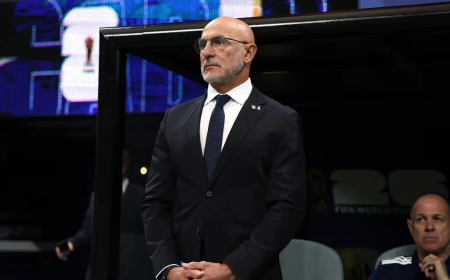
FIFA Chief Refereeing Officer, Pierluigi Collina, has defended the independence of World Cup match officials following controversy over the VAR decisions in Argentina’s Round of 16 victory over Egypt, insisting that referees cannot be influenced by anyone, including FIFA President Gianni Infantino.
Collina made the remarks in an interview published by FIFA on Thursday after criticism over officiating decisions during the knockout tie, saying allegations questioning the integrity of referees were unacceptable and had exposed officials and their families to threats.
“Nobody can claim that FIFA Refereeing can be influenced by anyone, not even by the FIFA President [Gianni Infantino].
“He has always shown his full support for FIFA Team One while trusting us to work with complete independence. Match officials make honest decisions and, just like players and coaches, they always try to do their best,” he was quoted as saying.
Explaining the controversial decisions in the Argentina-Egypt match, Collina said VAR correctly intervened after Egypt midfielder Marwan Attia stepped on the foot of Argentina defender Lisandro Martínez during the attacking possession phase before a goal.
According to him, the Laws of the Game do not impose any time or distance limit on incidents that can be reviewed if they lead to a goal.
“We believe that a foul is a foul. Regardless of whether the foul appears ‘obvious’, if the referee did not see it on the field of play, the VAR can intervene.
Equally, if no foul is identified in the build-up to a goal, the VAR will advise the referee accordingly. Stepping on an opponent’s foot is a foul, whereas a defender who touches the ball first and then makes normal football contact has not committed a foul.
“Again, an example of this came at the end of the same game. The referee and the VAR deemed it normal football contact between Egypt No. 10 Mohamed Salah and Argentina No. 10 Julián Álvarez,” he said.
The Italian referee acknowledged that officiating decisions would always generate debate but maintained that FIFA was satisfied with how VAR had been applied throughout the tournament.
“Of course, there will always be an element of subjectivity in some decisions, but we are happy with how this principle has been applied throughout the tournament,” he stated.
Collina also gave a positive assessment of officiating standards after 96 matches at the expanded 48-team World Cup, saying FIFA remained satisfied with the overall performance of referees despite the increased workload.
“Constructive discussion about decisions will always be part of football, but unfounded allegations have no place in our sport.
“Nobody can question the integrity of the FIFA World Cup match officials. When this happens, it may provoke reactions that lead to threats against them and their families. This is not right,” he said.