
316 years combined, Meet world’s oldest living sisters undergoing DNA longevity research
 admin
admin
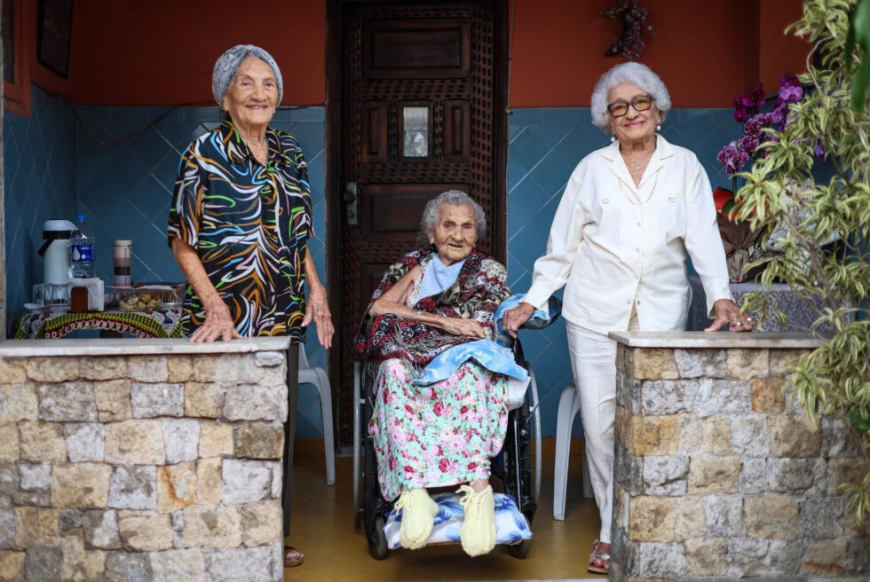

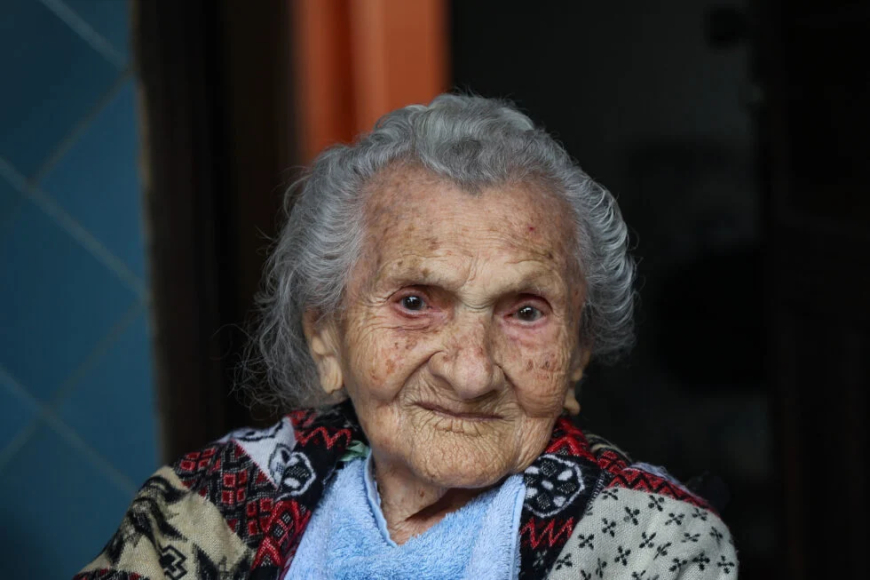
Three Brazilian sisters aged 109, 104 and 103, respectively, have been officially recognised by Guinness World Records for setting a record for the highest combined age of three living siblings.
With a combined age of 316 years, their incredible survival has caught the attention of top scientists who want to understand the secret behind their long lives and sharp minds.
According to a June report published by LongeviQuest, an organisation that verifies longevity records and partners with Guinness World Records, a researcher, Lara Souza, personally visited the world’s oldest living sibling trio at their residence.
Originally from the rural town of Cedro de São João in Sergipe, Brazil, the sisters grew up in a big family of eight children.
They spent their youth doing heavy manual work, eating fresh food straight from the farm, and swimming in open rivers. Later in life, they all migrated to Rio de Janeiro.
A profiling of the family revealed that despite their history-making longevity, the three sisters led largely conventional, hardworking lives.
“Levita de Deus Nunes was born on 7 June 1917, and has turned 109 since the visit took place. The second-eldest of eight siblings, it was Levita who managed the home, organized the household routine, and cared for the family while her parents worked in the fields.
Around 1953, she moved to Rio de Janeiro to support Zulina during the difficult process of adapting to the new city. Although she never married nor had children, Levita devoted her entire life to her family,” the report partly read.
Levita reportedly inherited from her mother a talent for handmade crafts and transformed crochet, knitting, and sewing into activities that combined livelihood, leisure, and personal expression. She later joined Rede Globo Television, where she worked for 12 years.
When asked about her favourite foods today, Levita reportedly mentioned sorubim and lau-lau catfish.
The second oldest of the sisters, Zoraide de Deus Mota, was born on 24 November 1921.
She reportedly graduated as a primary school teacher, and began her professional journey in São Cristóvão, Sergipe, before moving to Rio, where she went to nursing school.
“Over the years, she built a respected and solid career, working in several hospitals until her retirement. On 6 February 1950, she married Enéas Alves da Mota, with whom she had five children.
“Zoraide recalled that the family enjoyed high-quality pork in their youth. Their father raised pigs and butchered them himself, selling the meat directly from their home. While much of it was sold to customers, he always set aside the best cuts for his family to enjoy,” the report revealed.
The youngest of the trio, Zulina de Deus Nunes, born on March 4, 1923, reportedly learned domestic and artisanal skills, including sewing, cross-stitch embroidery and refined handmade crafts from an early age that would later become fundamental to her survival and independence.
She married José Benvindo dos Santos on July 17, 1945, when she was said to have taken responsibility for managing the household and raising their six children while her husband worked, travelling the railway route as an employee of the former Federal Railway Network
Zulina reportedly faced tough times after their marriage ended with no financial stability.
“Alone, with small children and no financial stability, she decided to migrate to Rio de Janeiro around 1952 in search of a better future for her family. Upon arriving in Rio de Janeiro, she found fundamental support in Zoraide, who offered her shelter and assistance during the first month,” the report said.
The rare concentration of extreme longevity within a single immediate family has reportedly drawn intense interest from the global medical community.
As all three sisters have crossed the 100-year mark while remaining healthy and mentally sharp, they have been enrolled in The DNA Longevo Project, a major scientific study led by renowned geneticist Dr Mayana Zatz at the University of São Paulo.
Reuters reports that the scientific study aims to pinpoint specific biological markers that preserve physical and mental functional resilience at exceptionally advanced ages.
The researchers are reportedly comparing the genetic data of healthy nonagenarians and centenarians against that of individuals who develop early frailty, chronic diseases, or cognitive decline.
“Through DNA testing, we look for protective genes, and we know there are several of them,” Dr. Zatz, who coordinates the university’s Human Genome Research Center, reportedly stated to Reuters. “The more people we have who live past 100, especially families with multiple centenarians, the more accurate our research will be in identifying them.”
Believing that inherited biological factors play a far more substantial role in extreme survival than environmental habits alone, researchers also hope to understand how genetic factors, rather than lifestyle, help protect the heart, muscles, and cognitive function from the ravages of ageing.
A co-researcher, Joao Paulo Guilherme, who works with Zatz, said the study’s goal “is to reach 500 centenarians so we can draw more definitive conclusions about longevity.”
When sisters reach that age, there is clearly a strong genetic component, but because they live near each other, they also have a support network, with family able to help when needed. There is definitely a community aspect as well,” the Chief Executive Officer of LongeviQuest, Ben Meyers, was also quoted as saying.
When asked about their secrets, the sisters themselves pointed to a lifetime of natural nutrition.
Recalling their childhood in rural Brazil, the youngest sister, Zulina, told Reuters that they spent their youth swimming and fishing in open rivers.
“Everything was fresh. We didn’t have a refrigerator,” she said. “Breastfeeding is incredibly important,” Zoraide added.
Reflecting on her 109-year journey, the eldest sister, Levita, told researchers she has no regrets about her life, concluding, “I had a good childhood and adolescence. I can’t complain.”
Report that the world’s oldest person, British woman Ethel Caterham, turned 116 in August 2025, months after the title passed to her following the death of Brazilian nun Inah Canabarro Lucas.
When asked about her secret to longevity, she humorously replied, “Never arguing with anyone! I listen, and I do what I like.”