UK ministers free to vote as they wish on assisted dying bill — PM Burnham
 admin
admin
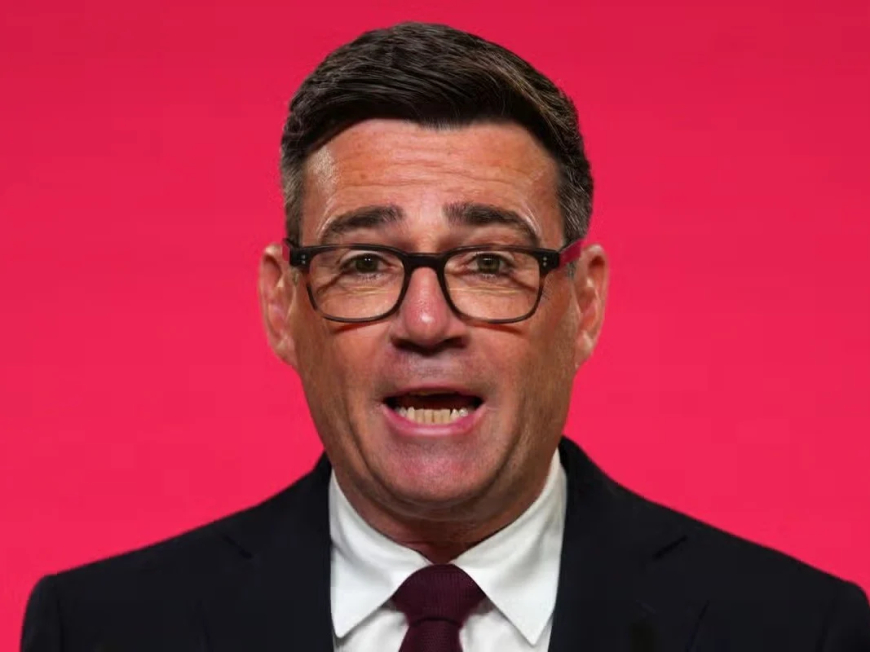
UK ministers have been told they can follow their conscience when deciding whether terminally ill adults should be allowed to seek assisted death, as the government steps aside from one of the country’s most emotionally charged ethical debates.
Prime Minister Andy Burnham said ministers would be free to “vote, or abstain, however they wish” on the Terminally Ill Adults (End of Life) Bill, which would enable assisted dying in England and Wales.
This is as the government says it has also suspended collective responsibility for ministers over a proposed assisted-dying law, allowing members of the Cabinet to vote or abstain according to their personal views on the issue.
In a personal minute circulated to all government ministers, on Friday, Burnham said the decision followed the reintroduction of the “Terminally Ill Adults (End of Life) Bill, which seeks to enable assisted dying in England and Wales.”
Burnham described the legislation as “an incredibly important and deeply personal issue” on which ministers could legitimately hold different views.
“As is long-standing convention for such issues of conscience, I have set aside collective responsibility on the Bill and on the question of whether assisted dying should be permitted,” he said.
“That means Ministers can vote, or abstain, however they wish.”
The Prime Minister said the Government would remain neutral on both the principle of assisted dying and the progress of the Bill through Parliament.
“The Government will remain neutral on the question of assisted dying and on the passage of the Bill,” he said.
He added that the Government would continue to fulfil its responsibilities towards the statute book and would ensure that any change to the law approved by Parliament could be effectively implemented.
Treat opposing views with respect
Burnham acknowledged that ministers would approach the issue from different personal experiences and urged them to treat opposing views with respect.
“We will all bring different life experiences to this debate, and I know the decisions Ministers come to will weigh heavily on them,” he said.
“As such, everyone must be given the space to arrive at their own view, and it is vital that those different views are treated with dignity and respect.”
Ministers told to stay out of public campaign
The Prime Minister also instructed ministers to avoid using their government positions to influence the wider public debate over the legislation.
He said members of the Government should be able to reach their decisions without feeling that the administration was attempting to influence Parliament.
“At the despatch box, I ask that Ministers reiterate that this is a question for Parliament, on which the official Government position is to remain neutral,” Burnham said.
He said the same approach should apply outside Parliament, including when ministers engage with traditional and social media.
However, ministers would not be required to withdraw views they had previously expressed on assisted dying.
“Of course, Ministers do not need to resile from their previously stated view when directly asked about them and can correspond with constituents about their previous position,” Burnham said.
He nevertheless urged them to avoid becoming active participants in the public debate or expressing views about the implications of the Bill for their individual departmental responsibilities.
Relaxation of collective responsibility
Burnham stressed that the relaxation of collective responsibility was exceptional and limited specifically to the assisted-dying question.
“As you will be aware, this is an exceptional arrangement, which applies only to the question of whether, and how, Parliament should legislate on the issue of assisted dying.
“Collective responsibility will apply as usual across the rest of Government business,” he said.
He added that if Parliament voted to change the law, it would become Government policy to implement the change.
The Terminally Ill Adults (End of Life) Bill would therefore be debated against the backdrop of an officially neutral Government, with ministers permitted to support, oppose or abstain from votes based on their individual convictions.