Trump rejects blame for Republican losses, says candidates failed to inspire voters
 admin
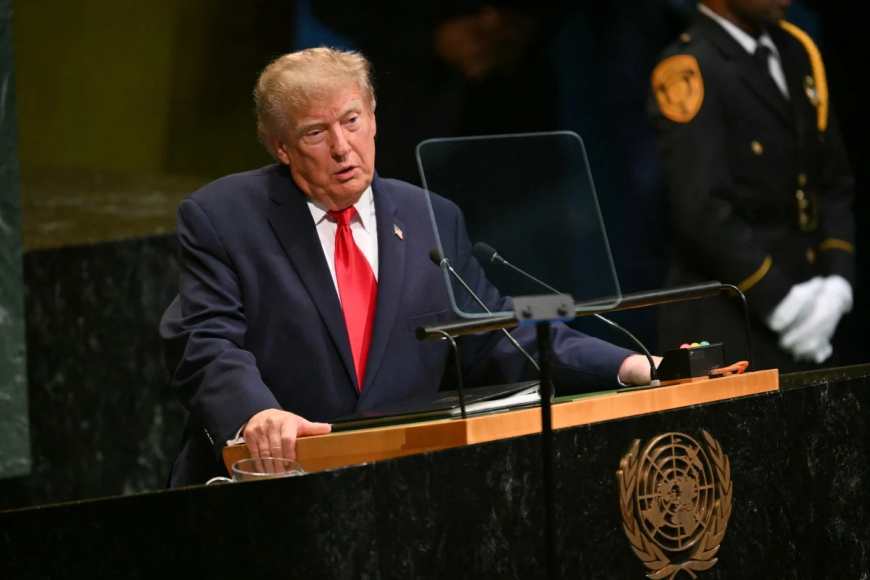
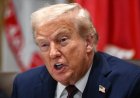
United States President Donald Trump has rejected suggestions that his leadership and policies contributed to Republican losses in the midterm elections, instead blaming the party’s candidates for failing to mobilise voters.
The election results, which saw Democrats win control of both the House of Representatives and the Senate on Tuesday, have raised questions about Trump’s political standing and the direction of his administration for the remainder of his term.
While members of both parties viewed the outcome as a rejection of Trump’s record in office, the President dismissed the suggestion that the results represented a setback for him.
“But I don’t view it as a hit on me,” Trump told Fox News in a live phone interview
We’ve had the greatest two years in the history of the presidency in terms of the economy, in terms of all the things that we’ve done.”
Trump argued that the losses were largely caused by the performance of individual Republican candidates rather than his administration’s policies, including the war in Iran and tariffs that have contributed to rising prices.
He also blamed what he described as favourable media coverage of Democratic candidates, particularly on Fox News, saying the election outcome came as only a “little surprise”.
“I thought they’d do better,” he said, referring to Republican candidates.
He later attributed the outcome to a “mood in the air”, while maintaining that his administration’s policy agenda would continue despite the Democrats’ gains in Congress.
The election followed weeks of campaigning by Trump, who travelled to Republican-leaning states to rally support for candidates, urging voters to “pretend I’m on the ballot”.
However, the strategy failed to deliver the expected results, with Trump insisting that the candidates did not do enough to attract voters.
“They just didn’t inspire the people to get out and vote,” he told Fox News.
“And I wasn’t on the ballot. If I was on the ballot, they would have got out.”
Several of the defeated candidates, including Darline Graham in South Carolina, Ken Paxton in Texas, Michael Whatley in North Carolina and Mike Collins in Georgia, had received Trump’s endorsement.
Some of the endorsements had also been made against the wishes of other Republican leaders.
Trump, however, did not acknowledge his role in selecting the candidates as he criticised their performances.
I had no choice,” he said, defending his decision to support Paxton over incumbent Senator John Cornyn in Texas.
“When it wasn’t fashionable, he kissed my ass.”
In a post on his Truth Social platform shortly before midnight, Trump indicated that he would publicly analyse the reasons behind the party’s losses.
“I’m going to become a Political Pundit, both good and bad, on the reasons these Candidates won and lost!” he wrote.
He subsequently criticised Texas Governor Greg Abbott, describing him as a “Republican in name only” and accusing him of returning to an unsuccessful political strategy.
He went back to his original formula, and it wasn’t pretty!” Trump wrote.
However, in an interview with Politico around the same period, the President said he was not interested in blaming anyone for the outcome.
“I don’t want to blame anybody,” he said.
“I just want to say, you know, it was a very interesting period of time. I watched with great interest, learned from it.”
Trump also expressed willingness to work with Democrats, who will now have greater influence over legislative decisions in Washington.
He said he had already spoken with some Democratic politicians, although he did not identify them.
“You know, I have a lot of friends that are Democrats. Believe it or not, I’ve already spoken to some of them,” he said.
The President spoke about finding areas of agreement with the opposition party, although similar promises of bipartisan cooperation following Republican losses in the 2018 midterm elections did not produce significant results.
Meanwhile, Trump dismissed suggestions that he regretted his decision to launch the war in Iran, an issue some Republicans have identified as contributing to the party’s poor electoral performance.
“I don’t think about it. I did the right thing,” he told The Wall Street Journal when asked whether he regretted the military action.
“I would have done it again.”