Soyinka to Tinubu: Probe unresolved assassinations as promised
 admin
admin

Nobel Laureate, Prof. Wole Soyinka, has called on President Bola Tinubu to fulfil his promise of revisiting cases of unsolved assassinations and extrajudicial killings across the country.
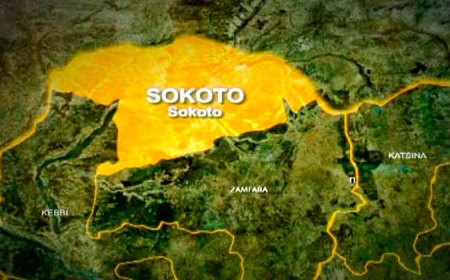
Soyinka also called on the Federal Government not to gloss over the killing of the student of Shehu Shagari College of Education, Sokoto, Deborah Samuel, by Muslim extremists in 2023 after she was accused of blasphemy.
Speaking at the 28th Wole Soyinka Lecture Series organised by the National Association of Seadogs (Pirates Confraternity), which featured the NAS Martyrs’ Day, held in Port Harcourt on Friday, Soyinka asked the Federal Government not to be silent on the extrajudicial killing of a 28-year-old youth, Mene Ogidi, who was shot dead in broad daylight by a policeman in Delta State, saying the perpetrators must be made to face the law.
The theme of the lecture was “Reclaiming the Nigerian State through Accountability, Justice and Civic Courage”, chaired by former Managing Director of the Niger Delta Development Commission, Chief Timi Alaibe.
When there was a government retreat, you remember? The incoming President said, ‘I want all the files of all the unsolved assassinations, killings, extrajudicial killings.’ What has happened to those files? I want you to join me in asking President Tinubu to say, we want you to dig up those files. We want to know what happened, why it happened, who is of value as a human being, and who is there for casual disposition.
“That is the essence that I understand from this lecture. That is why I took the trouble, as a Seadog. This was a duty, and this is a message to the nation, to you as citizens, as human beings, to put an end to this casual butchery, no matter what the causes are,” he stated.
While warning against selective justice, Soyinka lampooned the judiciary for failing to stand for the truth and for Nigerians in the face of clear injustice against fellow citizens.
He maintained that perpetrators of crime anywhere in the country must be identified and punished according to the law.
The Nobel Laureate said it was disturbing that one of Deborah’s classmates openly displayed the matchstick used to light the fire with which they set her ablaze and wondered why the deceased was yet to get justice years after that mindless act of wickedness.
He said the 28th lecture series was a reminder of the injustices going on in Nigeria, the failure of the judiciary and citizens, while serving as a tribute to all martyrs, including the six traders killed by the police in Apo, Abuja, in 2025.
He wondered why the trigger-happy cop in Delta State was swiftly apprehended whereas, in the case of Deborah’s murder in Sokoto, the suspects did not receive the same immediate arrest and punishment, suggesting selective justice.
Soyinka stated, “My remark is to remind you and pay honour to those who have lost their lives as a result of these deficiencies in the state and also the criminal participation, even indirect, of ours, the complicity in the decimation and the devaluation of our humanity.
“I don’t want us to lose that sense that this session is dedicated to the martyrs, to those who have needlessly and avoidably lost their lives, whom we all admit, the life of a human being constitutes the basic unit of any community, any structure, any system of governance.
It is dedicated to individuals, the youths, like Deborah, who was butchered by her own classmate, hunted through the city, necklaced and set on fire. But that is not the crime. That really is not the crime.
The crime is the silence of the rest of us, that such a thing is possible, and that the killers of that girl can actually go on television, hold up a match, and say this is the match with which I set her on fire. And there the system of justice fails us completely. Try and imagine that policeman who shot that young person, then going on television and saying this is the gun with which I killed him. It’s impossible.”
Soyinka decried the “selective justice”, which he said must not be allowed to continue.
Returning to Deborah’s killers, Soyinka said, “But because that happened in another part of the nation, those killers got away with it. Now when I say this, which I have done, of course, then I hear cries like, ‘Oh yes, he wants to start a religious war; people are starving, he doesn’t talk about that; people are stealing, he doesn’t talk about that.’ I think such people are insane.
“And that is why sessions like this are important, to remind us that the human unit is the basic, the least common denominator, and thus, ironically, the most important of what you call the human community. And I want you all to keep watch with me, to follow what happens to that policeman, to make sure that the judiciary doesn’t fail us again, that the system of justice doesn’t fail us. Watch with me so that we can force the government to bring up all the files.”
In his keynote address, former Minister of Aviation, Osita Chidoka, stated that justice for most Nigerians begins long before any courtroom, saying it starts when police officers decide whether a complaint is believed or ignored based on merit and not on external factors.
While citing the wrongs in the Nigerian justice and correctional system, Chidoka revealed that 64 per cent of inmates in custodial centres, including more than 50,000 Nigerians, were awaiting trial and had yet to be convicted of any crime.
“Each of these 50,000 is a life in suspension, a job lost, a family destabilised, someone’s health failing. When the state causes that delay, the citizens pay for it in lost liberty. The delay is not inefficiency; it is a form of violence carried out by the state itself,” he said.
He insisted that true justice means the rules do not change with a citizen’s identity and that the prosecution of individuals must follow evidence, while those in detention must remain visible to their lawyers.
“A citizen who defeats the government in court must not face a second battle to compel obedience. Justice is also tested by how society treats those it dislikes. The law is not established when it protects only our friends. Justice must defend the accused, the unpopular, the political opponent, and the minority, because citizenship does not depend on agreement. Where justice is negotiable, citizenship becomes hierarchical,” he added.
Earlier in his opening remarks, the Chairman of the occasion and former Managing Director of the Niger Delta Development Commission, Timi Alaibe, said sustainable development could not exist in the absence of accountability.
Alaibe added that where institutions are weak, hope gives way to despair and that where accountability is present, even limited resources can produce lasting impact.