Reps dismiss money laundering petition against NNPCL boss
 admin
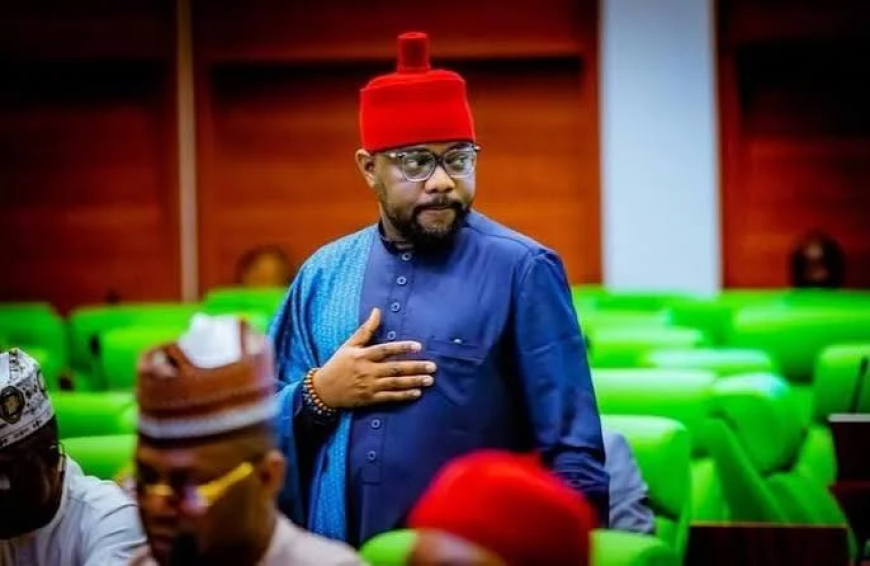
The House of Representatives Committee on Petroleum Resources (Downstream) has dismissed a petition accusing the Executive Vice President (Downstream) of the Nigerian National Petroleum Company Limited, Dr Mumuni Dagazau, of money laundering and conflict of interest, saying the petitioners failed to provide evidence to substantiate their allegations.
The committee also passed a vote of confidence in President Bola Tinubu and the management of NNPCL, commending their handling of reforms in the downstream petroleum sector.
The committee’s chairman, Ikenga Ugochinyere, announced the decisions on Monday during a sitting at the National Assembly Complex, Abuja, where members considered reports on pending investigations and reviewed progress in the implementation of downstream sector reforms.
Ugochinyere said the petition, submitted by the Coalition for Transparency and Accountability in Nigeria’s Petroleum Sector, was referred to an ad hoc subcommittee for investigation, with both the petitioners and the NNPCL executive given opportunities to present their positions.
He said, “The petitioners appeared before the sub-committee on Wednesday, October 21, but presented newspaper clippings rather than documentary evidence to support the allegations.”
He said they were given further opportunities to submit relevant documents but failed to return on Thursday and Friday.
Dagazau, on the other hand, honoured the committee’s invitation through his representatives, who responded to the questions put to them, Ugochinyere said.
The committee chairman added that members also took note of an existing court order relating to the matter before reaching their decision.
“Having considered the report of the sub-committee, this committee has today resolved to dismiss the petition in its entirety. No evidence was placed before us in support of any of the allegations. An allegation is not evidence, and a newspaper clipping is not proof”, he stated.
Ugochinyere criticised the petitioners for failing to substantiate the allegations, warning against using the National Assembly as a platform to damage the reputations of public officials.
“When petitioners bring weighty allegations against public officers, attract public attention, and then fail to substantiate them or even to return, they abuse the processes of the National Assembly and damage the reputations of those who serve the nation,” he added.
He, however, maintained that the committee remained open to petitions backed by credible evidence, stressing that its oversight responsibilities would be exercised without fear or favour.
The dismissal of the petition followed the committee’s consideration of other pending matters, including proposed amendments to the Petroleum Industry Act 2021 and measures to strengthen domestic refining, petroleum product distribution and energy security.
The committee also passed a vote of confidence in Tinubu over his leadership of the downstream petroleum reforms and commended NNPCL’s management for its role in implementing them.
Ugochinyere said the committee’s assessment was that the reforms had helped improve supply stability and strengthen domestic participation in the petroleum market, despite rising international crude oil prices.
He cited the reported increase in the contribution of domestic refineries to petrol supply, alongside measures to improve crude supply to local refineries and expand alternative-fuel infrastructure.
According to him, the contribution of domestic refineries to petrol supply had risen by more than 75 per cent, while the regulator had recorded no supply shortfalls and more than 25 days of national sufficiency.
The committee, he said, had agreed with the Nigerian Midstream and Downstream Petroleum Regulatory Authority to raise national sufficiency to 45 days within the current quarter and develop a strategic national stock capable of covering up to 90 days in 2027.
Ugochinyere also said crude supply to local refineries under the Domestic Crude Supply Obligation reached 97.4 per cent of allocated volumes in the second quarter of 2026.
Between January and September, he added, domestic crude accounted for more than 80 per cent of crude received by Nigerian refineries.
He further disclosed that Nigeria’s crude oil production reached 1.56 million barrels per day in June, its highest level in 74 months.
The figures were presented by the committee chairman as evidence of progress under the government’s downstream reform programme.
The lawmaker also highlighted measures by NNPCL to ease the impact of rising fuel costs, including a reported N66-per-litre petrol discount introduced on October 1.
He said the Federal Government announced on October 8 that NNPC Retail would suspend its profit margin and sell petrol at cost for 30 days, with priority given to commercial transport operators.
According to Ugochinyere, the arrangement was designed to provide temporary relief without restoring the former fuel subsidy regime, as the reduction would be borne by NNPC Retail’s margin rather than the public treasury.
He also commended the company’s efforts to expand compressed natural gas infrastructure, disclosing that more than 120,000 vehicles were operating on CNG and that NNPCL had acquired 500 CNG-powered trucks for petroleum product distribution.
The company had also delivered 35 CNG-hybrid buses to the Presidential CNG Initiative, he said.
In addition, Ugochinyere cited NNPC Retail’s commissioning of a solar-powered smart energy station in Abuja in September, offering petrol, liquefied petroleum gas, CNG and electric vehicle charging services. He said between 50 and 70 similar stations were expected to be established within six months.
On refinery rehabilitation, the committee chairman said technical partners had conducted assessments of the Port Harcourt and Warri refineries as part of efforts to restore reliable and commercially viable operations.
The committee’s position comes against the background of longstanding difficulties in Nigeria’s refining sector, where repeated rehabilitation projects have failed to deliver sustained production from the country’s state-owned refineries. As of July 2026, the Port Harcourt, Warri and Kaduna refineries had yet to resume production, according to the statement presented to the committee.
House Plans Further Downstream Reforms
The committee also received an update on proposed amendments to the Petroleum Industry Act 2021, which Ugochinyere said were intended to strengthen domestic crude supply arrangements, regulate imports, protect product quality and improve oversight of pricing and market competition.
He said the proposed changes would also address pipeline security and support the expansion of CNG and LPG infrastructure.
The committee granted its subcommittee investigating NIPCO Plc an additional 14 days to conclude its work, stressing that the extension was intended to allow a thorough examination of the issues before it.
Ugochinyere said the committee would continue to monitor the implementation of its nine-pillar roadmap to downstream energy security, including domestic crude supply, strategic reserves, product quality monitoring, pipeline protection and transparent pricing.
The Renewed Hope downstream sector agenda is working,” he said, while assuring Nigerians that the committee would sustain its oversight of the industry.
The committee’s resolutions place renewed emphasis on accountability in the petroleum sector, even as its dismissal of the petition against Dagazau closes the legislative panel’s consideration of the allegations on the evidence presented to it. The decision does not, by itself, establish that no wrongdoing occurred; it reflects the committee’s finding that the petitioners failed to substantiate their claims before the panel.