Make Biology compulsory in secondary schools, Reps urge education ministry
 admin
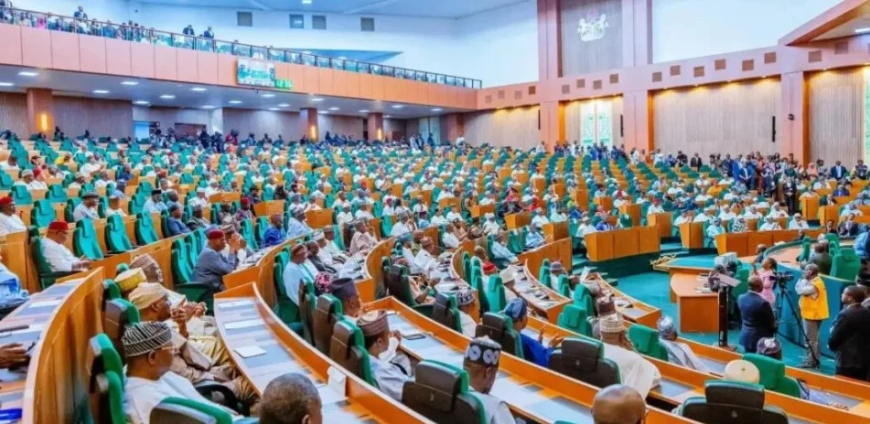
The House of Representatives has urged the Federal Ministry of Education to reinstate Biology as a core and compulsory subject in the senior secondary school curriculum, warning that its removal could undermine students’ understanding of human life and the natural world.
The House also called on the ministry to introduce Spanish, German, Chinese and Russian into the school curriculum to strengthen Nigeria’s capacity to meet growing international, scientific, economic and diplomatic demands.
The resolutions followed the adoption of a motion sponsored by Ibrahim Isiaka (APC, Ogun) titled “Need to Review the Federal Ministry of Education’s Circular Issued by the Nigerian Educational Research and Development Council on the Approved Subjects for Basic and Senior Secondary Education in Nigeria”.
Presenting the motion during Wednesday’s plenary, Isiaka drew attention to the Federal Ministry of Education’s circular of September 8, 2025, which outlined the approved subjects for basic and senior secondary education.
He expressed concern that Biology, traditionally taught as a core science subject in Nigerian secondary schools, had been removed from the list of compulsory subjects for senior secondary students.
The lawmaker argued that Biology “provides essential knowledge about the human body, plants, animals and other living organisms, making it important to students’ education and their understanding of the environment.”
He warned that removing the subject from the compulsory curriculum could “limit students’ access to scientific knowledge with practical applications in healthcare, agriculture, environmental protection and other fields.”
He said, “The House is concerned that the removal of Biology as a compulsory and core subject will cause significant harm to the education standard of our students in their capacity to acquire knowledge that is universally acknowledged and to benefit themselves, society and humanity at large.”
The motion noted that biological research and scientific experiments remained important to global scientific advancement, including research conducted aboard the International Space Station and missions exploring the Moon and Mars.
Against this background, the House considered the exclusion of Biology from the compulsory curriculum unhelpful to the development of students’ scientific knowledge and understanding.
Following the adoption of the motion, the House consequently urged the Federal Ministry of Education to review the revised basic and secondary education curriculum and restore Biology as a core and compulsory subject at the senior secondary level.
It also called on the ministry to “develop appropriate training and recruitment arrangements for teachers of the proposed foreign languages, particularly at the basic and senior secondary levels.”
The lawmakers said expanding the pool of language teachers and interpreters would help address the country’s shortage of professionals capable of facilitating communication in international engagements.
To ensure implementation, the House mandated its Committees on Basic Education and Services, Alternative Education and Basic Examination Bodies to liaise with the ministry and report back within four weeks for further legislative action.
The proposed review comes amid continuing efforts to revise Nigeria’s school curriculum to reflect changing educational priorities and equip students with knowledge and skills relevant to national development.
Biology remains an important foundation for further studies in fields such as medicine, nursing, pharmacy, agriculture and biological sciences.
However, the House’s resolution is a call for a review of the approved subject list; any change to the curriculum would depend on the Federal Ministry of Education’s response and the relevant implementation process.