Customs seek review of import waivers, 2023 Act
 admin
admin
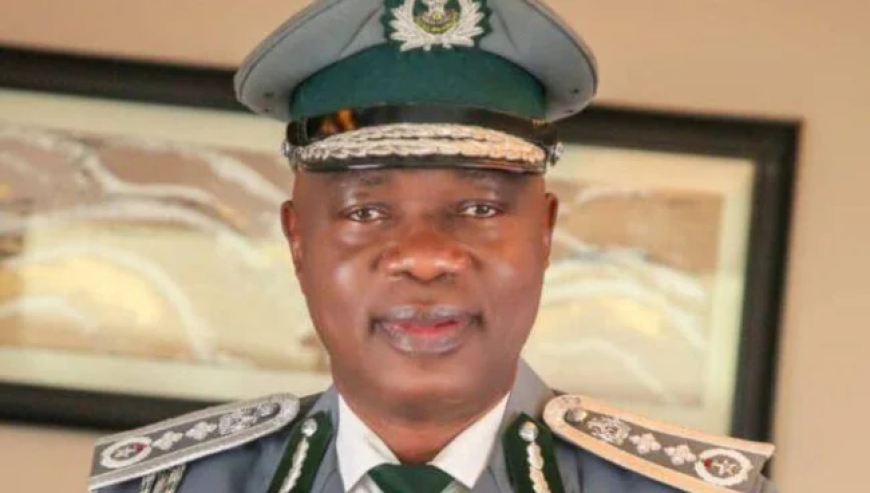
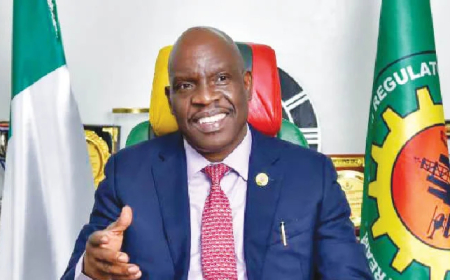
The Nigeria Customs Service has pushed for a comprehensive legislative review of Nigeria’s import waiver and concession regime, urging the National Assembly to examine whether the incentives continue to justify their fiscal cost and support the economic objectives for which they were established.
The Comptroller-General of Customs, Bashir Adeniyi, also urged the legislative arm to commence a review of the Nigeria Customs Service Act 2023, saying three years of implementation had exposed provisions that may require refinement to keep pace with the country’s rapidly evolving trade environment.
Adeniyi made the appeal on Wednesday in Abuja during a two-day retreat organised for the Senate Committee on Customs with the theme, “Legislative Oversight in the Context of Nigeria Customs Service Modernisation and Reforms.”
Rather than focusing solely on the Service’s record-breaking revenue performance, the Customs boss challenged lawmakers to shift legislative oversight from individual cargo clearances to the design of the digital systems driving customs operations.
He argued that the next phase of oversight should interrogate automated risk management, valuation databases, cargo release timelines and the effectiveness of tax exemptions instead of isolated operational decisions.
Speaking on the waiver regime, Adeniyi said a significant volume of imports enters the country under government-approved concessions whose continued relevance deserves legislative attention.
He said, “Third, engage us on the exemption regime. A substantial volume of trade enters this country under waivers and concessions granted for policy reasons. Whether those concessions still serve the purposes for which they were created is a legislative question rather than a Customs one, and we would welcome your attention to it.”
The latest call comes weeks after Adeniyi raised fresh concerns over the growing scale of import duty waivers, revealing that exemptions granted by the Federal Government had reached unprecedented levels.
Last month during an investigative hearing of the Senate Committee on Finance with revenue-generating agencies, the customs boss disclosed that the value of Import Duty Exemption Certificate approvals granted by the Federal Government on selected imported goods and equipment rose to N34tn in 2025.
“IDEC approvals reached about N34tn in 2025, 60 per cent of which was rightly granted by the government for military hardware procurement, which attracted duty exemptions because of Nigeria’s prevailing security challenges,” he said during the meeting.
The Customs chief also urged the lawmakers to undertake a post-implementation review of the Nigeria Customs Service Act 2023, describing the legislation as the legal foundation that made the agency’s ongoing reforms possible.
According to him, three years of implementation have generated sufficient evidence for Parliament to determine which provisions are functioning effectively and which require amendment.
He said, “The Act has now been in operation for three years. A statute of that age is no longer a proposition; it is a record. There is now evidence of which provisions have worked as intended, which have proved harder to apply than the drafting anticipated, and which the pace of trade has already begun to overtake.
“A legislature rarely gets to see its own statute at work from the inside. Over these two days you will. I would ask you to treat this retreat as an occasion for reviewing the Act as much as for reviewing the Service, to ask our resource persons not only what we have built, but whether the law you gave us is proving adequate to what we are now being asked to do. Where it is not, we would rather you heard it here than discovered it in three years’ time.”
Adeniyi maintained that Customs modernisation was fundamentally about replacing human discretion with transparent, technology-driven systems capable of producing consistent decisions regardless of the officer handling a transaction.
He explained that the deployment of the indigenous B’Odogwu customs platform and the Trade Modernisation Project represented more than a software upgrade, describing them as reforms designed to eliminate manual processes and improve accountability.
He said, “We mean the replacement of discretion with rules. Every point at which an officer exercises personal judgement over a consignment is a point at which the outcome depends on that officer, on his training, his workload, his integrity and his mood on the day. Modernisation is the systematic reduction of those points, and their replacement with risk rules, automated valuation references and data-driven targeting that produce the same answer regardless of who is at the desk.
“That is why the Trade Modernisation Project matters, and why the deployment of B’Odogwu is more than a change of software. A customs administration that runs on paper is an administration in which the file can be found or lost, moved forward or held back. An administration that runs on a single electronic record is one in which every decision leaves a trace, every delay has an owner, and every intervention can be reconstructed after the fact.”
While highlighting the agency’s financial performance, Adeniyi cautioned against judging Customs solely by revenue growth
He disclosed that the Service generated N7.277tn in 2025, exceeding its annual target by 10.24 per cent, while collections between January and May 2026 reached N3.35tn.
However, he argued that exchange-rate adjustments could artificially inflate revenue figures, insisting that the real measure of success lies in institutional reforms.
He said, “Revenue growth in a period of currency adjustment can flatter an administration that has done very little. What matters is whether the growth rests on better systems or on favourable arithmetic. I put it to you that ours rests on systems, and the purpose of this retreat is to let you examine that claim rather than accept it from me.”
The Comptroller-General further called for sustained legislative support for Customs reforms, warning that modernisation efforts often encounter resistance because automation removes discretionary powers that some interests seek to preserve.
He said, “Customs reform fails in most countries not for want of technical capacity but for want of political protection. Every modernisation reduces somebody’s discretion, and discretion is valuable to those who hold it. An administration that automates a process is removing something from someone, and that someone will often be better connected than the officer implementing the change.
“The protection that endures beyond any single administration is legislative protection. Where this Committee makes it known that the reform has the confidence of the Senate, resistance to it becomes materially harder.”
He also urged lawmakers to evaluate Customs based on measurable trade outcomes rather than administrative activities.
“Hold us to outcomes rather than to activity. Ask what the release time was, not how many meetings were held about it,” he added.
Earlier, Chairman of the Senate Committee on Customs, Senator Jibrin Isah, commended the Nigeria Customs Service for surpassing its 2025 revenue target, describing the performance as evidence that ongoing reforms were yielding tangible results.
According to him, Customs generated about N7.3tn in 2025 against an approved target of N6.5tn.
He said, “We must commend the Nigeria Customs Service under the leadership of Comptroller-General Bashir Adewale Adeniyi for surpassing its revenue target in 2025. There has been a quantum leap in revenue generation, improved trade facilitation, and robust anti-smuggling activities.
“On behalf of the Senate, I want to appreciate the Comptroller-General, members of management and staff of the Nigeria Customs Service for this impressive performance.”
The lawmaker assured the Service of the National Assembly’s support in addressing legislative obstacles to its reforms.
He said, “Going forward in 2026, we believe that you can do a lot better. What you need to do is identify your challenges and address them as much as possible so that you can have a much more robust performance in 2026 and beyond. Where you require legislative backing, please do not hesitate to call on us.
“At the end of this retreat, my colleagues will be better ambassadors of the Nigeria Customs Service.”
Isah also congratulated Adeniyi on his re-election as Chairman of the World Customs Organization Council, describing the achievement as international recognition of Nigeria’s growing influence in global customs administration.
The PUNCH reports that the Nigeria Customs Service Act 2023 replaced decades-old customs legislation and introduced sweeping reforms, including legal backing for electronic cargo processing, advance rulings, Authorised Economic Operator status and a new funding framework for the Service.
Since its enactment, the agency has accelerated its digital transformation through the rollout of the indigenous B’Odogwu customs platform and the Trade Modernisation Project, both aimed at reducing cargo clearance time, improving transparency, strengthening risk management and enhancing revenue collection.
The latest call for a legislative review signals that Customs now wants Parliament to assess whether aspects of the law and Nigeria’s longstanding waiver and concession regime remain fit for purpose amid changing global trade patterns.